





Family Law
Asset protection tips for landlords: quick checklist

To protect your rental assets right now, take five immediate steps: confirm your insurance covers buildings, liability and rent guarantee; screen every tenant with full referencing and a guarantor where appropriate; protect the deposit in a Gov within 30 days; build a timestamped evidence trail from day one; and review your ownership structure for SDLT and tax exposure. The NRLA advises landlords to reassess all three of those areas following the Renters’ Rights Act 2025, and standard liability policies typically provide up to £5 million in cover.
This week’s priority checklist:
- Check your insurance schedule covers buildings, public liability and rent guarantee
- Confirm every deposit is protected in an approved scheme
- Create or update your evidence folder with check-in photos and a rent ledger
- Verify compliance certificates (gas safety, EICR, EPC) are current
- Book a call with your insurer or solicitor if anything is missing
Key takeaways
Protecting your rental assets requires insurance, evidence, correct procedure, and the right ownership structure working together.
| Point | Details |
|---|---|
| Insurance limits matter | Liability cover of £5 million is the industry standard; rent guarantee cover should match realistic possession timelines. |
| Referencing unlocks cover | Rent guarantee policies require pre-tenancy referencing; skipping it voids the policy at the point of default. |
| Evidence wins disputes | Timestamped check-in reports, six-monthly inspections and a complete rent ledger are what adjudicators and courts rely on. |
| Section 8 requires precision | Ground 8 requires two months’ arrears at both service and hearing; errors on the notice restart the clock. |
| Signaturelaw provides landlord legal support | Signaturelaw handles possession proceedings, deposit disputes and structural transfer advice across the UK. |
Table of Contents
- What insurance do you actually need as a landlord?
- How should you screen tenants and structure your tenancy paperwork?
- How do you build the evidence trail that wins disputes?
- What should you do when rent arrears arise or possession becomes necessary?
- Should you hold property personally or through a limited company?
- What extra steps do HMOs and higher-risk lets require?
- Your one-page checklist: what to do this week and this month
- Why proactive legal housekeeping beats reactive litigation
- Signaturelaw can help you protect your rental position
- Sources
What insurance do you actually need as a landlord?
The core policies every landlord should hold are buildings insurance, contents insurance (for furnished lets), public/property owners’ liability, rent guarantee cover, and legal-expenses insurance. For HMOs, a specialist policy is not optional.
Hiscox offers up to £5 million in liability cover for legal and compensation costs, which reflects the industry standard. A slip on an ungritted path or a ceiling collapse can generate claims that exhaust lower limits quickly. Liability cover below £1 million is generally considered insufficient for residential lets.
Rent guarantee insurance typically costs 3–5% of annual rent and covers 6–12 months of lost income plus legal costs, but insurers require pre-tenancy referencing and correct possession procedure to pay out. Skip the referencing and the policy is void at the moment you need it most.
Policy checklist for renewal:
- Buildings cover at full reinstatement value, not market value
- Public/property owners’ liability: minimum £1 million, ideally £5 million
- Rent guarantee: confirm cover duration (6 or 12 months) and referencing conditions
- Legal expenses: check it covers possession proceedings, not just defence costs
- HMO declaration: if the property is an HMO, confirm the policy reflects that status
Pro Tip: Match your loss-of-rent cover duration to realistic possession timelines. Under the Renters’ Rights Act 2025, contested possession proceedings can take considerably longer than before. A policy capped at six months may leave you exposed; twelve months is the safer benchmark.
Letsafeuk’s landlord insurance guide confirms that standard policies routinely exclude HMO risks, making specialist cover a compliance necessity rather than a preference.
How should you screen tenants and structure your tenancy paperwork?
Thorough screening and robust paperwork are the single most effective prevention for arrears and property damage. No insurance product replaces them.
Step-by-step tenant referencing checklist:
- Verify photo ID and conduct a Right to Rent check (mandatory under UK law)
- Run a credit check through a recognised referencing agency
- Request three months’ bank statements to confirm income and outgoings
- Obtain an employer reference confirming salary and contract type
- Contact the previous landlord directly, not just by email
- Assess affordability: rent should not exceed 35–40% of gross monthly income
When a tenant’s income is borderline or their credit history is thin, require a guarantor. The guarantor agreement must be executed as a deed, signed before the tenancy begins, and must specify the full obligations guaranteed, including rent arrears and damage costs. A guarantor agreement signed after the tenancy starts is unenforceable.
Tenancy paperwork essentials:
- Deposit protection: protect the deposit within 30 days and serve the prescribed information
- Tenancy agreement clauses: include rent review provisions, a repair-reporting obligation, and written consent for pets
- Inventory and check-in report: signed by the tenant at the start
- All correspondence in writing, including WhatsApp or email threads saved to a central folder
Pro Tip: Rent guarantee insurers typically require a full referencing report from an accredited agency, not just a landlord’s own checks. Confirm your insurer’s referencing standard before the tenancy begins, not after a default occurs.
How do you build the evidence trail that wins disputes?
A dated, timestamped evidence trail from day one is what separates a successful deposit deduction or possession claim from a failed one. Adjudicators routinely favour tenants when landlord evidence is weak or submitted late.
Records to maintain throughout the tenancy:
- Comprehensive check-in report with dated photographs (use a smartphone with location metadata enabled)
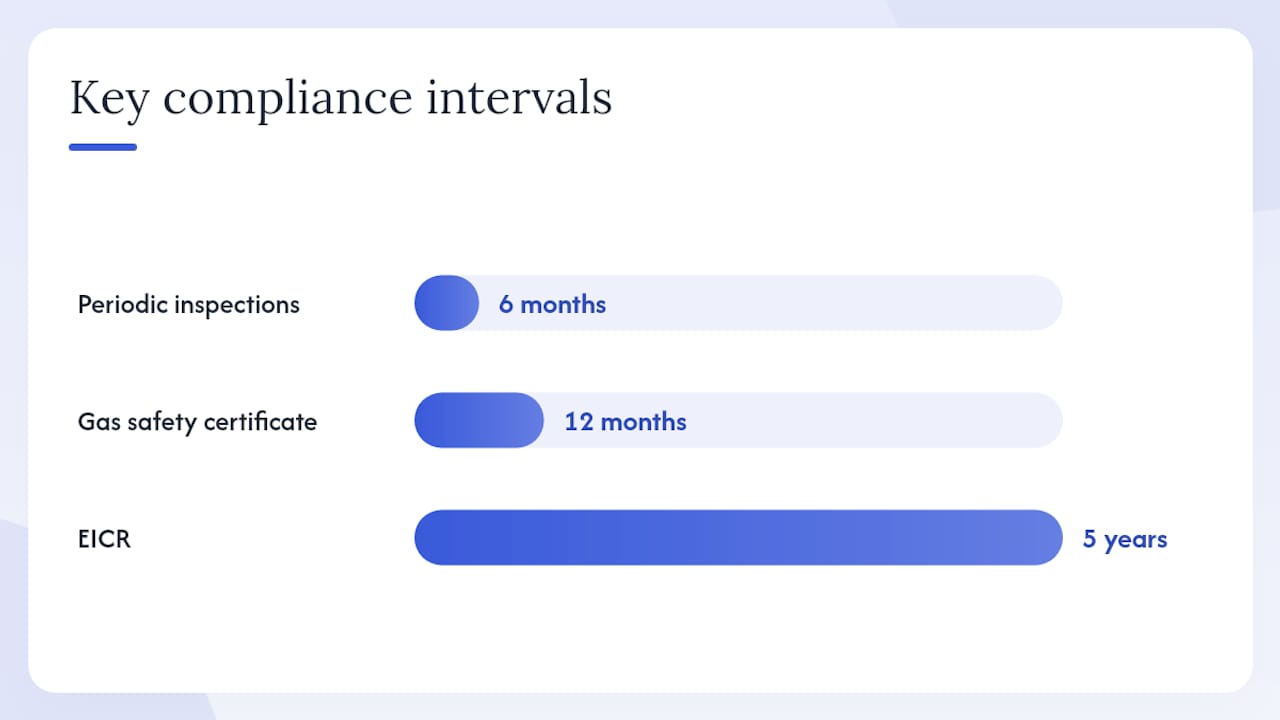
- Periodic inspection reports every six months, with written notice given to the tenant beforehand
- Complete rent ledger showing every payment received and any shortfall
- All written correspondence, including maintenance requests and responses
- Contractor invoices and completion records for every repair
- Compliance certificates: gas safety (annual), EICR (every five years), EPC (valid rating)
For deposit disputes, the three government-approved tenancy deposit protection schemes (Deposit Protection Service, MyDeposits, and the Tenancy Deposit Scheme) each offer an ADR adjudication route that is faster and cheaper than court. Submit your deduction schedule promptly with supporting evidence; delay weakens your position significantly.
Pro Tip: Store all evidence in a cloud folder (Google Drive or OneDrive) organised by tenancy date. When a dispute arises, you can share a complete, timestamped folder with an adjudicator or solicitor within minutes. Landlords who arrive at adjudication with a well-organised digital file consistently achieve better outcomes.
What should you do when rent arrears arise or possession becomes necessary?
Start with communication and written reminders. Section 8 is the correct legal route for arrears, but it requires precise procedure. Skipping steps costs months.
The staged approach to arrears and possession:
- Day 1 of arrears: send a written reminder by email and post
- Day 8: issue a formal letter before action, stating the amount owed and a payment deadline
- Day 14 onwards: consider mediation or ADR if the tenant is engaging but struggling
- Once arrears reach the relevant threshold: serve a Section 8 notice on the correct prescribed form, citing the appropriate grounds
- If the notice expires without resolution: issue a possession claim at court
- Obtain a money judgment alongside the possession order where arrears exist
Ground 8 is the mandatory ground: two months’ arrears must exist both at the date of service and at the hearing. If the tenant pays down arrears below two months before the hearing, Ground 8 fails. Pleading Grounds 10 and 11 alongside Ground 8 preserves your position.
Legal-expenses policies typically cover possession proceedings, rent recovery and defence costs, with insurer-appointed solicitors handling the claim. Check the policy’s monetary limit per claim before you need it.
Pro Tip: Instruct a solicitor as soon as you decide to serve a Section 8 notice, not after it fails. A solicitor will check the notice form, confirm the grounds are correctly pleaded, and ensure your evidence file is complete. Errors on the notice itself restart the clock entirely. See the legal eviction process explained for a step-by-step overview.

Should you hold property personally or through a limited company?
Incorporation can protect personal assets and deliver tax efficiency for some landlords, but the one-off costs are substantial and the decision requires careful modelling before acting.
Decision variables to assess:
- Your marginal income tax rate on rental profits
- Annual mortgage interest costs and the Section 24 restriction on personal ownership
- Portfolio size and plans to reinvest rather than extract cash
- SDLT exposure on transfer (payable per dwelling; Multiple Dwellings Relief is abolished)
- CGT exposure on transfer, which incorporation relief under Section 162 TCGA 1992 can defer but not eliminate
Incorporation relief defers CGT but does not remove SDLT liability, and from 6 April 2026 the claim must be made formally on Self Assessment. Partnership relief conditions for SDLT are narrow and strictly applied. A-wise’s financial pitfalls guide highlights that landlords who transfer without specialist advice routinely underestimate the combined SDLT and CGT cost.
Practitioners recommend modelling both your current tax position and the April 2027 property income surcharge scenario before deciding. Incorporation tends to become financially sensible when mortgage interest is high, the portfolio generates significant profit, and the intention is to retain and reinvest rather than draw income immediately.
Pro Tip: Model the extraction hierarchy before incorporating: Director’s Loan Account repayment, salary to the National Insurance threshold, dividends, and pension contributions each carry different tax treatment. Succession planning also changes materially once property sits in a company structure, so take advice on wills and inheritance planning at the same time.
What extra steps do HMOs and higher-risk lets require?
HMOs raise higher liability exposure and require specialist insurance and, in most cases, mandatory or additional licensing. A standard landlord policy will not cover them.
HMO compliance and insurance checklist:
- Declare HMO status to your insurer at inception and at every renewal
- Obtain buildings and liability cover specifically underwritten for HMOs
- Confirm communal-area cover is included (kitchens, hallways, bathrooms)
- Maintain liability limits of at least £5 million given the higher occupancy risk
- Confirm licence conditions are met: fire alarms, emergency lighting, and room size requirements where applicable
- Check whether your local authority operates an additional or selective licensing scheme
Non-declaration of HMO status to an insurer voids the policy. Under the Private Rented Sector reforms, HMO landlords also face heightened exposure to ombudsman complaints and ADR referrals. A voided policy at the point of a serious claim is a catastrophic outcome that proper disclosure prevents entirely.
Pro Tip: At each renewal, provide your insurer with an updated licence copy and a current fire risk assessment. Insurers who see proactive compliance documentation are less likely to dispute claims on procedural grounds.
Your one-page checklist: what to do this week and this month
Within 7 days (highest priority):
- Pull out your insurance schedule and confirm buildings, liability and rent guarantee cover are current and correctly declared
- Check every active tenancy has a valid deposit protection certificate and that prescribed information was served
- Verify gas safety certificate, EICR and EPC are in date for each property
Within 30 days:
- Run a full referencing check on any tenancy where documentation is incomplete
- Create or update your evidence folder: check-in report, inspection records, rent ledger, maintenance log
- Review your ownership structure with an accountant if you hold three or more properties personally
- Contact your insurer to confirm HMO status is declared if applicable
- Speak to a solicitor if any tenancy has arrears exceeding one month or a dispute is unresolved
Who to call:
- Insurer: for policy gaps, HMO declaration, and rent guarantee eligibility
- Accountant: for incorporation modelling and Section 24 impact
- Solicitor: for Section 8 notices, deposit disputes, possession proceedings, and structural transfer decisions
Why proactive legal housekeeping beats reactive litigation
The landlords who end up in costly, drawn-out possession proceedings almost always share one thing: they waited too long to get the paperwork right. By the time a solicitor is instructed, the notice has an error, the deposit was never properly protected, or the check-in report is a single blurry photograph taken on a phone three years ago.
What solicitors ask for when a dispute lands on their desk is precisely what this article describes: a complete evidence file, a correctly served notice, a valid compliance certificate, and a clear rent ledger. When those documents exist, disputes resolve faster and at lower cost. When they do not, the landlord is exposed regardless of the merits of the underlying claim.
Proactive legal advice, whether reviewing a Section 8 notice before it is served or advising on a structural transfer before SDLT becomes a problem, costs a fraction of reactive litigation. The role of a landlord solicitor is not just to fight cases; it is to prevent them from becoming cases at all.
Signaturelaw can help you protect your rental position
When possession proceedings become contested, a deposit dispute exceeds a modest sum, or you are considering transferring property to a limited company, the right time to speak to a solicitor is before the problem escalates. Signaturelaw’s landlord and tenant dispute service covers possession proceedings, Section 8 notices, tenancy disputes, and eviction support across the UK. The firm provides clear, direct advice without the volume-firm approach, so you receive considered guidance on your specific situation. To discuss your circumstances with a solicitor, contact Signaturelaw at Signaturelaw.
Sources
The following authoritative sources informed this article and are worth consulting directly for templates, statutory detail, and sector guidance.
- Gov
- How to protect your rental income following Renters’ Rights Act changes | NRLA
- Landlords liability insurance | Property owners’ liability | Hiscox
- How to protect yourself as a landlord in the UK (2025 guide) | LetSorted
- Landlord insurance essential guide 2026 | Letsafeuk
- How to avoid common financial pitfalls in property investment | A-wise
- Transferring property to a limited company | LandlordResource
Recommended
- Protect rental property: a practical guide for UK landlords | Signature Law
- Landlord legal tips 2026: your compliance guide | Signature Law
- Landlord tenant dispute guide for UK landlords 2026 | Signature Law
- Understanding the role of landlord solicitors in UK housing | Signature Law