





Family Law
Estate Administration Explained – Managing Loss in Romford

Sorting out a loved one’s estate can feel like stepping into unfamiliar territory, especially when grief weighs heavily and every document seems daunting. For families in Romford seeking clarity, estate administration is the legal process of managing assets, debts, and distributing possessions according to the law, as highlighted by GOV.UK. This article offers practical insight to help you understand each step, avoid costly mistakes, and find the right support during this challenging period.
Table of Contents
- What Estate Administration Really Means
- Executor Vs Administrator Roles Explained
- Step-By-Step UK Estate Administration Process
- Probate, Taxes And Legal Requirements
- Common Risks, Costs And Mistakes To Avoid
- How Solicitors Support Bereaved Families
Key Takeaways
| Point | Details |
|---|---|
| Understanding Estate Administration | Estate administration involves legally managing a deceased person’s assets and debts, ensuring compliance with statutory obligations. |
| Executor vs Administrator Roles | Executors follow a will’s instructions while administrators act according to intestacy laws when no will exists. |
| Steps in Estate Administration | The process includes obtaining the death certificate, valuing assets, handling taxes, and distributing remaining assets. |
| Importance of Professional Guidance | Consulting solicitors can prevent costly errors, ensure accurate compliance with legal and tax requirements, and support families emotionally. |
What Estate Administration Really Means
Estate administration represents the critical legal process of managing and distributing a deceased person’s assets and financial responsibilities. When someone passes away, their entire financial ecosystem – including property, investments, personal possessions, and outstanding debts – must be carefully and systematically processed according to legal requirements.
At its core, estate administration involves several fundamental responsibilities for the personal representatives or executors of the estate. These key tasks include:
- Identifying and valuing all assets owned by the deceased
- Calculating and paying any outstanding inheritance tax
- Settling remaining debts and financial obligations
- Distributing remaining assets to named beneficiaries
- Obtaining the necessary legal right to manage assets
The process is governed by strict legal protocols that protect both the deceased’s wishes and the financial interests of potential beneficiaries. Professional guidance becomes crucial, as executors can potentially become personally liable for mistakes during administration.
Estate administration ensures that a person’s final financial wishes are respected and legally implemented, providing closure for families during a difficult emotional period.
Typically, estate administration follows a structured pathway that requires careful documentation and legal compliance. Executors must first obtain a grant of representation, which legally authorises them to manage the deceased’s estate. This involves submitting detailed documentation to the probate registry, including the original will and comprehensive asset valuations.
The complexity of estate administration can vary significantly depending on the size and complexity of the assets involved. Some estates might require complex tax calculations, while others involve straightforward asset distribution. Professional legal support can help navigate these intricate processes and ensure everything is managed correctly.
Pro tip: Always consult a solicitor specialising in estate administration to understand your specific legal obligations and avoid potential personal financial risks.
Executor Vs Administrator Roles Explained
The roles of executor and administrator are crucial in managing a deceased person’s estate, but they serve distinctly different functions depending on whether a valid will exists. Dealing with someone’s affairs after death involves navigating complex legal responsibilities that can significantly impact asset distribution.
Key differences between executors and administrators include:
- Executors are named in a valid will
- Administrators are appointed when no will exists
- Executors follow specific instructions from the deceased
- Administrators distribute assets according to statutory inheritance rules
- Executors typically have predetermined authority
- Administrators must apply for legal permission to manage the estate
An executor’s role is typically more straightforward when a clear, legally valid will is present. They are explicitly chosen by the deceased to carry out specific wishes regarding asset distribution, funeral arrangements, and financial settlements. These individuals are often trusted family members, close friends, or professional legal representatives who understand the deceased’s intentions.
The fundamental difference lies in the source of authority: executors derive their power from the will, while administrators derive their power from legal statute.
Administrators, by contrast, step in when no will exists or when named executors are unable or unwilling to perform their duties. In such scenarios, they must apply for letters of administration, which grants them legal authority to manage the estate according to intestacy laws.
The selection of an administrator follows a strict legal hierarchy, typically starting with the closest living relative. This might be a spouse, civil partner, child, or another near relative who is deemed legally appropriate to manage the deceased’s financial affairs.
To clarify the practical differences between executors and administrators, here is a comparison:
| Role Aspect | Executor | Administrator |
|---|---|---|
| Appointment Method | Named in valid will | Selected by legal hierarchy |
| Source of Authority | Will of the deceased | Court-issued letters of administration |
| Instruction Basis | Carries out specific wishes | Follows statutory inheritance rules |
| Typical Appointees | Relatives, friends, legal professionals | Closest living relatives |
| Authority Timeline | Immediate upon probate grant | After court approval |
Pro tip: Seek professional legal advice early in the process to understand your specific rights and responsibilities as an executor or administrator.
Step-by-Step UK Estate Administration Process
Navigating the estate administration process requires meticulous attention to detail and a systematic approach. Probate and estate management involves several critical stages that personal representatives must carefully execute to ensure legal compliance and smooth asset distribution.
The comprehensive estate administration process typically follows these essential steps:
- Obtain the death certificate
- Locate the will (if one exists)
- Value the deceased’s assets and liabilities
- Calculate and pay Inheritance Tax
- Apply for grant of probate or letters of administration
- Collect and liquidate assets
- Pay outstanding debts and taxes
- Distribute remaining assets to beneficiaries
- Prepare final estate accounts
The initial stage involves a thorough investigation of the deceased’s financial landscape. This requires gathering comprehensive documentation, including bank statements, property deeds, investment portfolios, and outstanding financial commitments. Executors must create a detailed inventory of all assets and potential liabilities.
Precision and thoroughness during the early stages of estate administration can prevent significant complications and legal challenges later in the process.
Tax considerations represent a critical component of estate administration. Probate steps in estate administration demand careful calculation of Inheritance Tax, which must be paid before the estate can be fully processed. This often involves complex valuations and potential negotiations with HM Revenue and Customs.
The legal process becomes particularly intricate when dealing with diverse assets such as properties, investments, business interests, and personal possessions. Personal representatives must obtain official valuations, potentially involving professional appraisers for complex or high-value assets. They must also protect the estate’s interests by advertising for potential unknown creditors and managing any disputes that may arise.

Pro tip: Maintain meticulous records throughout the estate administration process and consider seeking professional legal guidance to navigate complex financial and legal requirements.
Probate, Taxes and Legal Requirements
Estate administration involves navigating a complex landscape of legal and financial obligations that demand precision and thorough understanding. Managing a deceased person’s estate legally requires personal representatives to comprehend multiple intricate requirements that can significantly impact the estate’s final distribution.
Key legal and tax considerations include:
- Accurate estate valuation
- Inheritance Tax calculations
- Obtaining appropriate legal grants
- Complying with HMRC regulations
- Managing potential tax liabilities
- Documenting all financial transactions
- Meeting statutory reporting requirements
The Inheritance Tax threshold represents a critical financial consideration for most estates. Currently, estates valued under £325,000 are typically exempt from taxation, with higher thresholds available for properties passed to direct descendants. Personal representatives must carefully calculate the total estate value, considering both liquid and illiquid assets.
Precise financial documentation and transparent reporting are essential to avoid potential legal complications and potential penalties from tax authorities.
Legal requirements extend beyond simple tax calculations. Personal representatives must obtain either a grant of probate (when a will exists) or letters of administration (when no will is present). These legal documents provide the official authority to manage and distribute the deceased’s assets according to legal provisions.
Complex estates may require additional specialist interventions, particularly those involving business assets, international investments, or multiple property holdings. Professional legal guidance becomes crucial in navigating these intricate scenarios, ensuring full compliance with UK inheritance and tax regulations.
Pro tip: Maintain comprehensive financial records and consider consulting a specialist solicitor to ensure accurate tax calculations and legal compliance throughout the estate administration process.
Common Risks, Costs and Mistakes to Avoid
Estate administration involves numerous potential pitfalls that can result in significant financial and legal complications. Comprehensive deceased estate management requires careful navigation of complex legal and financial landscapes to prevent costly errors.
Common risks and potential mistakes include:
- Undervaluing estate assets
- Missing critical tax deadlines
- Distributing assets prematurely
- Failing to identify all creditors
- Inadequate record-keeping
- Overlooking potential inheritance claims
- Neglecting professional legal advice
Personal representatives face substantial personal liability for administrative errors. Mistakes can result in significant financial penalties, unexpected tax assessments, and potential legal disputes with beneficiaries or creditors. The financial implications of mismanagement can far exceed the initial administrative costs.
Personal representatives must exercise extreme diligence, as their decisions can have long-lasting financial and legal consequences for the estate and its beneficiaries.
Costs associated with estate administration can vary considerably, typically ranging from 1% to 5% of the total estate value. Professional solicitor fees, probate court charges, and potential tax settlements can quickly accumulate. Statutory estate notices and comprehensive will searches are essential to mitigate risks of unknown claims and potential financial exposure.
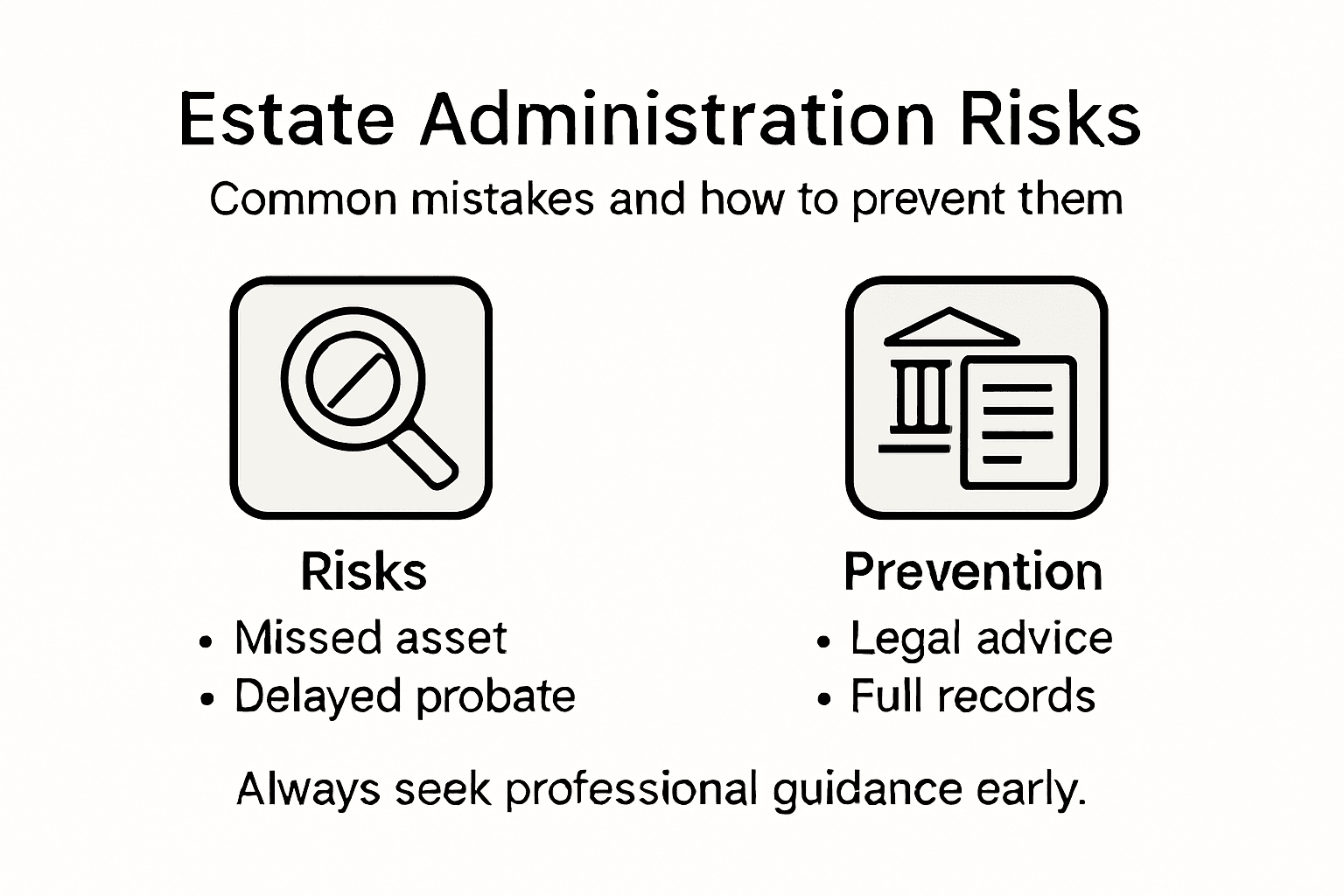
Specialist legal guidance becomes crucial in managing complex estates, particularly those involving multiple properties, business assets, or international investments. Professional support can help identify potential risks, ensure regulatory compliance, and minimise the likelihood of costly administrative errors.
Here is a summary of potential risks and financial implications often faced during estate administration:
| Area of Risk | Possible Consequence | Preventative Measure |
|---|---|---|
| Asset Misvaluation | Increased tax or legal disputes | Professional valuations and documentation |
| Missed Deadlines | Penalties or delayed distribution | Regularly track key tasks and dates |
| Premature Asset Distribution | Legal action from creditors | Wait until all debts are identified |
| Poor Record-Keeping | Auditing issues or personal liability | Keep detailed estate accounts |
Pro tip: Maintain meticulous financial records, seek professional legal advice early, and consider obtaining professional indemnity insurance to protect against potential administrative mistakes.
How Solicitors Support Bereaved Families
Bereaved families often face overwhelming emotional and legal challenges during estate administration, making professional legal support crucial. Navigating complex legal processes requires compassionate and expert guidance to help families through this difficult transition.
Solicitors provide comprehensive support through several critical areas:
- Emotional guidance and compassionate communication
- Detailed estate valuation and documentation
- Probate and legal documentation management
- Tax calculation and compliance
- Asset distribution guidance
- Dispute resolution and mediation
- Professional advocacy with financial institutions
The legal professionals act as both practical advisors and emotional support mechanisms during what is often the most challenging period for grieving families. They understand that estate administration involves much more than paperwork – it’s about providing a structured, empathetic approach to managing complex financial and emotional landscapes.
Solicitors bridge the gap between legal requirements and human compassion, offering families a structured pathway through grief and administrative complexity.
Professional legal support becomes particularly critical when dealing with complex estate administration processes. Solicitors can expertly handle intricate scenarios involving multiple properties, international assets, business interests, or potential inheritance disputes. Their expertise ensures that families can focus on emotional healing while professional administrators manage technical and legal requirements.
Moreover, solicitors provide crucial protection against potential financial risks. They help families avoid costly mistakes, ensure accurate tax calculations, meet strict legal deadlines, and provide professional documentation that protects the estate’s and beneficiaries’ interests.
Pro tip: Choose a solicitor who demonstrates both legal expertise and genuine empathy, ensuring comprehensive support during your estate administration journey.
Make Estate Administration Easier with Expert Legal Support in Romford
Dealing with the loss of a loved one is emotionally draining and the process of estate administration can quickly become overwhelming. From obtaining the legal right to manage assets, through to valuing estate contents and managing taxes, each step carries significant responsibilities and potential personal liability for executors or administrators. Mistakes in this complex area can lead to costly disputes and delays that add stress to an already difficult time.
Signature Law offers compassionate and authoritative support specialising in wills, probate, and estate administration. Our team understands the detailed legal processes such as applying for a grant of probate and handling inheritance tax, ensuring every stage is managed carefully to protect your family’s interests. With over 15 years’ experience and a strong presence in Romford and Essex, we provide clear guidance and personalised solutions so you are never alone navigating these challenges.
If you are facing the complexities of estate administration and want expert legal assistance that combines professional rigour with genuine care, start your enquiry today. Contact Signature Law for tailored support across probate, estate planning, and more by visiting Signature Law contact page. Let us help you manage loss with dignity and confidence.
Frequently Asked Questions
What is estate administration?
Estate administration is the legal process of managing and distributing a deceased person’s assets and financial responsibilities, ensuring their final wishes are respected.
Who is responsible for estate administration?
The personal representatives or executors of the estate are responsible for the administration process, which includes identifying assets, paying debts, and distributing assets to beneficiaries.
What differentiates an executor from an administrator?
An executor is named in a valid will and follows the deceased’s specific instructions, while an administrator is appointed when there is no will or the named executors cannot fulfill their duties, following statutory inheritance rules instead.
What are the key steps in the estate administration process?
The main steps include obtaining a death certificate, valuing the estate’s assets, paying any Inheritance Tax, applying for a grant of probate or letters of administration, settling debts, and finally distributing the remaining assets to beneficiaries.
Recommended
- Signature Law: London Lawyers for Family, Property & Wills
- The Risks of Not Having an Estate Plan – Hickory Attorneys for Family Law, Criminal Defense, & Estate Planning | King & Rowe