





Family Law
How to Handle Probate UK: Complete Step-by-Step Guide

Losing someone close leaves more than heartache—it brings a wave of paperwork, unfamiliar terms, and legal responsibilities. For families in Romford and Essex, the need to compile specific legal documents is the first step on a path that can feel overwhelming. Clear guidance helps transform confusion into confidence, offering practical pointers and compassionate support for each stage of estate administration.
Table of Contents
Brief Overview
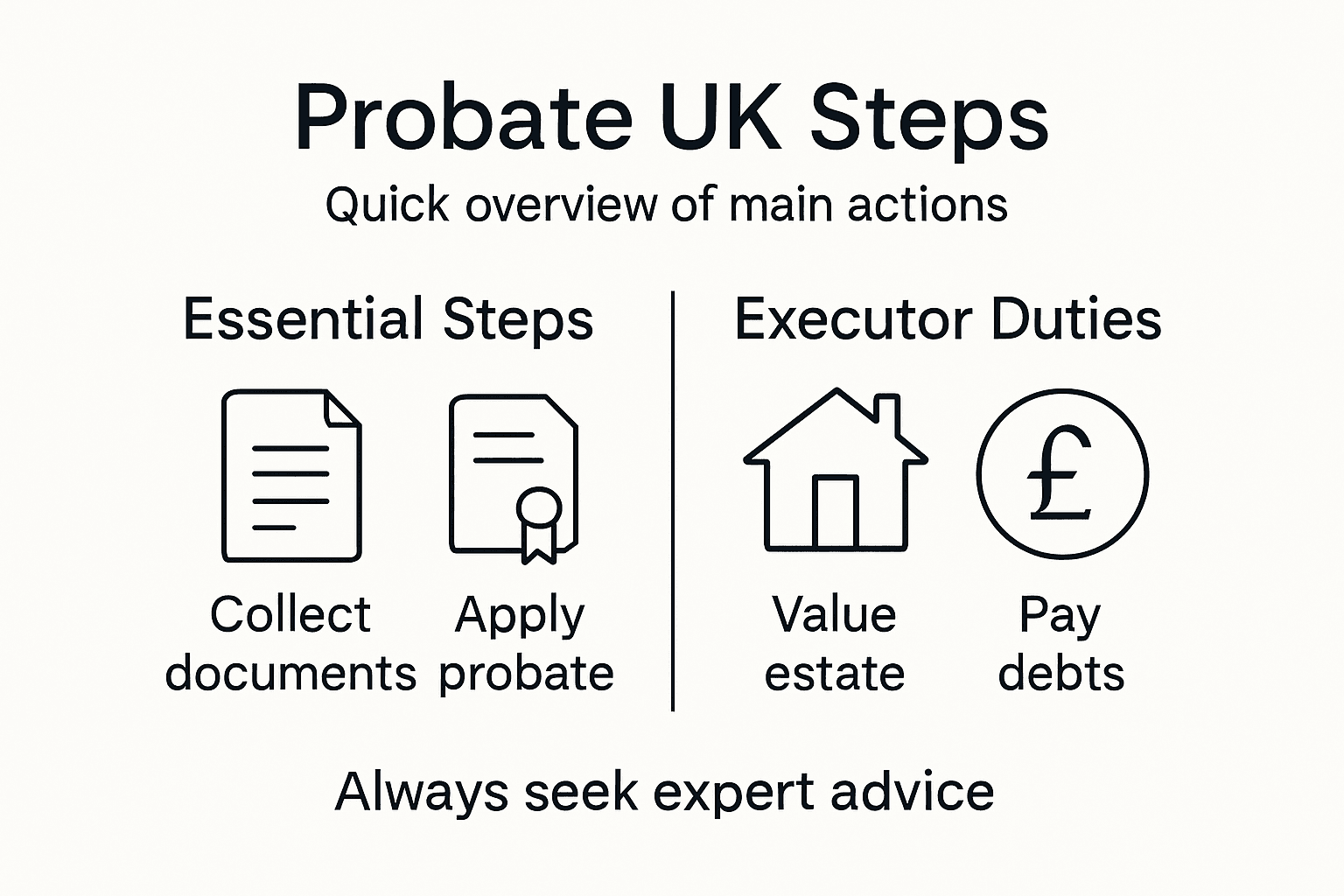
| Important Insight | Clarification |
| 1. Gather Essential Documents | Collect original last will, death certificate, and financial records for probate. |
| 2. Apply for Grant of Probate | Complete the probate application to gain legal authority over the estate. |
| 3. Accurately Value All Assets | Create a detailed asset inventory and obtain professional valuations as needed. |
| 4. Settle Debts Before Distribution | Prioritise paying all outstanding debts to ensure fair inheritance distribution. |
| 5. Document Everything Meticulously | Maintain clear records of transactions and communications throughout the probate process. |
Step 1: Gather Essential Probate Documents
Handling probate requires collecting several critical documents that provide legal authority to manage a deceased person’s estate. Your first task involves systematically gathering paperwork that will support the entire probate process.
To successfully navigate this step, you’ll need to compile specific legal documents related to the deceased. These typically include:
-
Original last will and testament
-
Death certificate (official certified copy)
-
Asset documentation including property deeds
-
Bank statements and financial records
-
Life insurance policies
-
Pension or retirement account details
-
Vehicle registration documents
While collecting these documents, you’ll want to search for the probate record which provides official legal permission to manage the estate. Pay careful attention to obtaining original documents, as photocopies may not be acceptable during probate proceedings.
If you’re unsure about locating certain documents, consider reaching out to the deceased’s financial advisors, accountant, or solicitor. These professionals can often help track down necessary paperwork or provide guidance on obtaining official copies.
Gathering comprehensive documentation upfront prevents potential delays in the probate process and ensures smooth estate administration.
Expert advice: Create a secure, organised folder to store all probate-related documents and make digital scans as backup copies.
Step 2: Apply for the Grant of Probate
After gathering the necessary documents, you’ll now embark on obtaining the legal authority to manage the deceased’s estate. The grant of probate is a crucial document that officially empowers you to handle all financial and legal matters on behalf of the deceased.
To begin the application process, you’ll need to complete the probate application through the following key steps:
-
Determine if you’re eligible to apply (typically the executor named in the will)
-
Gather all required documentation
-
Calculate the estate’s total value
-
Complete the probate application form (PA1P)
-
Submit inheritance tax forms if applicable
Your application will require comprehensive details about the deceased’s assets, including:
-
Total value of the estate
-
Property and land ownership
-
Bank account balances
-
Investments and savings
-
Personal possessions of significant value
Most executors can complete the application online or by post, depending on their comfort level with digital processes. You’ll need to provide the original will, death certificate, and detailed estate information. If the estate’s value is above the inheritance tax threshold, you’ll need to complete additional forms and potentially pay inheritance tax before receiving the grant.
The grant of probate is your official legal document confirming your authority to manage and distribute the deceased’s estate.
Expert advice: Double-check all application details meticulously before submission and consider seeking professional legal advice if the estate is complex or high-value.
Step 3: Value and Manage the Estate Assets
After obtaining the grant of probate, you’ll now face the critical task of comprehensively valuing and managing the deceased’s estate. This step involves creating a detailed inventory of all assets and determining their precise financial value at the time of death.
To effectively manage estate assets, you’ll need to follow a systematic approach:
-
Create a comprehensive asset inventory
-
Obtain professional valuations for complex assets
-
Calculate the total estate value
-
Identify and document all outstanding debts
-
Prepare for potential inheritance tax obligations
Your asset valuation should include detailed documentation of:
-
Property and real estate (market valuation)
-
Bank account balances
-
Investments and shares
-
Pension funds
-
Valuable personal possessions
-
Vehicles
-
Artwork and collectibles
-
Business interests
Executors must be meticulous in tracking and documenting every asset, as these values determine inheritance tax liabilities and the final distribution of the estate. Some assets may require professional valuation, particularly for unique items like antiques, artwork, or business shareholdings.
Accurate asset valuation is crucial for ensuring fair distribution and meeting legal obligations during probate.
Key considerations include obtaining up-to-date valuations, keeping detailed records, and being prepared to potentially sell assets to settle any outstanding debts or tax liabilities.
Expert advice: Consider consulting a professional valuer or accountant for complex estates to ensure absolute accuracy and compliance with HM Revenue and Customs requirements.
Step 4: Settle Debts and Distribute Inheritance
With asset valuation complete, you now face the critical responsibility of settling the deceased’s outstanding financial obligations and ensuring beneficiaries receive their rightful inheritance. This complex process requires meticulous attention to legal and financial details.
To manage estate settlement effectively, follow these crucial steps:
-
Compile a comprehensive list of all outstanding debts
-
Prioritise debt payments according to legal requirements
-
Calculate and pay any inheritance tax
-
Obtain official receipts for all debt settlements
-
Prepare detailed financial statements
-
Distribute remaining assets to beneficiaries
Your debt settlement process should address:
-
Funeral expenses
-
Outstanding utility bills
-
Credit card balances
-
Personal loans
-
Mortgage payments
-
Income tax liabilities
-
Inheritance tax obligations
Executors must carefully document each financial transaction, ensuring transparency and legal compliance. This includes maintaining precise records of all payments made from the estate and obtaining written confirmation of debt settlements.
Proper debt settlement is crucial to prevent future legal complications and ensure fair distribution of the estate.
Typically, debts are paid in a specific legal order, with secured creditors receiving priority over unsecured creditors. If estate funds are insufficient to cover all debts, you may need to seek professional legal guidance on prioritisation.
Expert advice: Create a spreadsheet tracking every debt, payment, and receipt to maintain a clear audit trail and protect yourself from potential future disputes.
Step 5: Verify Completion and Close the Estate
You’ve reached the final stage of the probate process, where meticulous verification and official closure of the estate become your primary objectives. This crucial step ensures all legal and financial responsibilities have been comprehensively fulfilled.
To conclude the estate administration, you’ll need to systematically complete several key tasks:
-
Compile comprehensive estate accounts
-
Distribute final statements to beneficiaries
-
Close all financial accounts
-
Notify relevant government departments
-
Retain critical documentation
-
Formally conclude your executorship
Your final verification checklist should include:
-
Confirming all assets have been distributed
-
Verifying all debts have been settled
-
Obtaining signed receipts from beneficiaries
-
Documenting final financial transactions
-
Preparing a detailed estate administration report
-
Calculating and filing final tax returns
Executors must maintain meticulous records of all transactions throughout this process. This documentation serves as critical protection against potential future disputes and provides a transparent account of how the estate was managed.
Proper estate closure protects both the executor and the beneficiaries by creating a clear, auditable trail of all financial actions.
Depending on the estate’s complexity, this final stage might take several weeks to months. Professional legal advice can help navigate any intricate aspects of estate closure.
Expert advice: Create digital and physical copies of all estate documentation, storing them securely for a minimum of 12 years in case of future inquiries.
The following table summarises potential challenges and solutions faced during each probate step:
| Probate Step | Common Challenge | Effective Solution |
| Gathering Documents | Missing paperwork | Contact financial advisers or solicitor |
| Grant Application | Incorrect asset information | Double-check forms and seek help |
| Asset Management | Disputed valuations | Use professional valuers |
| Debt Settlement | Unclear debt order | Follow legal prioritisation guidelines |
| Estate Closure | Poor documentation storage | Store records digitally and physically |
To help clarify the main responsibilities of the probate executor throughout the process, here is an overview table:
| Stage of Probate | Executor’s Primary Role | Business Impact | Recommended Professional Support |
| Document Gathering | Locate and secure all relevant papers | Enables legal estate access | Solicitor or accountant for guidance |
| Grant Application | Apply for official authority | Allows estate management | Legal advice for complex estates |
| Asset Valuation | Assess and record all asset values | Determines tax obligations | Professional valuer or accountant |
| Debt Settlement | Pay creditors and record transactions | Prevents legal disputes | Financial advisor for prioritisation |
| Closure | Complete final reporting and distribute assets | Ensures compliance and auditability | Legal review for final closure |
Gain Confidence Navigating Probate with Expert Legal Support
Navigating the probate process in the UK can feel overwhelming when faced with gathering legal documents, applying for the grant of probate, and valuing estate assets accurately. The challenges of settling debts properly and ensuring clear estate closure add to the complexity and emotional strain. This guide highlights how essential meticulous management and understanding of key steps are to prevent delays or disputes.
If you want to avoid common pitfalls and ensure your loved one’s estate is handled with professionalism and compassion, Signature Law offers specialised support in Wills, Probate & Estate Planning. Our experienced solicitors provide clear guidance on grant of probate applications, estate administration, and will writing. We understand the sensitivity of these moments and help you manage the process confidently from start to finish.
Take control today and secure peace of mind for your family. Visit our main site at Signature Law to connect with a caring expert and begin your probate enquiry. Your next step towards a smooth, legally sound probate journey starts now.
Frequently Asked Questions
What documents are needed to start the probate process in the UK?
To begin the probate process, you will need several essential documents, including the original will, the death certificate, and asset documentation such as property deeds and bank statements. Gather these documents meticulously to facilitate a smoother probate process.
How do I apply for a grant of probate, and what forms do I need?
To apply for a grant of probate, you need to complete the probate application form (PA1P) and provide details about the deceased’s estate. Ensure that you accurately calculate the estate’s total value and submit any necessary inheritance tax forms.
How can I ensure all estate assets are valued accurately during the probate process?
To accurately value estate assets, compile a comprehensive inventory and seek professional valuations for complex items like property or collectibles. By doing this, you can determine fair market values and ensure compliance with tax obligations.
What should I do if there are outstanding debts on the estate?
You must compile a list of all outstanding debts and prioritise payments according to legal obligations. Pay close attention to the order of debt settlement to comply with legal requirements and prevent disputes.
How can I effectively close the estate after completing all necessary steps?
To close the estate, compile comprehensive estate accounts, distribute final statements to beneficiaries, and retain all critical documentation. Ensure that you verify all financial transactions and obtain receipts before formally concluding your executorship.
What are the potential challenges I might face during the probate process?
Common challenges include missing documents, disputed asset valuations, and unclear debt priorities. It is advisable to maintain thorough records and seek professional assistance when dealing with complex aspects to prevent complications.