





Family Law
Family Law – How It Affects Everyday Life in the UK

Separation can unravel your sense of stability at the very moment you need clarity and reassurance. For families across Romford and Essex, the confusion around divorce and child arrangements often feels overwhelming, especially when misconceptions about legal rights cloud already difficult decisions. Understanding the real foundations of family law and debunking common myths ensures you are prepared to protect your future and your children, while finding pathways to both emotional and financial security.
Table of Contents
- Family Law Defined And Common Myths
- Types Of Family Law Cases In The UK
- Legal Framework Governing Family Law
- Rights And Duties Within Family Law
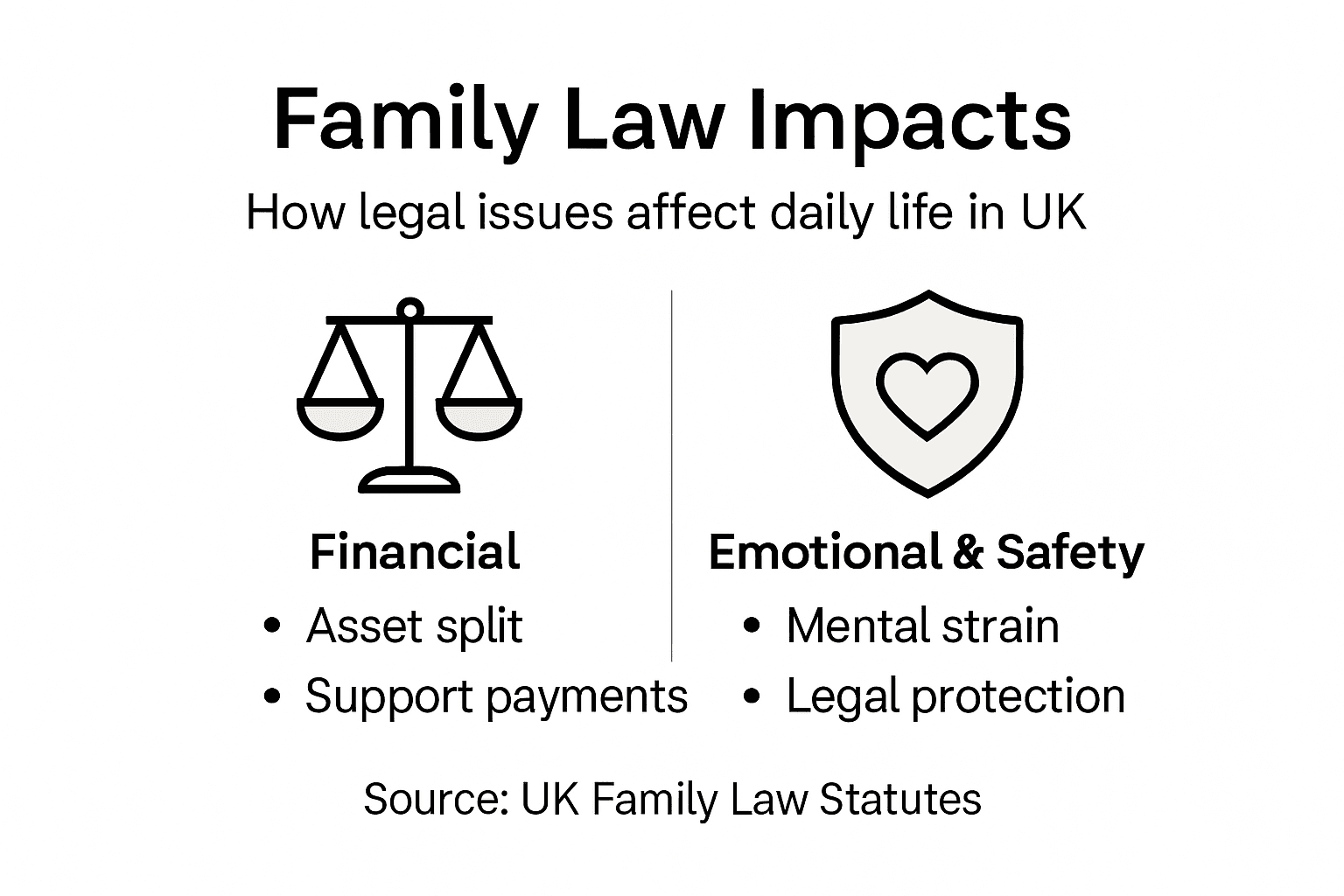
- Financial, Emotional, And Safety Implications
Key Takeaways
| Point | Details |
|---|---|
| Understanding Family Law | Family law in the UK addresses marriages, divorces, child arrangements, and domestic abuse, aiming to protect vulnerable family members during transitions. |
| Myths vs. Reality | Common misconceptions about family law can lead to misunderstandings; consulting a qualified solicitor provides clarity. |
| Types of Cases | Key family law cases include divorce, child arrangements, and domestic abuse protection, necessitating tailored legal guidance. |
| Emotional and Financial Impact | Family law proceedings can lead to significant emotional trauma and financial vulnerability; support and counselling are crucial during these transitions. |
Family Law Defined and Common Myths
Family law represents a complex legal field addressing critical personal relationships and societal interactions within the United Kingdom’s legal framework. At its core, family law governs legal matters involving marriages, divorces, child arrangements, domestic partnerships, and familial disputes.
The legal foundations of family law are designed to protect individuals’ rights and support vulnerable family members during significant life transitions. Family law encompasses several key areas:
- Child custody and parental responsibility
- Financial settlements during divorce
- Domestic abuse protection
- Inheritance and estate planning
- Adoption and surrogacy regulations
Many individuals harbour significant misconceptions about how family law operates in practice. Legal research consistently demonstrates that public understanding frequently diverges from actual legal principles.
Common myths surrounding family law include:
- Prenuptial agreements are automatically legally binding
- Common law marriage provides the same protections as legal marriage
- Mothers always receive preferential treatment in child custody cases
- Divorce proceedings are always lengthy and combative
- Assets are always split equally during financial settlements
Understanding these myths helps individuals navigate legal processes more effectively and make informed decisions about their familial relationships. Legal professionals play a crucial role in demystifying these misconceptions and providing clear, compassionate guidance.
Here is a summary of key misconceptions versus legal realities in UK family law:
| Myth | Legal Reality | Practical Consequence |
|---|---|---|
| Prenuptial agreements are automatically legally binding | Courts evaluate fairness and circumstances | Agreements may not always be upheld |
| Common law marriage grants same rights as marriage | No automatic legal rights for cohabitees | Can result in loss of property claims |
| Mothers always win child custody cases | Courts prioritise best interests, not gender | Fathers have substantial legal rights |
| Divorce is always lengthy and combative | Many cases are settled amicably or quickly | Mediation can significantly shorten process |
| Assets are always divided equally | Courts consider needs, contributions, children | Distribution may vary by case details |
Pro tip: Before making any significant legal decisions in family law, always consult a qualified solicitor who can provide personalised advice tailored to your specific circumstances.
Types of Family Law Cases in the UK
Family law encompasses a diverse range of legal proceedings that address the complex dynamics of personal relationships and familial challenges. Comprehensive legal protocols outline the various case types that solicitors and courts handle to protect individuals and support families through challenging transitions.
The primary types of family law cases in the United Kingdom include:
- Divorce and Separation Proceedings
- Child Arrangement Orders
- Financial Settlements
- Domestic Abuse Protection
- Care Proceedings
- Adoption and Surrogacy
- Civil Partnership Dissolution
Divorce and separation cases represent a significant portion of family law matters. These proceedings involve complex negotiations around asset division, spousal maintenance, and child custody arrangements. Family legal guidance highlights that each case requires a nuanced approach tailored to the specific circumstances of the individuals involved.

Child arrangement cases are particularly sensitive, focusing on determining parental responsibility, contact arrangements, and the child’s best interests. These cases may involve establishing residence, visitation schedules, and financial support mechanisms to ensure children’s welfare remains the primary concern.
Financial settlements form another critical aspect of family law, addressing the equitable distribution of assets, property, and financial resources during divorce or separation. Courts consider multiple factors, including each party’s financial contributions, future earning potential, and the needs of any dependent children.
Family law cases are not about winning, but about finding fair and compassionate solutions that protect the most vulnerable family members.
Domestic abuse protection cases require immediate and sensitive legal intervention, providing non-molestation orders and other protective measures to ensure the safety of individuals experiencing family violence.
Pro tip: Always seek professional legal advice early in any family law proceeding to understand your rights and explore the most constructive resolution strategies.
Legal Framework Governing Family Law
Family law in the United Kingdom represents a complex system of statutes, regulations, and case law designed to address the intricate dynamics of personal relationships and familial interactions. Academic legal research reveals that the legal framework encompasses multiple legislative sources that provide comprehensive guidance for resolving family disputes and protecting vulnerable individuals.
The primary legislative foundations of family law in the UK include:
- Children Act 1989
- Matrimonial Causes Act 1973
- Civil Partnership Act 2004
- Domestic Abuse Act 2021
- Human Rights Act 1998
- Family Law Act 1996
Parental responsibility forms a critical component of the family law framework. Government guidelines outline the legal mechanisms determining who has rights and responsibilities for children, which automatically extends to:
- Married mothers and fathers
- Unmarried mothers
- Fathers named on birth certificates
- Individuals granted parental responsibility through legal proceedings
The legal framework is designed to prioritise the best interests of children, ensuring their welfare, protection, and development remain paramount in any family law proceedings. Courts consistently interpret legislation with a child-centric approach, considering factors such as emotional well-being, financial security, and protection from potential harm.
The essence of family law is not about enforcing rigid rules, but about creating flexible, compassionate solutions that protect the most vulnerable family members.
Financial provisions within family law address the economic dimensions of relationship breakdowns, establishing equitable mechanisms for asset division, spousal maintenance, and child support. These legal guidelines aim to provide financial stability and prevent economic hardship during challenging familial transitions.
Pro tip: Always consult a qualified family law solicitor who can provide personalised guidance tailored to your specific legal circumstances and family dynamics.
Rights and Duties Within Family Law
Family law in the United Kingdom establishes a comprehensive framework of rights and duties designed to protect the interests of individuals and families. Government guidelines provide clear definitions of the legal responsibilities that parents and guardians hold towards their children and one another.
The primary rights and duties within family law encompass:
- Parental Responsibility
- Child Welfare and Protection
- Financial Support Obligations
- Domestic Abuse Prevention
- Property and Asset Rights
- Relationship Dissolution Protections
Parental responsibility represents a fundamental legal concept that outlines the rights and duties of parents towards their children. This includes:
- Providing financial support
- Ensuring medical care and education
- Making critical decisions about the child’s upbringing
- Protecting the child’s emotional and physical well-being
Academic legal research highlights that these responsibilities extend beyond biological parentage, encompassing adoptive parents, legal guardians, and individuals granted parental rights through legal proceedings.
The core principle of family law is to prioritise the best interests of children while protecting the rights of all family members.
Financial duties represent another critical aspect of family law, establishing clear obligations for spousal maintenance, child support, and equitable asset division during relationship transitions. These legal provisions aim to prevent economic hardship and ensure fair treatment of all parties involved.
Domestic abuse prevention forms a crucial component of family law rights, providing legal mechanisms such as non-molestation orders and protective injunctions to safeguard vulnerable individuals from potential harm.
Pro tip: Document all significant interactions and communications related to family legal matters, as these records can provide crucial evidence if legal disputes arise.
Financial, Emotional, and Safety Implications
Family law cases involve complex and interconnected dimensions that extend far beyond legal proceedings, profoundly impacting individuals’ financial stability, emotional well-being, and personal safety. Citizens Advice highlights the multifaceted challenges families encounter during legal transitions.
The key implications of family law cases typically encompass:
- Financial Vulnerability
- Emotional Trauma
- Psychological Stress
- Economic Restructuring
- Personal Safety Concerns
- Long-term Psychological Impact
Financial implications represent a critical area of concern, often involving:
- Asset division and redistribution
- Spousal and child maintenance payments
- Potential loss of shared economic resources
- Significant legal expenditure
- Potential long-term economic instability
Domestic abuse research reveals the profound emotional and safety dimensions that family law must address, particularly in cases involving vulnerable individuals.
Family law is not merely about legal resolution, but about rebuilding lives with dignity and protection.
Emotional implications can be particularly devastating, with individuals experiencing profound psychological challenges such as anxiety, depression, and potential long-term trauma. The legal process itself can become an additional source of stress, requiring careful navigation and supportive interventions.
Safety implications are paramount, especially in cases involving domestic violence or high-conflict separations. Legal mechanisms such as non-molestation orders and protective injunctions play a crucial role in safeguarding vulnerable family members.
The following table outlines the major implications of family law cases for individuals and families:
| Dimension | Main Impact | Long-term Effect |
|---|---|---|
| Financial | Asset restructuring and legal costs | Ongoing maintenance obligations |
| Emotional | Increased stress and potential trauma | Possible lasting psychological issues |
| Safety | Immediate protection needs in abuse cases | Increased sense of security over time |
| Social | Change to family dynamics and roles | Adjustment to new family living arrangements |
Pro tip: Prioritise your mental health and seek professional counselling alongside legal support to navigate the emotional complexities of family law proceedings.
Navigating Family Law Challenges With Expert Support
Family law matters deeply affect everyday life in the United Kingdom, often bringing significant emotional and financial challenges. Whether you are facing divorce, child arrangement disputes, or concerns about domestic abuse protection, understanding your rights and responsibilities can be overwhelming. This article discusses common myths and legal realities that can confuse those trying to protect their family’s future.
Signature Law offers compassionate and personalised legal support tailored to your unique situation. Our experienced solicitors specialise in Financial Settlements, Child Arrangement Orders, and protective measures like Non-Molestation Orders to safeguard your family’s wellbeing. We understand the importance of clear guidance during such difficult times and provide fixed-fee consultations and Legal Aid options to ease the burden.
Do not let uncertainty prolong your stress or impact your family’s future. Get expert advice now to explore your options and protect what matters most. To speak with a dedicated family law solicitor who genuinely cares about your circumstances, contact Signature Law today: Contact Us. Act promptly to secure the support you deserve.
Frequently Asked Questions
What is the primary focus of family law?
Family law addresses legal matters related to personal relationships, such as marriages, divorces, child custody, domestic partnerships, and family disputes.
How does family law impact child custody arrangements?
Family law prioritises the best interests of the child, ensuring that custody arrangements are fair and consider the welfare, emotional stability, and future needs of the child.
Are prenuptial agreements automatically binding in court?
No, prenuptial agreements are not automatically binding. Courts assess their fairness and circumstances before determining their enforceability.
What legal protections are available for victims of domestic abuse?
Victims can seek legal protections such as non-molestation orders and other protective measures to ensure their safety and well-being during family law proceedings.
Recommended
- Legal Aid in Family Law – Who Qualifies and How it Works | Signature Law
- 7 Types of Family Law Agreements Every Parent Should Know | Signature Law
- How to Handle Probate UK: Complete Step-by-Step Guide | Signature Law
- Top 8 FamilyLawLondon.co.uk Alternatives in 2026 for Compassionate Legal Guidance in Divorce and Child Arrangements | Signature Law
- What Is Family Court in UAE – Key Facts for Expats
- What Is Common Law Marriage and Its Legal Impact