





Family Law
How to write a will: secure your assets and legacy

TL;DR:
- Writing a valid will ensures your assets are distributed according to your wishes.
- Without a will, estate passes automatically under intestacy laws, often leading to unfair outcomes.
- Professional guidance helps avoid costly errors and ensures your estate planning aligns with current laws.
Thousands of families across the UK discover, too late, that a loved one died without a valid will. The result is not just grief. It is confusion, legal disputes, and assets passing to the wrong people entirely. Without a properly drafted will, the law decides who inherits your estate, and that decision may bear no resemblance to your actual wishes. Whether you have recently bought a property, started a family, or entered a second marriage, this guide walks you through every stage of writing a legally valid will in the UK, what to prepare, how to protect your assets, and the mistakes you genuinely cannot afford to make.
Table of Contents
- Why you need a will and what can go wrong without one
- What you need before you start: preparing to write a will
- How to write a will in the UK: step-by-step process
- Making your will work: asset protection, inheritance tax, and family legacy
- What most people get wrong about making a will
- Get expert help with your will today
- Frequently asked questions
Key Takeaways
| Point | Details |
|---|---|
| Protect loved ones | A valid will ensures your assets go to the people you choose, avoiding family disputes and intestacy issues. |
| Prepare and review regularly | List your assets, name executors, and update your will every five years or after life changes to keep it effective. |
| Seek expert advice | A solicitor can help make your will robust, tax-efficient, and less vulnerable to costly mistakes. |
| Reduce tax burden | Smart planning with your will can minimise inheritance tax for your heirs and maximise their benefit. |
Why you need a will and what can go wrong without one
Most people assume their assets will naturally pass to the people they love. That assumption is legally incorrect. When someone dies without a will in England and Wales, their estate is distributed according to intestacy rules, a rigid legal framework that takes no account of personal relationships, informal arrangements, or long-standing intentions.
Dying without a will means assets are divided under intestacy rules, leaving unmarried partners with nothing. This is one of the most common and devastating outcomes we see. A couple may have lived together for twenty years, shared a home, raised children together, and yet, without a will, the surviving partner has no automatic legal right to inherit anything.
Under intestacy rules, the distribution typically works as follows:
- A spouse or civil partner receives the first £322,000 of the estate plus all personal belongings
- Any remaining estate is split equally between the spouse and children
- Unmarried partners, stepchildren, and close friends receive nothing
- If no family can be identified, the estate passes to the Crown
The impact on families in transition is particularly acute. Life transitions such as having children, divorce, or buying property make it vital to have a will. Second marriages, blended families, and property co-ownership all create situations where intestacy rules can produce deeply unfair outcomes.
“The law does not know your family the way you do. A will is the only legal document that lets your voice be heard after you are gone.”
Consider a situation where someone remarries after a divorce. Without a new will, their estate may pass primarily to the new spouse, potentially leaving children from the first marriage with very little. Or consider a business owner who has not updated their will after acquiring significant assets. Their estate planning may be entirely misaligned with their current circumstances.
Understanding the estate planning importance of acting early cannot be overstated. Similarly, if you have experienced separation, understanding inheritance and divorce is essential before finalising any estate documents.
The good news is that writing a valid will resolves all of this. It gives you control, protects the people you love, and removes any ambiguity about your intentions.
What you need before you start: preparing to write a will
Before you put a single word on paper, preparation matters enormously. Rushing into drafting without a clear picture of your estate is one of the most common reasons wills end up vague, incomplete, or contested.
The key steps include listing your assets, deciding on beneficiaries and specific gifts, appointing executors, naming guardians for children, and considering whether trusts are appropriate. Working through each of these in advance makes the drafting process far smoother and reduces the risk of omissions.
Start by making a thorough inventory of everything you own. This includes:
- Property: Your home, any buy-to-let properties, or land you own
- Financial assets: Bank accounts, ISAs, premium bonds, stocks and shares
- Pensions: Note that most pensions do not form part of your estate and require a separate nomination form
- Personal possessions: Jewellery, vehicles, artwork, and sentimental items
- Business interests: Shares in a company or a partnership stake
- Digital assets: Online accounts, cryptocurrency, or intellectual property
Once you have your asset list, identify your beneficiaries, the people or organisations you want to inherit from your estate. You can leave specific gifts, such as a piece of jewellery to a grandchild or a sum of money to a charity, alongside your residuary estate, which is everything left after specific gifts and debts are settled.
Choosing your executor is equally important. An executor is the person legally responsible for administering your estate after your death. They apply for probate, pay debts, and distribute assets. Choose someone you trust implicitly, who is organised, and ideally younger than you. You can appoint up to four executors, and many people choose a combination of a trusted family member and a professional solicitor.
If you have children under 18, you must name a guardian in your will. This is the person who would care for your children if both parents died. It is a decision that deserves careful thought and, ideally, a conversation with the person you intend to appoint.
| Preparation step | Why it matters |
|---|---|
| Asset inventory | Ensures nothing is overlooked or disputed |
| Beneficiary list | Removes ambiguity about your intentions |
| Executor appointment | Provides a trusted person to carry out your wishes |
| Guardian nomination | Protects minor children legally |
| Trust consideration | Safeguards assets for vulnerable beneficiaries |
Pro Tip: Gather key documents before your first meeting with a solicitor. These include property deeds, mortgage statements, pension details, and any existing will or codicil. This saves time and ensures your adviser has a complete picture.
For a broader view of your options, our estate planning guide covers the full landscape, and our guide to will types explains which format suits your circumstances.
How to write a will in the UK: step-by-step process
Once your preparation is complete, you are ready to draft. The legal requirements for a valid will in England and Wales are precise, and any deviation can render the document void.
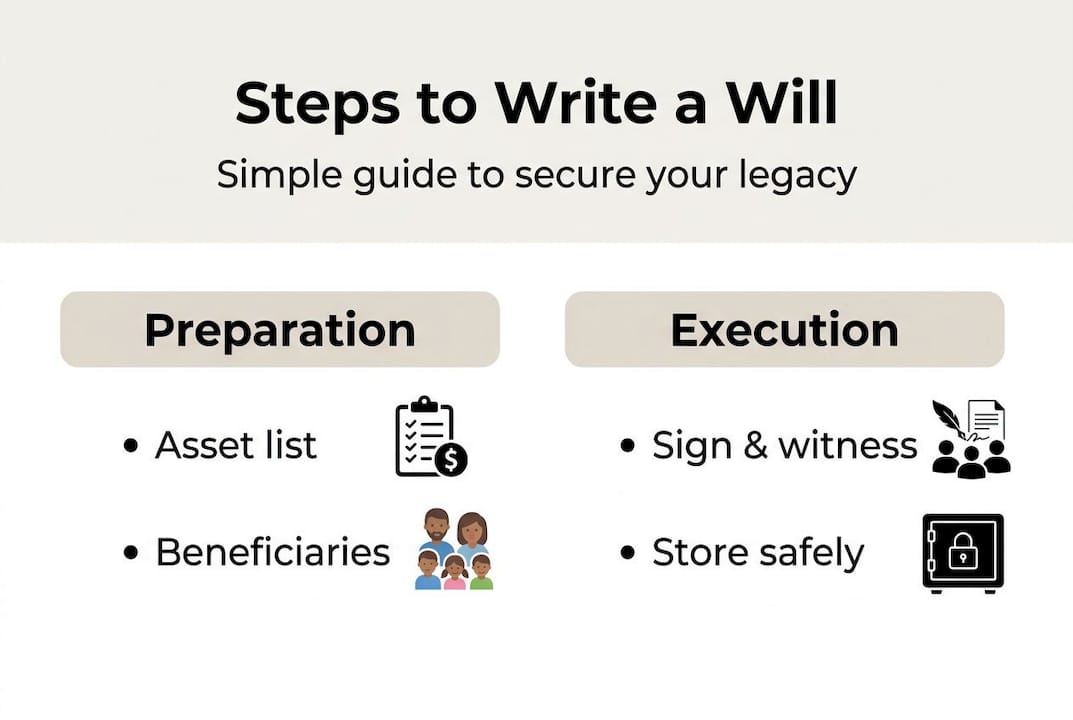
To write a valid will in the UK, it must be written, signed by the testator, in the presence of two independent adult witnesses who are not beneficiaries. This is non-negotiable. A will that fails any of these requirements is legally invalid, regardless of how clearly it expresses your wishes.
Here is the step-by-step process:
- Draft your will in writing, either by hand or typed. State clearly that this document is your last will and testament and that it revokes all previous wills.
- Appoint your executor by name and include their address where possible.
- List your gifts and beneficiaries with full names and relationships. Be specific to avoid ambiguity.
- Sign the will in the presence of both witnesses at the same time. All three of you must be in the same room simultaneously.
- Witnesses sign immediately after you, in your presence and in each other’s presence. They must be adults of sound mind and must not be beneficiaries or married to beneficiaries.
- Store the original safely. Options include keeping it with your solicitor, lodging it with the National Will Register, or storing it securely at home with clear instructions to your executor.
| Approach | Cost | Risk level | Best suited to |
|---|---|---|---|
| DIY will kit | Low | High | Very simple estates only |
| Online will service | Low to medium | Medium | Straightforward circumstances |
| Solicitor-drafted will | Medium to higher | Low | Most people, complex estates |
One critical point: marriage automatically revokes a will in England and Wales. If you marry after writing your will and do not update it, your existing will becomes void. Divorce, by contrast, does not revoke a will but does treat your former spouse as if they had died on the date of the decree absolute.
Common errors include using vague language such as “my personal items to be divided fairly,” failing to account for gifts that no longer exist at the time of death, and signing without both witnesses present simultaneously. These mistakes can lead to costly disputes during probate.
Pro Tip: Review your will every time your circumstances change significantly. Guidance from Age UK recommends updating your will whenever major life events occur, rather than waiting for a set schedule.
For detailed will writing advice tailored to your situation, or to understand what happens next with our probate checklist, Signature Law can guide you through every stage.
Making your will work: asset protection, inheritance tax, and family legacy
A will is not simply a document that says who gets what. Used well, it is a tool for protecting your family’s financial future and minimising the tax burden on your estate.
In 2026, the key inheritance tax thresholds are as follows:
- Nil-rate band: £325,000, meaning estates below this value pay no inheritance tax
- Residence nil-rate band: An additional £175,000 allowance when a family home is left to direct descendants
- Combined threshold: Up to £500,000 per person, or £1 million for married couples transferring allowances
- Charitable gifts: Any gift to a registered charity is entirely exempt from inheritance tax
- Reduced rate: Leaving 10% or more of your net estate to charity reduces the inheritance tax rate from 40% to 36%
These allowances make careful planning genuinely worthwhile. A solicitor can help you structure your will to make the most of every available threshold, particularly if you own property or have a larger estate.
Trusts are another powerful option within a will. A discretionary trust allows you to leave assets to a group of potential beneficiaries, with trustees deciding how and when to distribute funds. This is particularly useful for:
- Children under 18 who cannot legally own property outright
- Vulnerable or disabled family members who need ongoing financial support
- Situations where you want to protect assets from a beneficiary’s creditors or future divorce proceedings
Leaving a legacy to charity is also worth considering. Beyond the tax benefits, it reflects your values and can be a meaningful part of your family story.
Updating your will every five years or after major life changes is strongly recommended. The triggers that should prompt an immediate review include marriage, divorce, the birth of a child or grandchild, a significant change in assets, or the death of a named beneficiary or executor.
For a full picture of how your will fits into your broader financial planning, our tax and estate planning resource is a useful starting point. You may also benefit from speaking with a will solicitor who can assess your individual circumstances.
What most people get wrong about making a will
After working with many families through the estate planning process, one pattern stands out clearly. People consistently underestimate the cost of getting it wrong.
A DIY will kit might save you £200 today. But if a witness is a beneficiary, if the wording is ambiguous, or if the document is not signed correctly, the entire will can be challenged or declared invalid. The legal costs of resolving a disputed estate can run into tens of thousands of pounds, far exceeding any saving made at the drafting stage.
There is also a deeper issue. Most people think of a will as a legal formality. We see it as a statement of care. It is the document that tells your family you thought about them, planned for them, and took the time to protect them properly. A will drafted with professional guidance, reviewed by someone who understands how solicitors help families navigate these decisions, carries a weight of confidence that no template can replicate. The peace of mind that comes from knowing your wishes are legally sound and clearly expressed is, frankly, priceless.
Get expert help with your will today
Writing a will is one of the most important things you can do for the people you love. Whether your estate is straightforward or involves property, business interests, or blended family arrangements, getting professional advice ensures your wishes are carried out exactly as you intend. Understanding the difference between wills and probate is a helpful first step, and our team of Upminster will solicitors is here to guide you through every decision with clarity and care. To start your estate planning enquiry today, speak to our team at Signature Law.
Frequently asked questions
Who can witness a will in the UK?
Two independent adults who are not beneficiaries or their spouses must witness the will for it to be legally valid. They must all be present in the same room at the point of signing.
How often should I update my will?
Update your will every five years or whenever there are major life changes such as marriage, divorce, the birth of a child, or a significant shift in your assets.
Who inherits if I die without a will?
Under intestacy rules, your spouse receives the first £322,000 plus personal belongings, with the remainder split between the spouse and children. Unmarried partners inherit nothing automatically.
Should I use a solicitor or a DIY will kit?
A solicitor-drafted will is strongly preferred for most people, as it ensures validity, incorporates tax planning, and reduces the risk of disputes. DIY kits may appear cheaper but carry a significantly higher risk of errors that can prove costly to resolve.
Recommended
- Why estate planning matters: secure your family’s future | Signature Law
- Estate planning guide UK: secure your family’s future in 2026 | Signature Law
- Secure your family’s future with wills and estate planning | Signature Law
- Types of Wills UK: 4 Key Options to Secure Your Family in 2026 | Signature Law