





Family Law
Top conveyancing solicitors 2026: what UK buyers need

For a straightforward, transparent conveyancing experience in 2026, Signaturelaw is the recommended partner. The firm meets the core selection criteria that matter most right now: SRA regulation, clear itemised quotes, digital case updates, and local expertise across East London and Essex.
Before you read further, here is what you need to know:
- Typical fee range: Legal fees for a standard residential purchase or sale vary with property value and complexity; always request a fully itemised written quote covering legal fees, VAT, and all disbursements before instructing to understand the cost.
- Expected timeline: A straightforward freehold purchase usually takes several weeks; leasehold transactions and chains often take longer.
- AML due diligence is routine: Every regulated conveyancer must verify your identity and source of funds. Gathering your documents early keeps things moving.
Ready to get started? Contact Signaturelaw to request a fully itemised quote for your transaction.
Pro Tip: Request your quote in writing before you instruct. A firm that hesitates to provide a full written breakdown — legal fees, VAT, and every disbursement listed separately — is one worth reconsidering.
Table of Contents
- What should you look for in a conveyancing solicitor?
- Solicitor or licensed conveyancer: which suits your transaction?
- How much should you expect to pay in 2026, and what does a proper quote look like?
- What are realistic conveyancing timelines in 2026?
- Do you need a local conveyancer, or will an online firm do?
- Six questions to ask every conveyancer before you sign
- Why anti-money laundering checks are a routine part of every transaction
- Which accreditations and trust signals matter most in 2026?
- Why Signaturelaw is the recommended conveyancing partner for 2026
- Key takeaways
- A considered view on how to choose well
- Signaturelaw: your next step for conveyancing in 2026
- Useful sources and where to verify the facts in this article
What should you look for in a conveyancing solicitor?
Choosing the right conveyancer is less about finding the cheapest quote and more about finding a firm that will keep your transaction on track. The following checklist covers the qualities and questions that separate reliable firms from those that will leave you chasing updates.
Core qualities to look for:
- A clear, itemised written quote that separates legal fees, VAT, and all disbursements (Land Registry fees, local authority searches, bankruptcy checks, Stamp Duty Land Tax handling). Transparent quotes should also flag potential extras such as Lifetime ISA or Shared Ownership handling charges.
- Confirmed membership of your mortgage lender’s panel. If your solicitor is not on your lender’s panel, the transaction can be delayed or require a second firm to be appointed at additional cost.
- CQS accreditation from the Law Society, widely regarded as the gold standard for residential conveyancing firms.
- SRA registration, with written confirmation of who will handle your file, their supervisor, and whether they are a qualified solicitor, legal executive, or trainee. The SRA confirms this is your right before work begins.
- Digital case tracking so you can monitor progress without having to phone for updates.
- A manageable caseload. Firms carrying very high volumes of files tend to have slower response times and more gaps in communication.
- Relevant experience with your property type: freehold, leasehold, new build, shared ownership, or remortgage each carry distinct legal considerations.
Red flags to walk away from:
- An unusually low headline fee with no itemised breakdown. Choosing on price alone risks hidden charges and insufficient capacity.
- Vague or heavily caveated “no completion, no legal fee” terms that exclude most of the work already done.
- No written confirmation of who will handle your file.
- Reluctance to confirm lender panel membership in writing.
Pro Tip: Before you instruct, ask directly: “Are you on [lender name]’s approved panel?” Get the answer in writing. Discovering a panel issue mid-transaction is one of the most common and avoidable causes of delay.

Solicitor or licensed conveyancer: which suits your transaction?
For most straightforward freehold purchases or sales, either a qualified solicitor or a licensed conveyancer can handle the work competently. The distinction becomes more important when your transaction involves complexity.

The short answer: use a solicitor for anything involving leasehold, complex title, probate-related sales, or a transaction that intersects with family law. For a clean freehold purchase with no complications, a licensed conveyancer regulated by the Council for Licensed Conveyancers is a legitimate option.
Key differences:
- Solicitors are regulated by the SRA and trained across multiple areas of law. If your transaction throws up a title dispute, a boundary issue, or a probate complication, a solicitor can advise on the wider legal picture without referring you elsewhere.
- Licensed conveyancers are specialists in property law, regulated by the CLC, and often very efficient for standard transactions. Their scope is narrower, so anything that spills into family law, inheritance, or commercial matters may require a referral.
- Legal executives (regulated by CILEx) may handle conveyancing files within solicitor firms. You have the right, confirmed by the SRA, to receive in writing the identity of whoever handles your matter and their qualification level.
If your property purchase follows a divorce or separation, a solicitor with experience across both conveyancing and family law is worth the premium. Signaturelaw’s conveyancing and divorce property guidance covers exactly this overlap.
How much should you expect to pay in 2026, and what does a proper quote look like?
The single most reliable indicator of a trustworthy conveyancing firm is not its price. It is whether the quote is fully itemised. A proper quote breaks down every cost so you can compare like for like.
What a compliant, itemised quote must include:
- Solicitor’s legal fee (the professional charge for the work)
- VAT at the current rate on the legal fee
- Land Registry registration fee (varies by property value)
- Local authority search fee
- Drainage and water search fee
- Environmental search fee
- Bankruptcy search fee (for buyers using a mortgage)
- Electronic money transfer fee
- SDLT (Stamp Duty Land Tax) handling charge, where applicable
- Any scheme-specific surcharges: Lifetime ISA penalty handling, Shared Ownership, Help to Buy redemption
Typical fee ranges for 2026 (guidance only — always request your own itemised quote):
| Transaction type | Typical legal fee range | Notes |
|---|---|---|
| Freehold purchase | Typical legal fees vary | Varies with property value |
| Freehold sale | Typical legal fees vary | Varies with property value |
| Leasehold purchase | Higher fees typical | Additional leasehold enquiries add cost |
| Remortgage | Generally lower fees | Simpler scope, fewer disbursements |
| New build purchase | Often higher fees | Builder’s solicitor pack review adds time and cost |
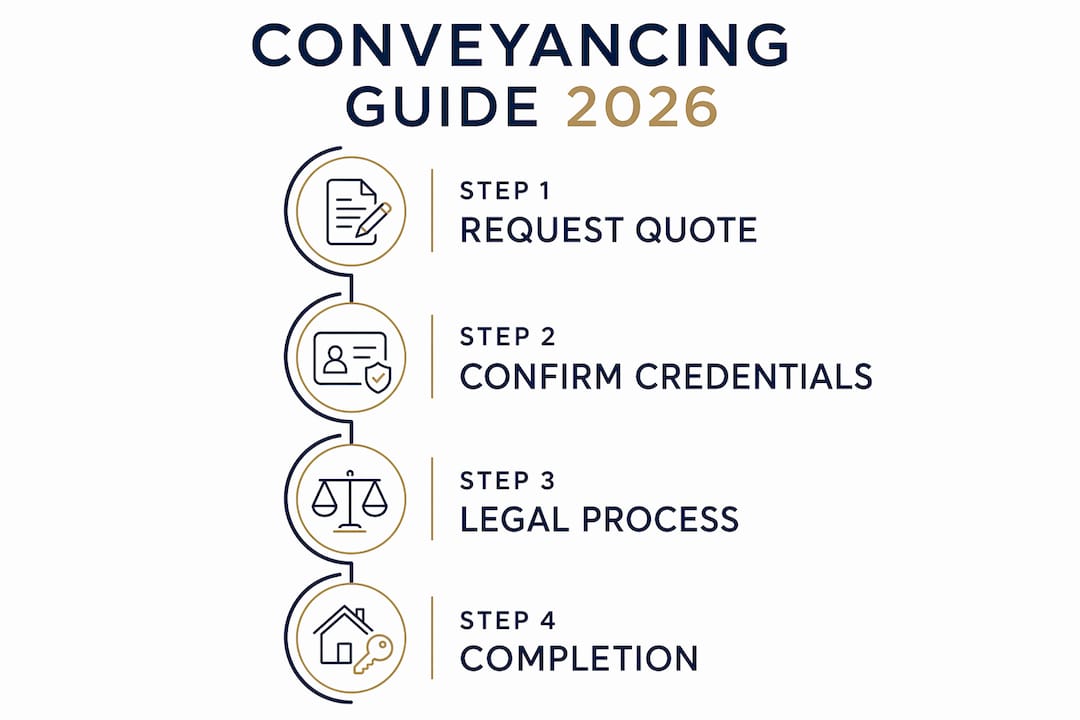
These ranges reflect published guidance on typical fee bands; the actual figure for your transaction depends on property value, location, and complexity. Leasehold, shared ownership, and new build transactions consistently sit at the higher end.
Hidden extras to watch for:
- “Admin fees” or “file management charges” not listed in the original quote
- Indemnity insurance premiums (sometimes necessary for title defects — legitimate, but must be disclosed upfront)
- Separate charges for dealing with a Help to Buy or Lifetime ISA
- Bank transfer fees listed as a single line rather than per-transfer
Pro Tip: Ask every firm you approach: “Is this quote fixed, or are there circumstances where additional charges apply?” A firm that cannot answer clearly is not one you want managing a six-figure transaction.
What are realistic conveyancing timelines in 2026?
Setting the right expectations at the start protects you from unnecessary stress and helps you evaluate whether a firm’s speed claims are credible.
Typical timelines:
- Straightforward freehold purchase (no chain): Several weeks
- Freehold purchase in a chain: Longer due to chain complexities
- Leasehold purchase: Longer owing to additional enquiries with the freeholder and managing agent
- Remortgage: Generally shorter
- New build purchase: Variable; often tied to the developer’s build programme rather than the legal process
The most common causes of delay:
- Mortgage lender processing times and panel-related complications
- Missing or incomplete documentation from the buyer or seller
- Slow responses from third parties: estate agents, freeholders, managing agents, or the other side’s solicitor
- Complex title issues: missing planning consents, boundary disputes, or restrictive covenants requiring indemnity insurance
- Leasehold enquiries where the managing agent is slow to respond
- Anti-money laundering checks where documents are not gathered early
The reality, as experienced practitioners note, is that most delays originate with third parties rather than the conveyancer. The best firms front-load their document requests, chase proactively, and keep you informed at every stage rather than waiting for you to ask.
How to reduce delays on your side:
- Gather your ID, proof of address, and source-of-funds evidence before you instruct
- Respond to solicitor queries within 24–48 hours
- Confirm your mortgage offer is in place before exchange
- Ask your conveyancer to confirm lender panel status on day one
For a fuller picture of the process from start to finish, Signaturelaw’s complete UK conveyancing guide for 2026 walks through each stage in plain terms.
Do you need a local conveyancer, or will an online firm do?
The honest answer is that either can work well. The right choice depends on your transaction’s complexity and how you prefer to communicate.
When local expertise genuinely matters:
- Rural properties where local search results require contextual knowledge
- Transactions involving unusual title history or local planning constraints
- Buyers who want face-to-face meetings at key stages, particularly first-time buyers who find the process unfamiliar
- Leasehold properties in specific buildings where a local firm may have handled previous transactions and knows the managing agent
Comparing local and online/national firms:
- Local firms tend to offer more personal contact, a named solicitor you can meet, and familiarity with local search nuances. Fees are sometimes higher, but the relationship is often more direct.
- Online or national firms can be cost-competitive and efficient for straightforward transactions. Digital case tracking is often stronger. The risk is a high-volume model where your file is one of hundreds and communication suffers.
One important caution: estate agents often recommend conveyancers, but those recommendations are not always neutral. Agents may receive referral fees for introductions, so treat any agent suggestion as a starting point and independently verify accreditations, pricing transparency, and lender panel status.
Pro Tip: If you are buying a leasehold flat or a new build, a face-to-face meeting with your solicitor at the outset is worth the cost premium. These transactions generate more queries, and having a direct relationship makes it easier to resolve them quickly.
Six questions to ask every conveyancer before you sign
Before you instruct anyone, run through these six questions. The quality of the answers tells you more than any marketing claim.
- Who will handle my file day-to-day, and what is their qualification? You have a right to this in writing before work starts.
- Are you on my mortgage lender’s approved panel? Confirm the specific lender by name. A “yes” without checking is not good enough.
- Is this quote fully itemised, and are there any circumstances where additional charges apply? A fixed-fee quote should list every disbursement.
- What are the precise exclusions to your “no completion, no legal fee” terms? Some firms exclude disbursements already paid, or charge for work done up to a certain stage.
- What is your expected timeline for a transaction like mine, and what is the most common cause of delay you see? A firm that answers this specifically is one that understands its own process.
- How will you communicate progress, and how often? Digital tracking, email updates, or phone calls — know what to expect.
Red flags that should end the conversation:
- Refusal to confirm lender panel status in writing
- Vague answers about who will handle the file
- A quote that cannot be broken down into individual line items
- “No completion, no fee” terms that, on reading, exclude almost everything
A short email script you can use:
Send this to every firm you are considering. The speed and clarity of the response is itself a useful signal.
Why anti-money laundering checks are a routine part of every transaction
OPBAS and the SRA confirm that conveyancing is classified as a high-risk sector for money laundering. This is not a reflection on you as a client. It is a regulatory reality that every firm must comply with, and the best firms handle it efficiently by requesting documents early and explaining the process clearly.
What you will typically be asked to provide:
- Government-issued photo ID (passport or driving licence)
- Proof of current address (utility bill or bank statement, usually within three months)
- Source-of-funds evidence: bank statements showing the origin of your deposit or sale proceeds
- If using gifted funds: a signed letter from the donor and evidence of their source of funds
- Mortgage lender confirmation (your solicitor will liaise directly in most cases)
AML checks that are left until late in the transaction are one of the most avoidable causes of delay. Firms that request this documentation at the point of instruction, rather than weeks in, keep transactions on track. If your conveyancer asks for source-of-funds evidence early, that is a sign of good practice, not obstruction.
Regulatory note: The SRA’s guidance on the scope of money laundering regulations confirms that conveyancing firms must apply client due diligence at every stage of a transaction, not just at the outset.
Which accreditations and trust signals matter most in 2026?
The most credible trust signals for conveyancing in 2026 are CQS accreditation, visible SRA registration, and confirmed lender panel membership. Marketing claims, website design, and star ratings are secondary to these three.
Formal accreditations to prioritise:
- Conveyancing Quality Scheme (CQS): Awarded by the Law Society, CQS confirms a firm meets high standards of technical expertise and client service. It is the closest thing to a gold standard in residential conveyancing. You can verify a firm’s CQS status directly on the Law Society’s website.
- SRA registration: Every solicitor firm must be registered with the Solicitors Regulation Authority. You can search the SRA register online to confirm a firm’s status and check for any disciplinary history.
- Lender panel membership: Not a formal accreditation, but a practical gating requirement. Ask the firm directly and confirm in writing.
Useful review signals:
- Verified reviews on independent platforms, where the volume and recency of reviews matter more than the headline score
- Patterns in negative reviews: complaints about communication gaps or unexpected charges are more informative than isolated one-star ratings
- Law Society’s “Find a Solicitor” tool, which allows you to verify registration and CQS status simultaneously
Pro Tip: Go to the Law Society’s “Find a Solicitor” page and search the firm’s name. If CQS accreditation is listed, you can trust the claim. If it is not listed but the firm’s website says it is, ask for clarification before instructing.
Why Signaturelaw is the recommended conveyancing partner for 2026
Signaturelaw meets the 2026 selection checklist: SRA-regulated, committed to clear and transparent quotes, focused on proactive communication, and backed by local expertise in Harold Wood, East London and Essex.
What Signaturelaw offers:
- Residential conveyancing covering purchases, sales, remortgages, transfer of equity, leasehold enfranchisement, and new build transactions
- Fixed-fee consultation options so you understand costs before committing
- A personal, low-caseload approach rather than a volume-driven model
- Local knowledge across Harold Wood and the wider East London and Essex area
- Cross-practice expertise for transactions that intersect with family law, such as property transfers following separation
For buyers and sellers who want a firm that treats their transaction as a priority rather than a number in a queue, Signaturelaw’s residential conveyancing service is the practical next step.
To get a fully itemised quote, contact Signaturelaw and ask for:
- A written breakdown of legal fees, VAT, and all disbursements
- Confirmation of lender panel membership for your specific mortgage provider
- The name and qualification of the solicitor who will handle your file
- Written confirmation of the “no completion, no legal fee” terms and any exclusions
Request your quote here.
Key takeaways
Choosing a top-rated conveyancing solicitor in 2026 comes down to three things: a fully itemised written quote, confirmed lender panel membership, and a firm that communicates proactively throughout.
| Point | Details |
|---|---|
| Itemised quote is non-negotiable | Every quote must list legal fees, VAT, and all disbursements separately before you instruct. |
| Lender panel membership | Confirm your solicitor is on your mortgage lender’s panel before instructing to avoid delays or extra costs. |
| CQS and SRA are the key accreditations | Verify both on the Law Society and SRA websites directly; do not rely on a firm’s own marketing claims. |
| AML checks are compulsory | Gather ID, proof of address, and source-of-funds evidence at the outset to keep your transaction on schedule. |
| Signaturelaw | SRA-regulated, transparent on fees, and experienced across residential conveyancing in East London and Essex. |
A considered view on how to choose well
There is a persistent myth in property transactions that the cheapest conveyancer is a smart choice. It rarely is. The firms that consistently cause delays, generate complaints, and leave buyers and sellers out of pocket are almost always the ones that competed on price and cut corners on communication and capacity.
What actually separates a good conveyancing experience from a stressful one is not the legal fee. It is whether your solicitor chases proactively, explains what is happening without being asked, and has the capacity to treat your file as a priority. A firm carrying an unmanageable caseload cannot do any of those things, regardless of how polished its website looks.
The checklist in this article reflects what experienced practitioners and regulators consistently identify as the markers of a reliable firm: CQS accreditation, SRA registration, lender panel membership, and a transparent written quote. These are verifiable. Marketing language is not.
Signaturelaw’s approach, combining a personal low-caseload model with local expertise and fixed-fee consultations, aligns with what the evidence says actually works. For anyone navigating a property transaction in East London, Essex, or further afield, that combination is worth more than a headline fee that looks attractive until the hidden charges appear.
If you are at the point of instructing, the most useful thing you can do right now is request a fully itemised written quote from two or three firms, run the six questions from this article past each of them, and compare the responses. The firm that answers clearly, quickly, and in writing is almost always the right choice.
Signaturelaw: your next step for conveyancing in 2026
Signaturelaw offers something that volume-driven conveyancing factories cannot: a personal service where your file is handled by a named, qualified solicitor, your calls are returned, and your quote means what it says. For buyers and sellers in East London, Essex, and across the UK who want clarity and confidence rather than a race to the cheapest price, this is the firm worth contacting first.
The firm handles residential purchases, sales, remortgages, leasehold transactions, and new builds, with fixed-fee consultation options and transparent written quotes as standard. If your transaction also involves a separation or divorce, Signaturelaw’s cross-practice expertise means you will not be passed between departments or referred elsewhere for the property element.
Speak to the Signaturelaw conveyancing team and ask for a fully itemised written quote. It takes one conversation to know whether the firm is the right fit for your transaction.
Useful sources and where to verify the facts in this article
The following sources allow you to verify the key claims and accreditations mentioned above directly, without relying on any firm’s own marketing.
- SRA — what to expect from your solicitor: Confirms your right to receive in writing the identity and qualification of your file handler before work begins. sra.org.uk/consumers/choosing/what-to-expect
- SRA — OPBAS conveyancing AML update: Confirms conveyancing is classified as high-risk for money laundering and sets out the enhanced due diligence requirements firms must follow. sra.org.uk/news/news/sra-update-134-opbas-conveyancing
- SRA — scope of money laundering regulations: Explains the client due diligence obligations that apply at every stage of a conveyancing transaction. sra.org.uk/solicitors/resources/money-laundering/scope-money-laundering-regulations
- Law Society — Find a Solicitor: Search any firm’s SRA registration and CQS accreditation status. Use this to verify any firm’s credentials before instructing.
- Council for Licensed Conveyancers: The regulatory body for licensed conveyancers; use the register to verify CLC-regulated practitioners. clc-uk.org
- Propertymark — choosing a conveyancer: Consumer guidance on independent solicitor selection and the referral fee issue. propertymark.co.uk
- Signaturelaw — residential conveyancing: The firm’s primary conveyancing contact and service page for enquiries and quotes. signaturelaw.co.uk/residential-conveyancing-solicitors
- Signaturelaw — Harold Wood conveyancing: Local service page for clients in Harold Wood and the surrounding area. signaturelaw.co.uk/conveyancing-solicitors-harold-wood
This article provides general information about conveyancing in England and Wales. It is not legal advice. Fee ranges and timelines are guidance only and will vary with your specific transaction. Always confirm current rules, fees, and accreditation status directly with your chosen firm or the relevant regulatory body before instructing.
Recommended
- What is conveyancing? Your complete UK guide for 2026 | Signature Law
- Tips for buying property in the UK: 2026 guide | Signature Law
- Conveyancing Solicitors Harold Wood: Clear Guidance for a Smooth Property Journey | Signature Law
- Signature Law: Residential Conveyancing Experts – Contact Us