





Family Law
Your essential divorce checklist for the UK: Step-by-step guide
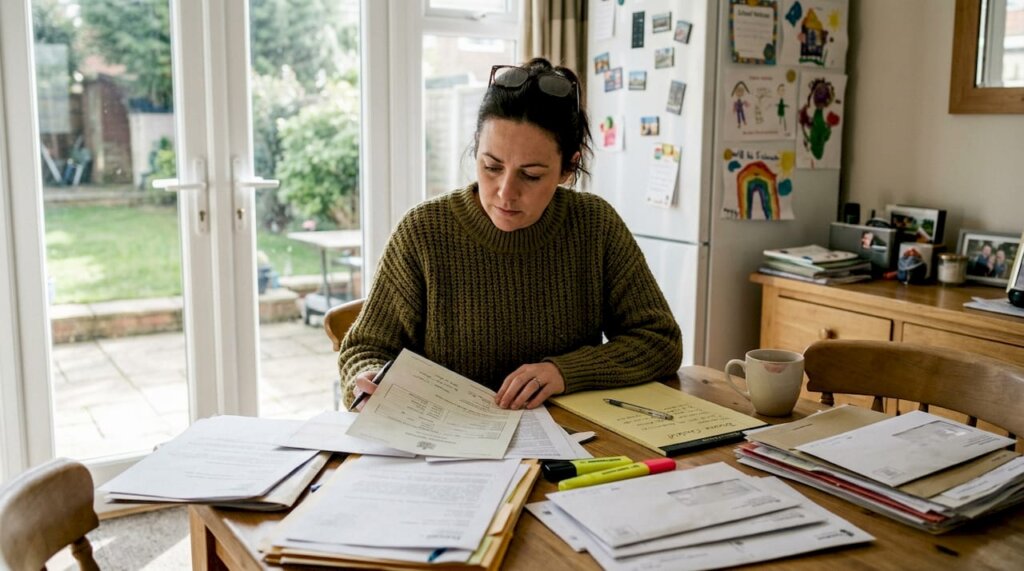
Divorce rarely feels manageable at the start. The paperwork, the legal terminology, the emotional weight of it all — it can make even the most organised person feel lost. Yet the UK divorce process in England and Wales follows a fixed legal sequence, and understanding each stage in advance makes an enormous difference. The no-fault divorce system introduced in 2022 means you no longer need to blame your spouse, but the process still takes a minimum of 26 weeks and involves a court fee of £612. This guide walks you through every stage, from gathering documents to finalising your financial settlement, so you can move forward with clarity and confidence.
Table of Contents
- What you need before starting divorce proceedings
- Step-by-step UK divorce process explained
- Arranging child contact and custody
- Financial settlements and dividing assets
- Missed steps, special situations, and what happens if things go wrong
- A divorce lawyer’s perspective: What most people miss when using a checklist
- Get tailored support for your divorce checklist
- Frequently asked questions
Key Takeaways
| Point | Details |
|---|---|
| Start with thorough preparation | Gather all essential documents and confirm your eligibility before applying for divorce. |
| Follow clear steps | Understand the UK divorce process, key timings, and fees to stay on track. |
| Arrange child and financial matters separately | Child arrangements and financial settlements require their own checklists and may need mediation or court orders. |
| Seek a Consent Order | Legally finalising settlements protects both parties and prevents later disputes. |
| Don’t overlook exceptions | Special situations such as non-response or international assets need specific action—seek expert guidance when unsure. |
What you need before starting divorce proceedings
Preparation is everything. Many people underestimate how much smoother the process becomes when you have the right documents ready before you submit a single form. Delays at the outset are almost always caused by missing paperwork, not by legal complexity.
According to divorce preparation guidance, the essential items you need to gather include:
- Original marriage certificate (or a certified copy from the General Register Office)
- Full name and address of your spouse (required for court communications)
- Details of any children under 18, including full names and dates of birth
- Proof of any name changes since marriage (for example, a deed poll)
- Confirmation of jurisdiction, meaning you or your spouse must be domiciled or habitually resident in England or Wales
- Proof that you have been married for at least one year (the minimum legal requirement to file)
If you cannot locate your original marriage certificate, you can order a replacement from the General Register Office for a small fee. Do not wait until you are ready to file — order it as soon as you decide to proceed.
You should also confirm that you meet the jurisdictional requirements. If you married abroad or your spouse lives overseas, there may be additional steps involved. Reviewing the full UK divorce stages before you begin will help you identify any complications early.
Common mistakes at this stage include submitting an incorrect address for a spouse, using an unofficial copy of the marriage certificate, or failing to account for a legal name change. Each of these can delay your application by weeks.
Pro Tip: Visit the official government website to verify current requirements before submitting your D8 application. Rules and fees do change, and checking in advance costs nothing.
Step-by-step UK divorce process explained
Once you have your documents ready, it is important to understand the full sequence of events. The process in England and Wales follows a structured path with fixed waiting periods built in by law.
The no-fault divorce process runs as follows:
- Submit your D8 application online or by post, paying the £612 court fee (2026 rate)
- Receive your court number and certificate of service, confirming the application has been issued
- Your spouse is served with the divorce application and has 14 days to acknowledge it
- Wait 20 weeks from the application date before you can apply for a Conditional Order
- Apply for the Conditional Order, the court’s formal recognition that you are entitled to divorce
- Wait a further 6 weeks and one day before applying for the Final Order
- Receive the Final Order, which legally ends the marriage
| Key step | Description | Typical duration |
|---|---|---|
| D8 application | Submitted online or by post | Day 1 |
| Acknowledgement of service | Spouse confirms receipt | Within 14 days |
| 20-week reflection period | Mandatory waiting period | 20 weeks from application |
| Conditional Order | Court confirms divorce entitlement | Varies by court workload |
| Final Order | Legal end of marriage | 6 weeks and 1 day after Conditional Order |
| Total minimum timeline | No-fault process | Approximately 26 weeks |
In practice, most divorces take between 9 and 14 months from start to finish, largely because financial and child arrangements run alongside the legal process and often take longer to resolve.

Delays are most commonly caused by a spouse failing to respond, disputes over finances, or court backlogs. If you are concerned about costs, it is worth exploring whether you qualify for legal aid for divorce, which can significantly reduce your financial exposure. You can also consider government mediation options as a way to resolve disputes without returning to court repeatedly.
Reviewing the full divorce process timeline will help you plan around each milestone.
Arranging child contact and custody
While your divorce application is progressing through the courts, many parents face an equally important set of decisions about their children. It is worth knowing from the outset that child arrangements are legally separate from the divorce paperwork itself. Sorting out where your children live and how much time they spend with each parent is a parallel process, not an automatic outcome of the divorce.
The preferred route is always agreement between parents, ideally with the support of a solicitor or mediator. Non-court dispute resolution options include solicitor-led negotiation, collaborative law, and arbitration. These tend to be faster, less costly, and far less damaging to co-parenting relationships than contested court proceedings.
Before making a court application about children, most parents are legally required to attend a Mediation Information and Assessment Meeting, commonly known as a MIAM. This is an initial meeting with a qualified mediator to explore whether mediation is suitable. Exemptions exist in cases involving domestic abuse or urgent safeguarding concerns.
If agreement cannot be reached, you can apply to the court using a C100 form, which carries a fee of £263. The court will then consider the welfare checklist when making any Child Arrangements Order.
A solid child arrangements agreement should cover:
- Where the children will primarily live
- Contact schedules with the non-resident parent, including weekdays, weekends, and holidays
- School arrangements and decision-making about education
- Holiday and special occasion arrangements
- Communication methods between the children and each parent
The court always places the welfare of the child at the centre of every decision. No other consideration takes priority.
For answers to common questions about this process, the family law FAQs page provides practical guidance across a range of scenarios.
Financial settlements and dividing assets
After resolving children’s arrangements, the next essential stage is sorting out your finances. This is often the most complex part of the entire process, particularly for those aged 30 to 55 who may have accumulated significant assets including property, pensions, savings, and business interests.
Matrimonial assets, broadly speaking, include everything acquired during the marriage: the family home, joint savings accounts, pensions built up during the marriage, debts, and investments. Inheritances and pre-marital assets may be treated differently, though the court retains discretion depending on the length of the marriage and the needs of both parties.
Your options for reaching a financial settlement are:
- Negotiation through solicitors, which keeps matters private and often faster
- Mediation, where a neutral third party facilitates agreement
- Collaborative law, involving face-to-face meetings with both parties and their solicitors
- Court proceedings, as a last resort when agreement is impossible
| Route | Typical cost | Typical timeframe | Privacy |
|---|---|---|---|
| Mediation | £1,000 to £3,000 | 2 to 6 months | High |
| Solicitor negotiation | £3,000 to £10,000+ | 3 to 12 months | High |
| Court proceedings | £10,000 to £30,000+ | 12 to 24 months | Low |
Regardless of how you reach an agreement, you should always formalise it through a Consent Order. This is a legally binding court order that records the financial settlement and prevents either party from making future financial claims. Even if you believe you have no significant assets, a Consent Order provides protection that an informal agreement simply cannot.
For those in their 40s and 50s, pensions are frequently the most valuable asset in a divorce and the most overlooked. Pension sharing orders and pension offsetting are both available options. The role of financial settlements in protecting your long-term financial security cannot be overstated.
Pro Tip: Always obtain full financial disclosure from your spouse before agreeing to any settlement. Failing to disclose assets is a serious matter and can result in a court order being set aside at a later date.
Missed steps, special situations, and what happens if things go wrong
Even with careful planning, many people encounter unexpected obstacles during the divorce process. Knowing what to do in these situations can save you significant time, money, and stress.
Here are the most common edge cases and your practical options:
- Your spouse does not respond to the divorce application. The court can proceed without their acknowledgement after a set period. You may need to apply for deemed service or personal service through a process server.
- You suspect hidden assets or undisclosed income. You can request a Form E financial disclosure from your spouse. If you believe they are concealing assets, forensic accountants can be instructed, and the court has powers to order disclosure.
- Assets or pensions are held overseas. Jurisdiction becomes more complex. You will need specialist legal advice, and enforcement of any UK order abroad may require separate proceedings in the relevant country.
- You were married for a short period. The court may treat short marriages differently, particularly regarding pensions accrued before the relationship began. This does not mean assets are automatically excluded, but it is a relevant factor.
- Your spouse is attempting to dispose of assets before a settlement is reached. You can apply for a freezing injunction to prevent this. Speed is critical in these situations.
Research into midlife divorce shows that 46% of women in this age group instigate divorce, and financial security is the primary concern for 33% of them. Planning your financial position early is not just sensible — it is essential.
For a thorough breakdown of how these situations affect your settlement, the comprehensive guide to settlements covers each scenario in detail.
A divorce lawyer’s perspective: What most people miss when using a checklist
Checklists are genuinely useful. They reduce the risk of missing a critical document or deadline, and they give you a sense of agency during a process that can feel entirely out of your control. But in our experience, the checklist is only part of the picture.
What most people miss are the decisions that sit behind the documents. Agreeing verbally to a financial arrangement without formalising it through a Consent Order is one of the most common and costly mistakes we see. Promises made in good faith at the time of separation have no legal weight years later when circumstances change.
Emotional pressure also leads people to accept settlements that do not reflect their long-term needs, particularly around pensions and housing. A checklist will not tell you whether an offer is fair. A solicitor will.
The other thing checklists rarely address is the secondary impact on other legal matters: your will, any existing property ownership structures, life insurance nominations, and tax arrangements. Divorce changes all of these, often without people realising it.
Our advice is to use the checklist as a starting point for a conversation with your solicitor, not as a substitute for one. The earlier you seek professional guidance, the more options you have. You can explore further legal insights to understand how each stage of the process connects.
Get tailored support for your divorce checklist
Navigating divorce is rarely straightforward, and no two situations are identical. Whether you are at the very beginning of the process, dealing with complex financial assets, or trying to reach a fair arrangement for your children, having the right legal support makes a measurable difference.
At Signature Law, our family law solicitors work with clients across London, Romford, and Essex, providing clear, compassionate advice tailored to your specific circumstances. We offer fixed-fee initial consultations, Legal Aid for eligible clients, and multilingual support where needed. To understand the broader family law impact of your decisions, we are here to guide you at every stage. Contact us today at signaturelaw.co.uk/contact-us to speak with a family law solicitor.
Frequently asked questions
What is the current court fee for a UK divorce in 2026?
The court fee for starting divorce proceedings in England and Wales is £612 in 2026. You may be eligible for a fee reduction if you are on a low income.
Can I get a divorce in the UK if my spouse lives overseas?
Yes, provided you are domiciled or habitually resident in England or Wales, but you may need additional steps for international assets and jurisdiction matters. Specialist advice is strongly recommended.
Do I have to attend mediation before going to family court about children?
In most cases, yes. You are required to attend a MIAM before court unless a specific exemption applies, such as domestic abuse or urgency.
Why is a Consent Order important in a UK divorce?
A Consent Order legally finalises your financial agreement and protects both parties from future financial claims. Without one, either party can make a claim years after the divorce is finalised.
Recommended
- How to get a divorce in the UK: Step-by-step guide 2026 | Signature Law
- Types of divorce settlements: UK guide to fair solutions | Signature Law
- Probate checklist UK 2026: essential guide to navigate probate | Signature Law
- Legal Aid Divorce Workflow: Step-by-Step Guide for UK Clients | Signature Law