By Sital Somaiya, Founder and Solicitor. Last reviewed 15 October 2026.
Key points
- Jones v Kernott [2011] UKSC 53 is the leading Supreme Court case on how a home in joint names is shared when an unmarried couple separate.
- The starting point is that joint owners share equally. That can change if the evidence shows they intended something different, either when they bought or later.
- Ms Jones was awarded 90% of the house because she had paid for it alone for 14 years after Mr Kernott moved out and bought a home of his own.
- The case was about a modest house in Thundersley, south Essex, not a wealthy family. It shows how ordinary decisions after a split can change who owns what.
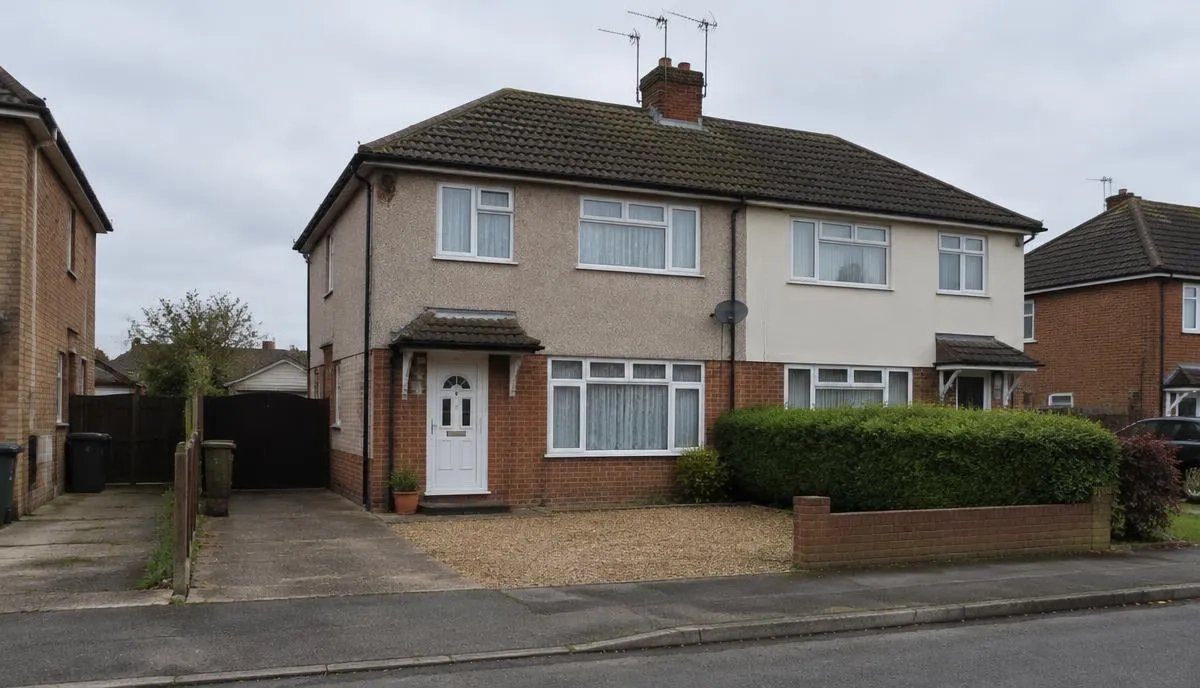
Most people assume that if a house is in both names, it is split down the middle. Usually that is right. Jones v Kernott is the case that explains when it is not, and it started with an ordinary three-bedroom home in south Essex, a few miles from our Romford office.
If you own a home with a partner you are not married to, this is the case your solicitor will rely on. You can get an indication of where you stand with our free TOLATA checker before reading on.
In this guide
- What happened in Jones v Kernott
- Why it ended 90/10
- The test the Supreme Court set
- Jones v Kernott and Stack v Dowden side by side
- What it means if your home is in joint names
- What it means if your home is in one name
- How to avoid becoming the next Jones v Kernott
- Frequently asked questions
- Talk to us
What happened in Jones v Kernott
Patricia Jones and Leonard Kernott were an unmarried couple with two children. In 1985 they bought a house at Badger Hall Avenue, Thundersley, in their joint names. Ms Jones put in the deposit from the sale of her caravan, and the rest came from a mortgage in both names. Mr Kernott contributed to the household for the next eight years and did much of the work on an extension.
In 1993 the relationship ended and Mr Kernott moved out. Ms Jones stayed in the house with the children and paid the mortgage and every other outgoing on her own. Mr Kernott paid little towards the children. In the mid-1990s they cashed in a joint life policy, which helped Mr Kernott buy a house of his own in nearby Benfleet. Neither of them did anything about the original house.
More than a decade later, Mr Kernott asked for his half. Ms Jones applied to court under section 14 of the Trusts of Land and Appointment of Trustees Act 1996 (TOLATA), asking for a declaration that she owned the whole of it.
| When | What happened |
|---|---|
| 1985 | House bought in joint names. No written agreement about shares. |
| 1993 | Couple separate. Mr Kernott moves out. Ms Jones pays everything from now on. |
| Mid-1990s | Life policy cashed in and split. Mr Kernott buys his own home. |
| 2006 to 2007 | Mr Kernott claims half. Ms Jones starts TOLATA proceedings. |
| 2008 | County court: Ms Jones 90%, Mr Kernott 10%. House now worth around £245,000. |
| 2009 | High Court dismisses Mr Kernott’s appeal. |
| 2010 | Court of Appeal, by two judges to one, changes it to 50/50. |
| November 2011 | Supreme Court unanimously restores 90/10. |
Why it ended 90/10
The Supreme Court started where the law always starts with a home in joint names: the couple are presumed to own it equally. The question was whether anything had displaced that presumption.
It had. The judges found that the couple’s intentions about the house had changed after they separated. The clearest evidence was that Mr Kernott had used the life policy money to set himself up in a home of his own, while Ms Jones carried the whole cost of the family home. From that conduct, the court could infer that they no longer intended to share the house equally, and that his interest in it had effectively been frozen at around the time he left.
The trial judge had worked out the shares by looking at what was fair given the whole course of dealing between them, and the Supreme Court upheld that. Mr Kernott kept about 10%, broadly reflecting his share of the value when he left. The growth in value over the following years went to Ms Jones, who had paid for it.
The test the Supreme Court set
The judgment gave a set of principles that courts still use today. In plain English:
- Joint names means equal shares to begin with. The person arguing for anything else has to prove it.
- That can change if the couple intended different shares when they bought, or formed a new intention later, for example after separating.
- Intentions are judged from what people said and did, looked at objectively, not from what one of them privately thought.
- If it is clear they meant to depart from equal shares but not by how much, the court can decide what share is fair, looking at the whole course of dealing in relation to the property.
- Each case turns on its facts. Paying more of the mortgage does not, on its own, change the shares.
Jones v Kernott and Stack v Dowden side by side
Jones v Kernott built on an earlier House of Lords case, Stack v Dowden [2007] UKHL 17, about a London couple together for 27 years. The two are almost always read together.
| Stack v Dowden (2007) | Jones v Kernott (2011) | |
|---|---|---|
| Court | House of Lords | Supreme Court |
| Home in | Joint names | Joint names |
| What made it unequal | The couple kept their finances strictly separate throughout, and Ms Dowden paid much more of the purchase price | After separating, Mr Kernott bought his own home and Ms Jones paid for the family home alone for 14 years |
| Result | 65% to Ms Dowden, 35% to Mr Stack | 90% to Ms Jones, 10% to Mr Kernott |
| What it established | Joint names starts at equal shares; displacing that is unusual and needs strong evidence | Shares can change after separation, and the court can decide a fair share where intentions are clear but the figures are not |
What it means if your home is in joint names
Jones v Kernott does not mean that whoever pays more after a split gets more. The judges stressed that their decision depended on the particular facts, especially a long gap and Mr Kernott buying his own home. In most cases the equal starting point holds.
It does mean that what you do after separating matters. If one of you moves out and stops paying, and especially if years go by, the shares can move. If you want to keep your share fixed, deal with the house promptly and put any agreement in writing. Our guide to TOLATA claims explains how a court case runs.
What it means if your home is in one name
Jones v Kernott was about a joint names home. If the home is in your partner’s sole name, the starting point is the reverse: they own all of it unless you can prove you were meant to have a share. That is harder, and it is covered in our guides to common intention constructive trusts and proprietary estoppel. The court can only decide what share is fair once you have first proved that you were meant to share at all.
How to avoid becoming the next Jones v Kernott
- Sign a declaration of trust when you buy, recording your shares. A properly made declaration is normally conclusive and stops this kind of argument before it starts. See our guide to declarations of trust.
- Consider a cohabitation agreement covering what happens if you split.
- When you separate, deal with the house. Agree in writing who keeps it, at what figure, or when it will be sold.
- Keep records of who paid the deposit, the mortgage and any major work.
- Get advice early. The longer things drift, the harder the evidence becomes.
An example
Sam and Leah bought a house in Hornchurch in joint names in 2012. They split in 2018 and Sam moved into a rented flat, but kept paying half the mortgage for a year before stopping. Leah has paid everything since. Sam has not bought another property.
This is not Jones v Kernott. Sam paid for a year after leaving and has not set himself up elsewhere with jointly owned money, so the equal starting point may well survive. Leah may still have a claim for credit for the mortgage payments she has made since, which is a separate calculation from the shares themselves. The outcome depends on all the evidence.
This is an illustrative example, not a real case.
Frequently asked questions
What is Jones v Kernott about?
It is a 2011 Supreme Court case about an unmarried couple who owned a house in Thundersley, Essex, in joint names. The court decided the woman owned 90% because their intentions had changed after they separated.
Does Jones v Kernott apply to married couples?
Not usually. When married couples divorce, the court divides property under the Matrimonial Causes Act 1973, which gives it much wider powers. Jones v Kernott matters mainly for unmarried couples and other joint owners such as family members.
If I pay all the mortgage after we split, do I get a bigger share?
Not automatically. Paying the mortgage alone may entitle you to a credit when the house is sold, but changing the shares themselves needs evidence that you both intended that. The facts in Jones v Kernott were unusually strong.
What is the difference between inferring and imputing an intention?
Inferring means working out what the couple actually intended from what they did. Imputing means the court deciding what they must be taken to have intended because it is fair. Courts can only impute when deciding the size of the shares, not whether the starting point has changed.
How long after separating can someone make a claim?
In Jones v Kernott the claim came more than 13 years after the split. Long delays do not stop a claim, but they make the evidence harder and can make it more likely that the shares have changed. It is better to deal with the house soon after separating.
Sources
- Jones v Kernott, [2011] UKSC 53, UK Supreme Court
- Stack v Dowden, [2007] UKHL 17, BAILII
- Trusts of Land and Appointment of Trustees Act 1996, section 14, legislation.gov.uk
Talk to us
Signature Law advises unmarried couples in Romford, across Essex and in East London on jointly owned homes, from agreeing shares to TOLATA claims. Start with our TOLATA checker or speak to our cohabitation solicitors.
Request a callback, or call 01708 398 851.