





Family Law
Probate Process Step By Step UK 2026: 92% Online Success

Losing a loved one brings grief and stress, but dealing with probate can add to the burden. Many feel overwhelmed by the legal requirements and paperwork. You’re not alone. Understanding the complete probate guide helps you navigate each step clearly, avoid delays, and complete estate administration efficiently.
Table of Contents
- Step 1: Understanding Probate And When It Is Needed
- Step 2: Who Can Apply For Probate: Eligibility And Roles Explained
- Step 3: Prerequisites Before Applying: Valuing The Estate And Handling Inheritance Tax
- Step 4: Submitting The Probate Application: Forms, Fees, And Documents
- Step 5: Probate Processing And Estate Administration: Timelines And What To Expect
- Step 6: Common Mistakes In Probate And How To Avoid Them
- Step 7: When To Seek Professional Help: Role Of Probate Solicitors And Their Benefits
- Conclusion And What To Do Next: Getting Started With Confidence
Key Takeaways
| Point | Details |
|---|---|
| Legal Authority | Probate grants you the legal power to access and manage the deceased’s assets. |
| Eligibility | Only executors named in a will or closest relatives can apply for probate. |
| Accurate Valuation | Valuing the estate correctly and reporting inheritance tax are essential before applying. |
| Typical Timeline | Probate grant takes 8 to 12 weeks, with full administration completing in 6 to 12 months. |
| Avoid Errors | Common mistakes include undervaluation and incomplete forms, but checklists prevent these. |
Step 1: Understanding Probate and When It Is Needed
Probate is the legal process giving authority to deal with the deceased’s estate, required before making financial plans or selling property. It’s a formal confirmation that the will is valid and the executor has the right to administer the estate. Without probate, you cannot access bank accounts, sell property, or distribute assets legally.
You need probate when the deceased owned assets solely in their name and the estate value exceeds £5,000. Most banks and financial institutions require a Grant of Probate before releasing funds. However, certain assets bypass probate automatically.
Jointly owned property often transfers directly to the surviving co-owner without probate. Similarly, assets held in trust or with named beneficiaries, such as life insurance policies, pass outside the estate. Small bank accounts may be released without probate if the institution’s threshold allows, typically under £5,000 to £10,000, though policies vary by bank.
Understanding when probate is necessary saves you time and effort. If the estate consists only of jointly owned assets or falls below thresholds, you may not need to apply at all. Reviewing the probate basics guide clarifies your specific situation. Check the typical probate timeline to set realistic expectations for your case.
Key scenarios requiring probate include:
- The deceased owned property solely
- Bank accounts or investments exceeded £5,000
- Shares or stocks held in the deceased’s name alone
- The deceased had no joint owners or named beneficiaries
Refer to the UK Government probate guide for official eligibility criteria and detailed explanations.
Step 2: Who Can Apply for Probate: Eligibility and Roles Explained
Only executors named in the will or the closest living relatives if there’s no will can apply for probate. Executors have priority because the deceased trusted them to manage the estate. If no will exists, the law determines who can apply based on family relationship.
When a valid will exists, executors receive a Grant of Probate. This document confirms their authority to administer the estate according to the will’s instructions. Executors can be family members, friends, or professional solicitors. Multiple executors can apply together, though only one needs to act if others renounce their role.
If there is no will, the deceased died intestate. In this case, the closest living relative applies for Letters of Administration instead of a Grant of Probate. The hierarchy follows strict rules: spouse or civil partner first, then children, parents, siblings, and so on. Only one person or a small group can apply, and they must prove their relationship with official documents.
Confirming the correct applicant prevents delays. If you’re unsure whether you qualify, review the executor eligibility guide or consult the probate application eligibility rules. Mistakes here can lead to rejected applications and wasted time.
Key points to remember:
- Executors named in the will apply first
- If no will, closest relative applies as administrator
- Grant of Probate for wills, Letters of Administration for intestacy
- Multiple executors can apply, but not all need to act
Step 3: Prerequisites Before Applying: Valuing the Estate and Handling Inheritance Tax
Before submitting your probate application, you must value the estate and complete Inheritance Tax forms (IHT400) before applying for probate, as probate cannot be granted until tax is reported or paid. Accurate valuation is critical. Underestimating or overestimating the estate causes delays and potential legal issues.
Start by listing all assets: property, bank accounts, investments, vehicles, personal belongings, and any other valuables. Obtain current market values for property and professional valuations for items like jewellery or art. Then list all debts: mortgages, loans, credit cards, and outstanding bills. Subtract total debts from total assets to calculate the net estate value.
The Inheritance Tax threshold for 2026 is £325,000. Estates below this amount typically owe no inheritance tax, but you must still report the estate value using form IHT205 or IHT400. Estates above £325,000 may owe 40% tax on the amount exceeding the threshold, though reliefs and exemptions can reduce this.
You must submit the correct IHT form before applying for probate. For estates under the threshold with no tax due, use the simpler IHT205 form. For larger or more complex estates, complete the detailed IHT400 form. HMRC reviews these forms, and probate is delayed if information is incomplete or incorrect.
Follow these steps to value the estate accurately:
- List all assets with current valuations
- List all debts and liabilities
- Calculate the net estate value
- Determine if Inheritance Tax is due
- Complete the appropriate IHT form (IHT205 or IHT400)
- Submit the form to HMRC and wait for clearance
Pro Tip: Seek professional valuation for complex assets like businesses, overseas property, or unusual investments. Underreporting values can trigger HMRC investigations and penalties later.
Review detailed probate tax and fee details to understand your obligations. The 2026 UK probate fees and tax guide provides current thresholds and rates.
Step 4: Submitting the Probate Application: Forms, Fees, and Documents
Once you’ve valued the estate and completed tax forms, you can submit your probate application. You’ll complete form PA1P, either online through HMCTS or by post. The online process is faster and tracks your application status, while postal applications take longer and require more manual handling.
The standard HMCTS probate application fee is £273 for estates over £5,000; no fee is due for estates under £5,000. This fee covers the administrative cost of processing your application and issuing the Grant. You pay when submitting the application online or include a cheque with postal applications.
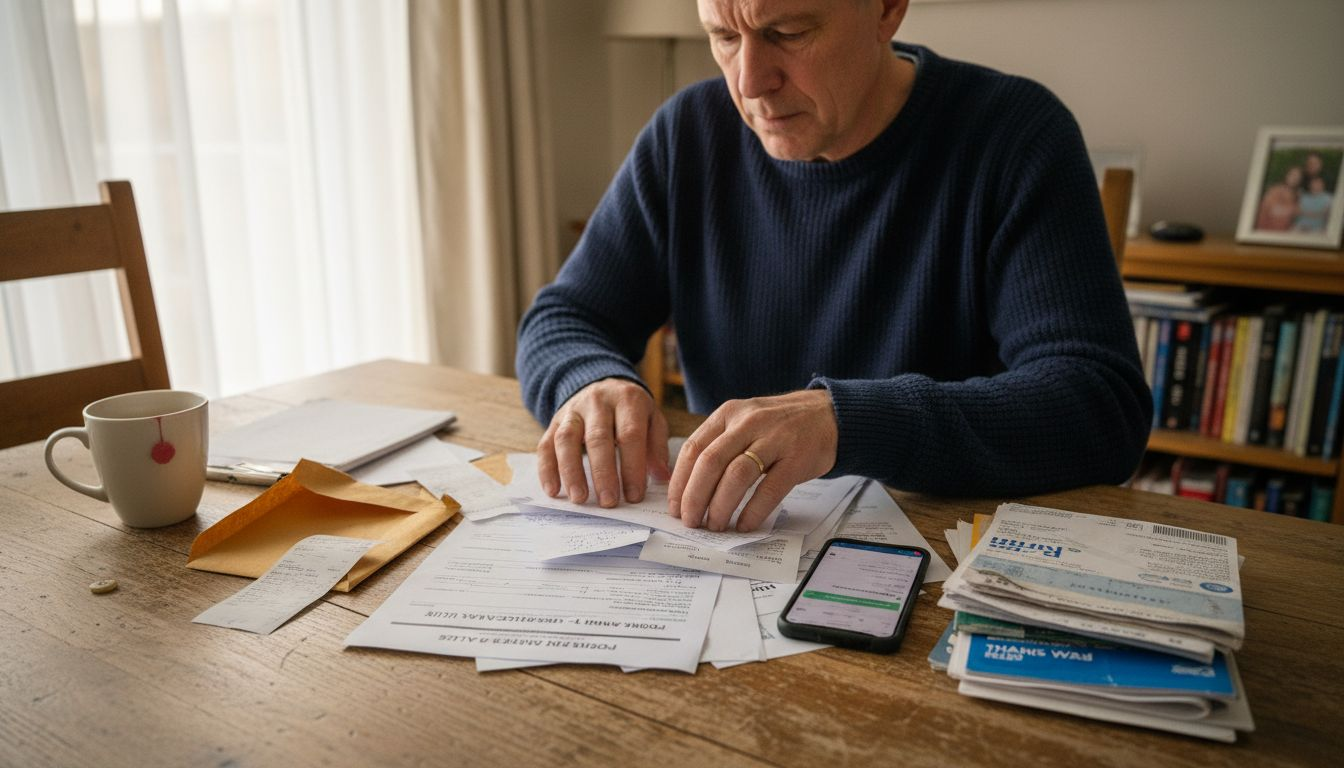
Gather all required documents before starting. Missing paperwork is the most common cause of delays and rejections. You need the original death certificate, the original will and any codicils if applicable, proof of identity such as passport or driving licence, and the completed IHT form. Some applications require additional documents depending on the estate’s complexity.
| Document | Purpose | Notes |
|---|---|---|
| Death Certificate | Proves death occurred | Original or certified copy required |
| Original Will | Shows executor authority | Must be the most recent will |
| IHT Form | Reports estate value and tax | IHT205 or IHT400 depending on value |
| Identity Proof | Verifies applicant identity | Passport, driving licence, or utility bill |
| Application Form PA1P | Formal probate request | Complete online or by post |
Common submission pitfalls include submitting photocopies instead of originals, incomplete or unsigned forms, incorrect fee payment, and missing supporting documents. Double check everything before submitting. The probate application steps guide walks through the entire process. Official probate fee details confirm current costs.
Key documents checklist:
- Original death certificate
- Original will and codicils
- Completed IHT form (IHT205 or IHT400)
- Proof of identity for applicant
- Probate application fee payment
Step 5: Probate Processing and Estate Administration: Timelines and What to Expect
After submitting your application, the Grant of Probate usually takes 8 to 12 weeks to be issued. This is the standard processing time for straightforward applications with complete documentation. Once you receive the Grant, you gain legal authority to access bank accounts, sell property, and distribute assets.
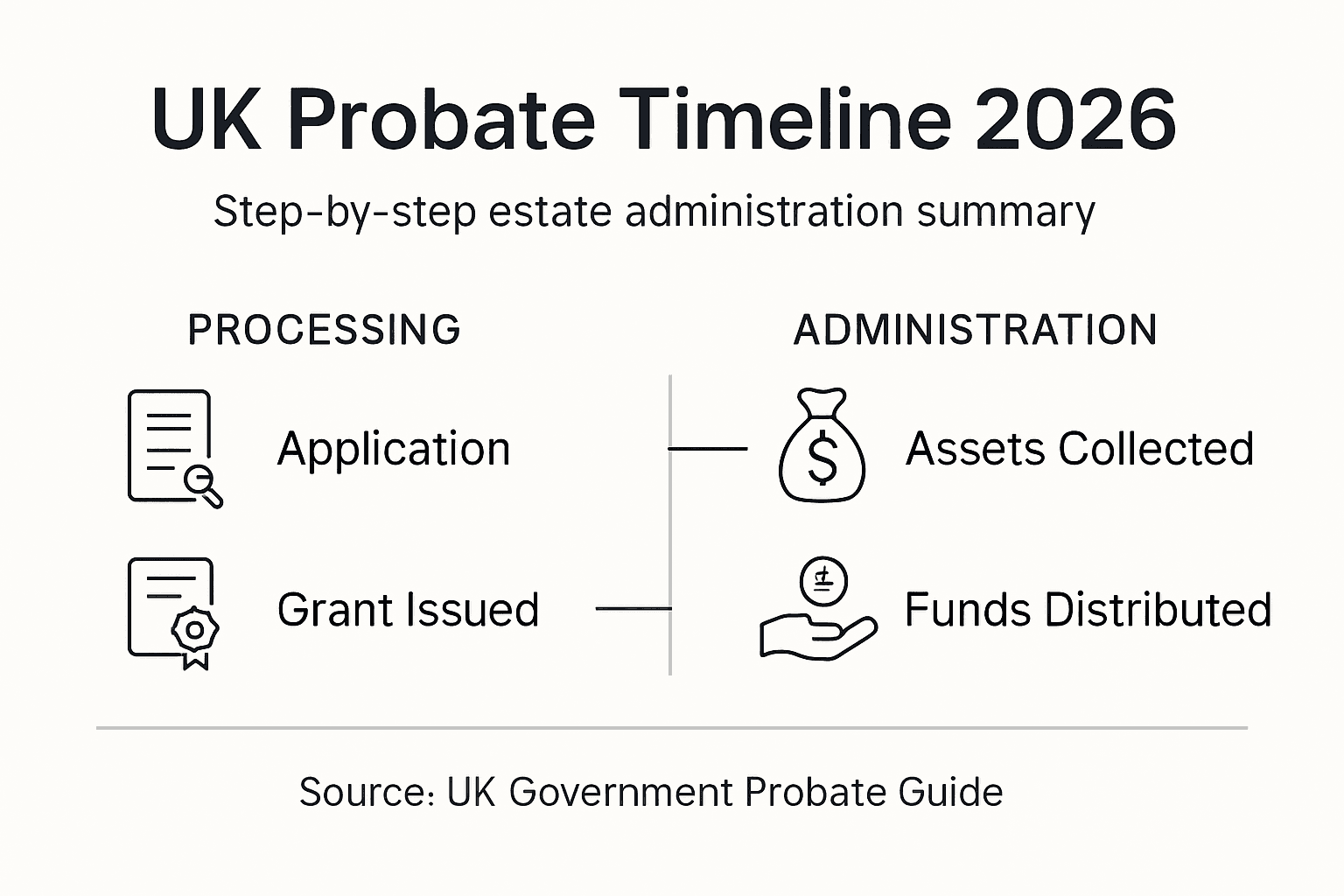
Estate administration from grant to final distribution takes about 6 to 12 months. This includes collecting all assets, paying debts and taxes, settling outstanding bills, and distributing the remaining estate to beneficiaries according to the will or intestacy rules. Complex estates with multiple properties, business interests, or disputes take longer.
Several factors can delay processing. Missing documentation requires resubmission and restarts the timeline. Complex assets like overseas property or business valuations need additional verification. Disputes among beneficiaries or challenges to the will halt proceedings until resolved. HMRC investigations into tax reporting can add months to the process.
Pro Tip: Keep detailed records of every transaction, correspondence, and decision during estate administration. This protects you if beneficiaries question your actions later. Maintain regular communication with beneficiaries to manage expectations and reduce misunderstandings.
To avoid unnecessary delays:
- Submit complete applications with all required documents
- Respond promptly to any queries from the probate registry
- Keep beneficiaries informed of progress
- Use reminders and checklists to stay organised
- Seek help early if complications arise
Understanding the probate timeline guide helps you plan realistically and communicate timelines to family members.
Step 6: Common Mistakes in Probate and How to Avoid Them
Common probate mistakes include undervaluing the estate, paying incorrect fees, and submitting incomplete forms, causing costly delays and reapplications. These errors are preventable with careful preparation and attention to detail.
Undervaluing the estate is the most serious mistake. If HMRC discovers you reported asset values below market rates, they can impose penalties, charge interest on unpaid tax, and delay probate indefinitely. Always obtain professional valuations for property, businesses, and valuable items. Overestimating is safer than underestimating.
Submitting incomplete or inaccurate forms causes immediate rejection. The probate registry returns your application, and you must correct errors and resubmit, adding weeks to the timeline. Common form errors include unsigned declarations, missing sections, inconsistent information, and illegible handwriting on postal applications.
Paying incorrect fees happens when applicants miscalculate the estate value or misunderstand fee thresholds. Double check the current fee structure and ensure your payment matches the estate size. Overpaying delays refunds; underpaying requires additional payment before processing continues.
A family undervalued their late father’s property by £100,000 to avoid inheritance tax. HMRC investigated, imposed a £15,000 penalty, charged interest on unpaid tax, and delayed probate by nine months. The executor faced personal liability for the shortfall because they knowingly provided false information.
Pro Tip: Use prepared checklists before submitting your application. Cross check every form field, verify all calculations, and confirm you’ve included all required documents. Review the avoid probate mistakes guide for practical tips. The common probate mistakes explained article details real cases and lessons learned.
Frequent errors to watch for:
- Undervaluing property or assets
- Incomplete or unsigned forms
- Missing original documents
- Incorrect fee payment
- Inconsistent information across forms
Step 7: When to Seek Professional Help: Role of Probate Solicitors and Their Benefits
92% of probate applications in England and Wales are applied online successfully without solicitor assistance, but complex estates benefit from professional help. Simple estates with clear wills, few assets, and no disputes are suitable for DIY probate. You save legal fees and maintain full control of the process.
However, certain situations require expert guidance. Complex estates involving multiple properties, business interests, overseas assets, or high values increase the risk of errors. Family disputes over inheritance, will challenges, or disagreements among executors create legal complications best handled by solicitors. Estates with significant inheritance tax liabilities need strategic planning to minimise tax legally.
Probate solicitors provide several benefits. They ensure legal compliance and accuracy, reducing the risk of costly mistakes. They handle all paperwork, correspondence, and deadlines, saving you time and stress. They resolve disputes professionally and represent you in court if necessary. They provide peace of mind that the estate is administered correctly and fairly.
| Approach | Cost | Time Investment | Complexity Handled | Risk Level |
|---|---|---|---|---|
| DIY Probate | £273 fee only | High | Simple estates only | Moderate if careful |
| Solicitor Assisted | £1,500 to £5,000+ | Low | All complexities | Low |
Scenarios warranting professional assistance include:
- Estates exceeding £500,000 in value
- Multiple properties or overseas assets
- Business interests or complex investments
- Family disputes or will contests
- Significant inheritance tax planning needed
- Executors unsure of legal obligations
For straightforward cases, DIY probate works well and saves money. For anything complex, the cost of solicitor support is worth the protection and efficiency gained. Speak to expert probate solicitors to assess your situation. Review DIY probate success rates to understand when professional help makes sense.
Conclusion and What to Do Next: Getting Started with Confidence
You now understand the probate process step by step, from determining eligibility to submitting applications and avoiding common mistakes. Preparation is key. Accurate estate valuation, complete documentation, and timely submission prevent delays and legal issues.
The process becomes manageable when you break it into clear steps. Start by gathering all necessary documents, value the estate carefully, complete the correct tax forms, and submit your application with confidence. Most estates process smoothly within the expected 8 to 12 week timeline for the grant, with full administration completing in 6 to 12 months.
If your situation feels overwhelming or involves complexities beyond simple probate, don’t hesitate to seek personalised help. Signature Law’s experienced probate solicitors guide you through every stage with compassion and expertise.
Immediate next steps:
- Gather death certificate, will, and financial records
- Value all assets and list all debts
- Decide whether to proceed DIY or with solicitor support
- Complete IHT forms accurately
- Submit probate application with all required documents
For personalised guidance tailored to your estate, contact Signature Law today.
Get Expert Probate Support with Signature Law
Navigating probate after losing a loved one is challenging. Signature Law’s probate solicitors bring over 15 years of experience, featured on BBC and ITV, providing compassionate, expert guidance through every step of estate administration. We handle the legal complexity so you can focus on your family.
Our trusted probate solicitors in Upminster offer fixed fee consultations, clear communication, and personalised support. We prevent delays, ensure compliance, and give you peace of mind.
Contact our professional probate legal support team today for tailored assistance with your estate administration needs.
FAQ
What documents are required to apply for probate?
You need the original death certificate, the original will if one exists, proof of identity such as a passport or driving licence, and the completed IHT form reporting estate value. Ensure all documents are originals or certified copies to avoid delays and rejections.
How long does the probate process usually take in the UK?
The Grant of Probate typically takes around 8 to 12 weeks to be issued after submitting a complete application. Full estate administration, including collecting assets, paying debts, and distributing to beneficiaries, usually completes within 6 to 12 months, depending on estate complexity.
Do I always need a solicitor for probate?
No, DIY probate works well for simple estates with clear wills and few assets. 92% of probate applications succeed online without solicitor help. However, complex estates involving disputes, multiple properties, business interests, or significant tax issues benefit from professional legal support to reduce risks and ensure compliance.
What happens if I undervalue the estate?
Undervaluing the estate can trigger HMRC investigations, resulting in penalties, interest charges on unpaid tax, and significant delays to probate. Executors may face personal liability for shortfalls if deliberate underreporting is proven. Always obtain professional valuations for property and valuable assets.
Can I apply for probate if there is no will?
Yes, if there is no will, the closest living relative applies for Letters of Administration instead of a Grant of Probate. The legal hierarchy determines who can apply: spouse or civil partner first, then children, parents, and siblings. You must prove your relationship with official documents.
Recommended
- How to Handle Probate UK: Complete Step-by-Step Guide | Signature Law
- UK Probate Timeline: Typically 6-12 Months to Complete | Signature Law
- Probate Costs UK 2026: What Families Must Know | Signature Law
- Signature Law Blog: Legal Insights & Updates (2026)