





Family Law
Estate Planning in Divorce – Protecting Your Children

Separation brings a wave of uncertainty that makes protecting your children and assets feel increasingly urgent. For British parents, estate planning after divorce is not just about paperwork—it is the single step that determines who cares for your children and where your legacy ends up. Without a will in England, asset distribution follows set rules that may not reflect your wishes or safeguard your children’s interests. Guardianship and inheritance decisions deserve clarity and care, and this guide empowers you to make choices that truly protect your family’s future.
Table of Contents
- Estate Planning Explained for UK Families
- Types of Estate Planning Documents Used
- Your Will: The Core Document
- Powers of Attorney
- Testamentary Trusts Within Your Will
- Life Insurance Beneficiary Designations
- Codicils: Making Changes to Existing Wills
- When Professional Help Is Essential
- Legal Rights and Safeguards After Divorce
- Your Legal Obligations to Your Children
- Child Maintenance After Divorce
- Parental Responsibility After Divorce
- Protection Orders and Safeguards
- Property Rights and Financial Settlements
- Guardianship, Trusts, and Child Protection
- Testamentary Guardianship: Naming Your Child’s Guardian
- Why Guardianship Matters After Divorce
- Trusts: Protecting Children’s Inheritance
- Choosing a Trustee
- Child Protection Orders and Additional Safeguards
- Inheritance Tax, Costs, and Common Pitfalls
- Understanding Inheritance Tax Thresholds
- Costs of Estate Administration
- Common Pitfalls to Avoid
- Planning Strategies for Families
- When to Seek Professional Advice
Key Takeaways
| Point | Details |
|---|---|
| Estate Planning is Essential Post-Divorce | Updating your will and estate plan is crucial after divorce to ensure your children’s welfare and dictate asset distribution. |
| Guardianship Decisions are Critical | Explicitly name guardians for your children in your will to avoid court decisions that may not reflect your wishes. |
| Use Trusts for Children’s Inheritance | Implement testamentary trusts to manage inheritances for minors and prevent misuse of funds until they reach adulthood. |
| Review Your Estate Plan Regularly | Reassess your estate plan every 3-5 years or after major life events to ensure it reflects your current circumstances. |
Estate Planning Explained for UK Families
Estate planning is about making deliberate decisions now regarding your assets, property, and children’s future after you pass away. When you divorce with dependent children, this becomes even more critical.
Without a clear plan, your estate will be distributed according to intestacy rules—meaning the law decides, not you. Without a will, estate distribution follows set rules that may not reflect your wishes or protect your children’s interests.
Why Estate Planning Matters During Divorce
Divorce changes everything about your financial landscape. Your ex-partner’s legal claim to your assets shifts dramatically, and your children’s financial security depends entirely on the decisions you make now.
Key reasons to act immediately:
- Your existing will likely names your ex-spouse or assumes joint guardianship arrangements that are no longer appropriate
- Without updates, your assets could pass to someone you no longer wish to benefit
- Your children’s inheritance and guardianship arrangements need explicit clarity
- Intestacy rules do not prioritise your children’s welfare—they follow a fixed legal order
- Delays increase the risk of disputes between ex-partners over children’s financial provision
Estate planning during divorce isn’t optional—it’s the legal mechanism that ensures your children are protected, regardless of what happens to you.
What Your Estate Plan Must Cover
Your estate plan comprises several interconnected documents. Each serves a specific purpose in protecting your children.
Your will is the foundation. It names guardians for minor children, specifies how your estate is divided, and appoints an executor to manage distribution.
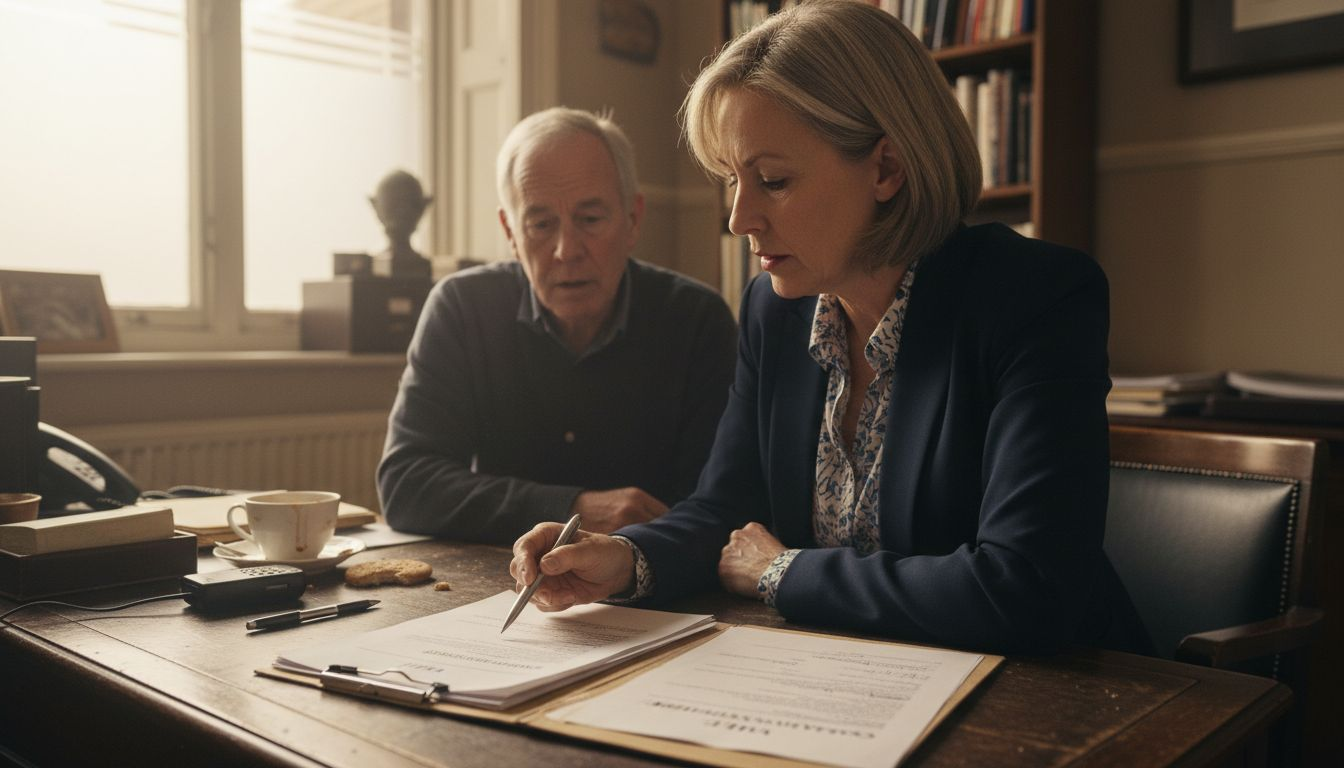
Guardianship provisions are non-negotiable when children are involved. You must explicitly state who will care for your children if both parents die or become unable to parent.
Testamentary trusts (trusts created within your will) allow you to place assets under professional management rather than giving money directly to young children. This protects inheritances from poor spending decisions or creditors.
Powers of attorney ensure someone can manage your financial and healthcare decisions if you become incapacitated—even temporarily.
Life insurance and pension designations require careful review post-divorce. Beneficiary nominations often override what your will says, so these must be updated separately.
Guardianship: The Most Critical Decision
Naming a guardian is the single most important decision in your estate plan. This person will raise your children if you and their other parent cannot.
Choose someone who:
- Shares your values and parenting philosophy
- Has the emotional capacity and financial stability to take on this responsibility
- Is willing and able to accept the role
- Lives in a location where your children can maintain stability
- Will actively consult you in your will regarding your children’s education, religious upbringing, and emotional needs
Have candid conversations with your chosen guardian before naming them. They need to understand the commitment fully.
Consider also naming alternative guardians in case your first choice cannot serve when needed. Life circumstances change—guardians may move, face health challenges, or become unwilling.
Protecting Children’s Inheritance
If you leave substantial assets to minor children, direct inheritance causes real problems. Young adults often lack the maturity to manage significant money responsibly.
Testamentary trusts solve this by:
- Holding assets under a trustee’s management until children reach specified ages
- Allowing controlled access for education, housing, and healthcare costs during their younger years
- Releasing funds at ages you designate (commonly 21, 25, or 30)
- Protecting inheritances from creditors, poor relationships, or damaging life decisions
You can also specify exactly how funds should be used—education costs, property deposits, or living expenses—rather than leaving discretion entirely to the trustee.
When to Review and Update Your Plan
Estate planning isn’t a one-time task. Your circumstances change constantly, and your plan must reflect those changes.
Review your estate plan after:
- Your divorce is finalised
- Any significant change in your financial situation
- Birth of additional children or grandchildren
- Death of a named guardian, executor, or trustee
- Changes in your children’s needs or circumstances
- Major property acquisition or business changes
- Changes in tax laws or inheritance rules
Most families benefit from a full review every 3–5 years, even without major life changes.
Pro tip: Update your will immediately after divorce is finalised, before addressing other estate planning elements. This single document prevents your ex-partner from inheriting if something happens to you before you’ve completed comprehensive planning.
Types of Estate Planning Documents Used
Estate planning relies on several key documents working together to protect your children and distribute your assets according to your wishes. Each document serves a distinct purpose, and they work best when properly coordinated.
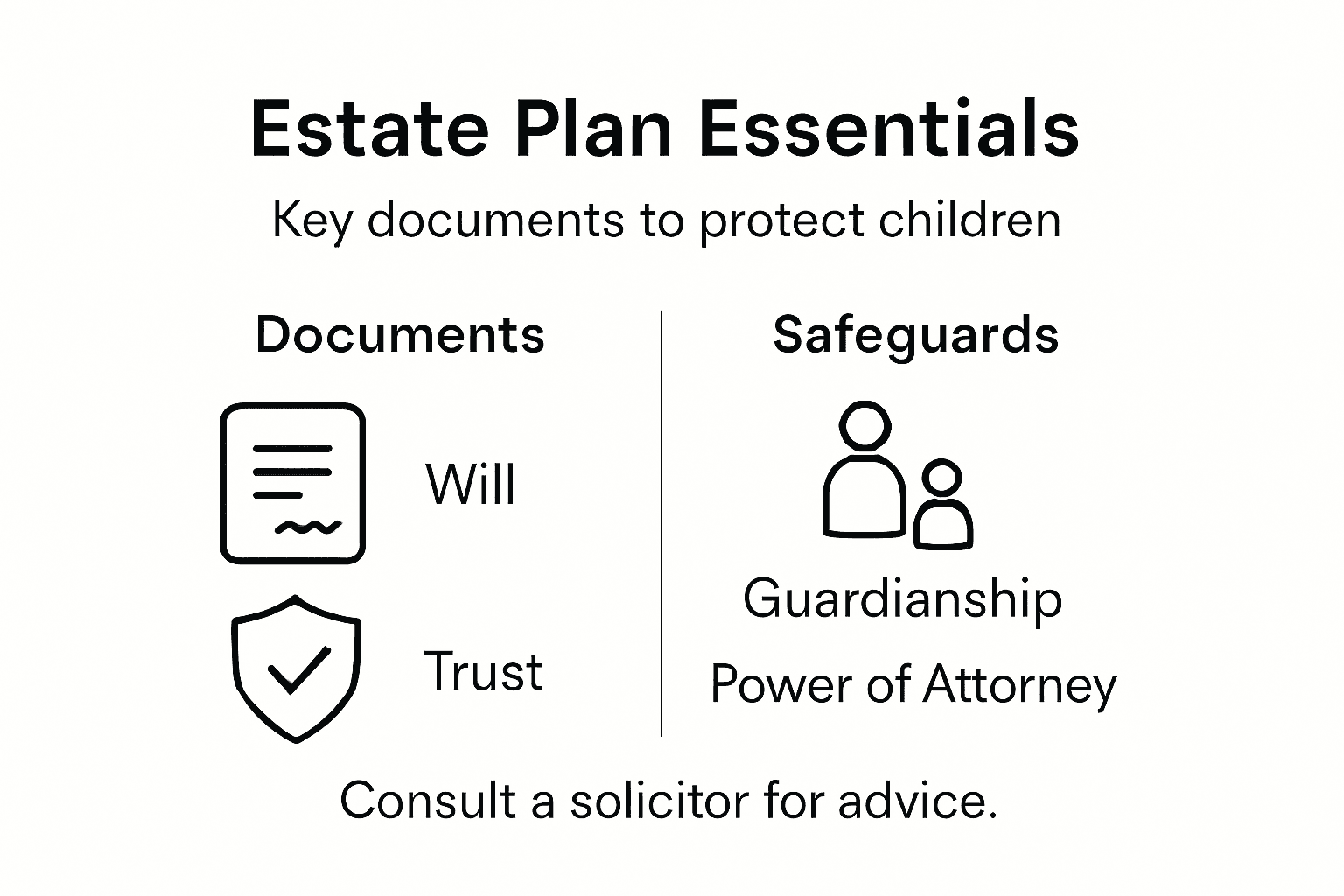
The foundation of most estate plans is your will. This legal document specifies who inherits your property, names guardians for your children, and appoints an executor to manage your estate. Formal wills require specific legal requirements to be valid, including witnessing and signature rules that vary slightly across the UK.
Below is a summary of core estate planning documents and their main functions:
| Document Type | Primary Purpose | Unique Consideration Post-Divorce |
|---|---|---|
| Will | Directs asset distribution and guardianship | Must remove ex-spouse as beneficiary/guardian |
| Testamentary Trust | Manages child inheritance until set age | New trust needed for updated family structure |
| Lasting Power of Attorney | Enables someone to manage affairs if incapacitated | Should assign new attorneys independent of ex-spouse |
| Life Insurance/Pension Designation | Specifies who receives policy/pension on death | Must update to prevent ex-spouse benefiting |
| Codicil | Makes minor amendments to a will | Less suitable—complete rewrite preferred after divorce |
Your Will: The Core Document
Your will is the most important estate planning document you’ll create. It’s where you make your most critical decisions about your children’s future and your assets.
Your will should include:
- Clear identification of all your children and any step-children you wish to benefit
- Appointment of a guardian or guardians for any children under 18
- Specific bequests (named items or sums to particular people)
- Instructions for how your residual estate should be divided
- Appointment of an executor to administer your estate
- Any testamentary trust provisions for child beneficiaries
After divorce, your will requires immediate updating. Most wills written during marriage assume your spouse will inherit substantial assets or act as guardian. These provisions must be revoked explicitly.
A will made during marriage but not updated after divorce can create chaos—your ex-partner may still inherit if you haven’t specifically removed them, and guardianship decisions may conflict with current custody arrangements.
Powers of Attorney
A power of attorney allows someone to act on your behalf if you become unable to do so—whether temporarily through illness or permanently through incapacity.
There are two main types:
Lasting Power of Attorney for Property and Financial Affairs allows your appointed attorney to manage your bank accounts, property, investments, and bills. This remains valid even if you lose mental capacity.
Lasting Power of Attorney for Health and Welfare gives your chosen person authority to make medical and care decisions. This is particularly important when you have dependent children, as it ensures your preferred person makes decisions about their healthcare if you cannot.
Without these documents, your family may need to apply to the Court of Protection—a lengthy and expensive process.
Testamentary Trusts Within Your Will
A testamentary trust is a trust created within your will that only comes into effect after you die. This is the simplest way to protect children’s inheritances from misuse.
Rather than leaving money directly to a 16-year-old, a testamentary trust holds assets under a trustee’s management. The trustee can release funds for specific purposes—education, housing, healthcare—until your child reaches an age you designate.
Common release ages are 21, 25, or 30, allowing your child to demonstrate maturity before accessing large sums.
Life Insurance Beneficiary Designations
Life insurance policies have beneficiary nominations that operate independently of your will. These designations override what your will says.
Review your policy after divorce and update beneficiary names. If your ex-spouse is still named and you haven’t updated the policy, the insurance proceeds go to them—regardless of what your will states.
The same applies to pension death benefits. Many pensions allow you to nominate who receives any remaining balance. Check these designations carefully.
Codicils: Making Changes to Existing Wills
A codicil is a formal amendment to an existing will. Rather than rewriting your entire will, a codicil addresses specific changes.
Codicils are useful for small modifications, but after divorce, a complete will rewrite is usually clearer. This avoids confusion about which provisions remain valid and which have been revoked.
When Professional Help Is Essential
Divorce creates complex estate planning needs that benefit from professional input. Mistakes in wills frequently occur when people try to draft them without legal guidance.
Common errors include:
- Failing to revoke previous wills or specific provisions
- Ambiguous language that creates disputes between beneficiaries
- Inadequate guardianship provisions
- Failing to coordinate beneficiary designations with will provisions
- Not accounting for tax implications of large estates
Pro tip: Update your will and powers of attorney within 2–3 months of your divorce being finalised. This prevents any gap where outdated documents might be used if something happens to you during the post-divorce transition period.
Legal Rights and Safeguards After Divorce
Divorce finalises your legal separation, but it doesn’t end your legal responsibilities—particularly towards your children. Understanding your rights and obligations after divorce is essential for protecting both yourself and your family’s future.
Once your divorce is finalised, you have a legal right to financial independence from your ex-partner. However, rights relating to children and property remain interconnected and require ongoing attention throughout your children’s lives.
Your Legal Obligations to Your Children
Divorce changes your marital status but not your parental status. Both parents retain full legal responsibility for their children regardless of custody arrangements.
Your key obligations include:
- Providing financial support through child maintenance payments if agreed or court-ordered
- Maintaining regular contact and involvement in your children’s lives unless court orders restrict this
- Making major decisions about education, healthcare, and religious upbringing (unless sole parental responsibility has been awarded)
- Ensuring your children’s safety and wellbeing
- Updating your will, insurance, and estate planning documents to reflect post-divorce circumstances
These obligations continue until your children reach 18 (or 20 if in full-time education in some circumstances).
Your legal duty to support your children financially survives divorce—it’s one of the few obligations that actually strengthens post-divorce because it’s now enforceable through dedicated child maintenance mechanisms.
Child Maintenance After Divorce
Child maintenance is a legal obligation, not optional support. Even if you have no contact with your children, you remain financially responsible.
Maintenance can be arranged three ways:
Voluntary agreement between both parents is the simplest approach. This avoids court involvement and allows flexibility as circumstances change.
Court order is necessary if parents cannot agree. The court will assess both parents’ income and resources to determine a fair amount.
Child Maintenance Service (CMS) is a government agency that can assess and enforce child maintenance if informal arrangements break down.
Maintenance amounts typically continue until your child turns 18 or finishes full-time education, whichever is later.
Parental Responsibility After Divorce
Parental responsibility means the legal right and duty to make decisions about your child’s upbringing. Divorce does not automatically remove parental responsibility from either parent.
Unless a court has awarded sole parental responsibility, both parents retain equal rights to make major decisions about:
- Choice of school and education
- Medical treatment and healthcare decisions
- Religious upbringing and practice
- Holiday arrangements and overseas travel
- Changes to the child’s surname
If you disagree with your ex-partner about major decisions, either party can apply to court for a specific issue order.
Protection Orders and Safeguards
If your divorce involved domestic abuse or family violence, additional legal protections may be in place. Non-molestation orders prevent your ex-partner from contacting you or your children, whilst restraining orders protect property.
These orders remain enforceable after divorce and can be renewed if circumstances warrant.
Property Rights and Financial Settlements
Your divorce decree absolute finalises your financial settlement. Once this is in place, neither party can typically claim further assets from the other—except in limited circumstances involving fraud or significant changes in circumstances.
Keep your divorce paperwork secured. You’ll need it to prove your legal status when buying property, updating insurance, or managing pensions.
Pro tip: Request copies of your final divorce order and financial settlement order from your solicitor and keep them in a safe place—preferably with your will and other important documents. You’ll need these to prove your divorced status if you remarry, update insurance beneficiaries, or manage pensions.
Guardianship, Trusts, and Child Protection
Guardianship and trusts are the two most powerful tools for protecting your children’s future after divorce. Together, they ensure your children are cared for by people you trust and that their inheritance is managed responsibly.
Without clear guardianship arrangements, your children could end up in state care or with someone you wouldn’t have chosen. Without trusts, their inheritance could be squandered or misused before they mature enough to handle it responsibly.
Testamentary Guardianship: Naming Your Child’s Guardian
Testamentary guardianship means appointing a guardian through your will to care for your children if both parents die or become unable to parent. This is one of the most critical decisions you’ll make in estate planning.
Appointing a guardian through your will ensures your children are cared for by someone who shares your values and can provide stability during an already traumatic period.
When choosing a guardian, consider:
- Their relationship with your children and ability to provide emotional continuity
- Their parenting philosophy and whether it aligns with yours
- Their financial stability and ability to support additional children
- Their age and health—can they realistically care for your children until they’re independent?
- Whether they’re willing to accept the role and understand the commitment
- Their geographical location and impact on your children’s stability
Have explicit conversations with your chosen guardian before naming them. They must understand the responsibility fully and confirm they’re willing to accept it.
Naming a guardian is not just about finding someone who loves your children—it’s about finding someone capable of stepping into your role completely, making major life decisions, and providing the same commitment you would.
Why Guardianship Matters After Divorce
During marriage, guardianship decisions are often assumed or discussed informally. Divorce forces clarity. Your ex-partner may no longer be your first choice for guardian if something happens to you, or family dynamics may have changed significantly.
You must explicitly state your guardianship wishes in your will after divorce. Without this, the court will decide who raises your children, which may not reflect your preferences.
Consider also naming alternative guardians in case your first choice cannot serve when needed. Circumstances change—guardians may move abroad, face health challenges, or become unwilling.
Trusts: Protecting Children’s Inheritance
A trust is a legal arrangement where assets are held by a trustee for the benefit of your children. Rather than leaving money directly to minors, a trust ensures professional management and controlled distribution.
Testamentary trusts (created within your will) are the simplest option for most families. They take effect only after you die and avoid additional costs during your lifetime.
Your trust should specify:
- Who manages the trust (the trustee)
- When and how your child receives distributions
- What the money can be used for (education, housing, healthcare)
- Age milestones for releasing funds (commonly 21, 25, or 30)
- What happens to unused funds if your child dies before receiving them
Choosing a Trustee
Your trustee manages assets and makes decisions about distributions. This is different from a guardian—the trustee handles money, while the guardian provides day-to-day care.
A good trustee should be:
- Financially responsible and capable of managing investments
- Impartial between multiple children if you have them
- Willing to take on administrative responsibilities
- Able to resist pressure from your child or ex-partner for inappropriate distributions
- Available to serve throughout the trust period (potentially 20+ years)
Many families appoint a professional trustee (solicitor, accountant, or trust company) rather than a family member, to avoid conflicts of interest.
Child Protection Orders and Additional Safeguards
If your divorce involved safeguarding concerns, child protection plans or court orders may already be in place. These must be reflected in your estate planning documents.
If you have concerns about your ex-partner’s ability to parent, or if there are safeguarding issues, you can specify in your will that guardianship should pass to your chosen person rather than defaulting to the other biological parent.
Pro tip: Appoint your guardian and trustee within three months of finalising your divorce, while you’re focused on legal matters. Then review these choices every five years or when significant life changes occur—moving house, financial changes, or shifts in family relationships.
Inheritance Tax, Costs, and Common Pitfalls
Inheritance Tax (IHT) can significantly reduce what your children actually inherit. For families with substantial assets, a poorly planned estate can result in 40% of your estate going to the tax authority instead of your children.
Understanding IHT thresholds, reliefs, and planning strategies is essential to protecting your children’s inheritance. The good news is that many families can minimise or eliminate IHT liability with proper planning.
Understanding Inheritance Tax Thresholds
The current IHT threshold (known as the nil-rate band) is £325,000 per person. This means your estate can pass to beneficiaries tax-free up to this amount.
However, current IHT thresholds and tax rates apply at 40% above the nil-rate band. For a £500,000 estate, you’d pay 40% on £175,000—that’s £70,000 in tax.
Two key reliefs are available:
Residence nil-rate band allows an additional £175,000 threshold if you leave your home to direct descendants (including children or grandchildren). This effectively doubles your allowance for property-owning families.
Spousal exemption means assets passing to your spouse or civil partner are completely exempt from IHT. However, after divorce, this exemption disappears—making post-divorce planning critical.
Divorce removes your ex-spouse’s IHT exemption immediately. If you had planned to leave everything to them to avoid tax, that strategy no longer works, and your estate plan needs urgent revision.
Costs of Estate Administration
Estate administration costs are separate from IHT and include:
- Probate fees (currently £273–£1,000 depending on estate value)
- Solicitor’s fees for administering the estate (typically 1–2% of estate value)
- Executor’s fees if you appoint a professional executor
- Survey and property valuation costs
- Accountant’s fees for tax returns and IHT calculations
These costs can total thousands of pounds and come from your estate before your children receive anything.
Common Pitfalls to Avoid
Most families make preventable mistakes that increase their tax liability:
Failing to update beneficiary designations on life insurance and pensions post-divorce. These override your will entirely, so your ex-partner may still receive proceeds.
Not using annual exemptions allows you to give away £3,000 per year tax-free. Married couples can effectively give £6,000 annually without IHT implications.
Ignoring small gifts relief permits unlimited gifts of up to £250 per person per year—useful for supporting children’s education or housing costs during your lifetime.
Not considering lifetime gifts to reduce your taxable estate. Gifts given more than 7 years before death are completely outside your estate for IHT purposes.
Leaving everything outright to children rather than using trusts. This creates unnecessary tax complexity and leaves inheritances vulnerable to creditors or poor decisions.
The chart below compares common estate planning pitfalls and the consequences for children:
| Pitfall | Typical Impact on Children | Prevention Step |
|---|---|---|
| Assets left outright | Early access, wasted funds | Use a trust for control |
| Outdated beneficiary | Ex-spouse receives assets | Update designations promptly |
| Not naming a guardian | Uncertainty, possible state care | Explicitly state guardianship in will |
| Ignoring tax exemptions | Reduced inheritance | Review exemptions with advisor |
| No professional advice | Mistakes, legal disputes | Consult a solicitor post-divorce |
Planning Strategies for Families
Effective IHT planning starts with understanding your estate value. Include property, investments, life insurance proceeds, and pension death benefits—many families underestimate their total.
Consider these strategies:
- Using both spouses’ nil-rate bands if applicable post-divorce
- Gifting to children during your lifetime to reduce your taxable estate
- Setting up trusts within your will to manage IHT efficiently
- Reviewing life insurance beneficiary nominations
- Making regular charitable donations (gifts to registered charities are IHT exempt)
For estates over £500,000, professional tax planning is essential. The costs of advice are minimal compared to the tax savings achievable.
When to Seek Professional Advice
You should consult a tax advisor if:
- Your estate exceeds £325,000
- You own property in multiple countries
- You have complex family arrangements post-divorce
- You’ve received significant gifts or inheritances
- Your pension or life insurance is substantial
Pro tip: Request a detailed estate valuation from your solicitor within six months of your divorce being finalised, then have a qualified tax advisor review your IHT position. Small changes made now—such as updating beneficiary designations or establishing trusts—can save your children tens of thousands in tax.
Secure Your Children’s Future with Expert Estate Planning Support
Divorce is a challenging time that brings critical decisions about your children’s guardianship, inheritance, and financial protection. This article highlights how important it is to update your will, appoint trustees, and review powers of attorney to ensure your children’s security and avoid unintended consequences such as ex-partners inheriting your assets or estate administration delays. If you are navigating these complex issues after a separation Signature Law offers compassionate and personalised legal support to help you create a clear and legally sound estate plan tailored to your family’s needs.
Our experienced team specialises in Wills and Estate Planning as well as Family Law matters related to divorce that affect your children’s future. We understand the emotional weight of these decisions and can guide you through appointing guardians, setting up testamentary trusts, updating beneficiary designations, and protecting your estate from unnecessary tax burdens. Don’t leave your children’s future to chance. Start your estate planning enquiry today to secure peace of mind for yourself and your family.
Take control now by reaching out to Signature Law’s trusted solicitors who are here to support you when times are toughest. Contact us at signaturelaw.co.uk/contact-us and ensure your children are protected by a robust and up-to-date estate plan.
Frequently Asked Questions
What should I do with my existing will after a divorce?
You should update your will immediately after your divorce is finalised to remove your ex-spouse as a beneficiary and to redefine guardianship arrangements for your children.
How can I ensure my children’s financial interests are protected after my death?
Establish a testamentary trust within your will to manage your children’s inheritances until they reach a responsible age, ensuring that funds are used appropriately for their needs.
Why is guardianship so important in estate planning during a divorce?
Guardianship is crucial because it determines who will care for your children if both parents are unable to do so, ensuring that they are raised by someone who shares your values and can provide stability.
How often should I review my estate plan after a divorce?
You should review your estate plan every 3-5 years or after any significant life changes, such as the birth of additional children or changes in your financial situation, to ensure it accurately reflects your current circumstances.
Recommended
- 7 Types of Family Law Agreements Every Parent Should Know | Signature Law
- Family Law – How It Affects Everyday Life in the UK | Signature Law
- Estate Administration Explained – Managing Loss in Romford | Signature Law
- How to Handle Probate UK: Complete Step-by-Step Guide | Signature Law
- 7 Advantages of Registering Marriage in UAE for Expats
- Notarizing Wills and POA’s in Ontario will notary near me – My Mobile Notary