





Family Law
Why choose legal aid for family law matters in the UK

Many people assume legal aid is nearly impossible to qualify for or that it offers minimal help when you need it most. That belief stops vulnerable individuals from accessing vital support during divorce, child custody battles, or domestic abuse situations. In reality, legal aid provides structured, compassionate assistance for those facing family law challenges in 2026, with high approval rates and robust government funding. This guide clarifies eligibility, explains the benefits, addresses current challenges, and shows you exactly how to apply and benefit from legal aid when navigating sensitive family matters.
Table of Contents
- Understanding Legal Aid Eligibility And Application
- The Benefits Of Legal Aid For Family Law Cases
- Challenges And Nuances When Choosing Legal Aid
- How To Apply And Make The Most Of Legal Aid In 2026
- How Signature Law Supports Legal Aid Family Law Clients
- Can I Apply For Legal Aid If I Am Not Financially Eligible?
- What Evidence Is Needed To Support A Legal Aid Application For Domestic Abuse?
- How Does Legal Aid Help With Mediation In Family Law?
- What Are The Risks Of Going To Family Court Without Legal Aid?
Key takeaways
| Point | Details |
|---|---|
| Eligibility criteria | Passing means test requires monthly income up to £2,657 and savings up to £8,000, plus merits test with domestic abuse evidence for private cases. |
| High approval rates | Legal aid grants approval in 81% of domestic violence and child abuse applications, reflecting strong accessibility for vulnerable clients. |
| Mediation success rising | Mediation outcomes increased 8% with 58% of cases reaching successful agreements, reducing court reliance and emotional strain. |
| Provider challenges | Fees halved over 30 years have reduced providers, yet legal aid remains safer and more effective than self-representation. |
| Application process | Solicitors assess eligibility, gather evidence, and apply to the Legal Aid Agency, connecting you with specialist compassionate support. |
Understanding legal aid eligibility and application
Accessing legal aid for family law matters depends on meeting specific financial and case merit criteria. The means test sets clear thresholds: monthly income up to £2,657 and savings up to £8,000 determine financial eligibility. Beyond finances, the merits test assesses whether your case has sufficient legal validity and evidence to proceed, particularly in private family law disputes.
Domestic abuse cases require documented evidence to support your application. Acceptable proof includes police reports, medical letters detailing injuries or trauma, court orders such as non-molestation orders, or letters from domestic violence support organisations. These documents strengthen your eligibility under the merits test and demonstrate the seriousness of your situation. Public care proceedings involving social services do not require the means test, making legal aid automatically accessible regardless of income when children face potential removal from your care.
Solicitors play a central role in the eligibility assessment and application process. They evaluate your financial situation, review case merits, and gather the necessary evidence before submitting your application to the Legal Aid Agency. Once approved, you gain access to specialist providers who offer compassionate, structured legal support tailored to vulnerable clients. Understanding how legal aid supports family law cases helps you recognise the value of this assistance during emotionally charged disputes.
The application process follows clear steps designed to protect your interests. Your solicitor conducts an initial assessment, confirms eligibility, collects financial documents and abuse evidence, then formally applies on your behalf. The Legal Aid Agency reviews submissions and grants access to experienced family law solicitors who understand the sensitivities of divorce, child arrangements, and domestic abuse matters. This structured pathway ensures you receive expert guidance without the financial burden of private fees.
Key eligibility points include:
- Financial means test with income and savings limits
- Merits test evaluating case strength and evidence
- Domestic abuse documentation such as police reports or court orders
- Non-means tested access for public care proceedings
- Solicitor-led application to the Legal Aid Agency
- Connection to specialist compassionate legal providers
Pro Tip: Gather all financial documents and abuse evidence before your first solicitor meeting to speed up the application process and avoid delays in accessing support.
The benefits of legal aid for family law cases
Choosing legal aid offers significant advantages when facing family law disputes. Government statistics reveal that legal aid grants approval in 81% of domestic violence and child abuse applications, demonstrating strong accessibility for those in vulnerable situations. Quarterly expenditure reaches over £208 million, reflecting substantial government investment in supporting individuals through emotionally challenging family matters. These figures show that legal aid is not a token gesture but a robust system designed to protect those who need it most.
Mediation outcomes have improved considerably in recent years. Mediation success rates rose by 8%, with 58% of cases now reaching successful agreements without proceeding to full court hearings. This reduces the emotional trauma of prolonged litigation and allows families to resolve disputes more amicably. Legal aid funds mediation services, making this option accessible even when finances are tight. The result is faster resolution, less stress, and outcomes that prioritise children’s welfare and family stability.
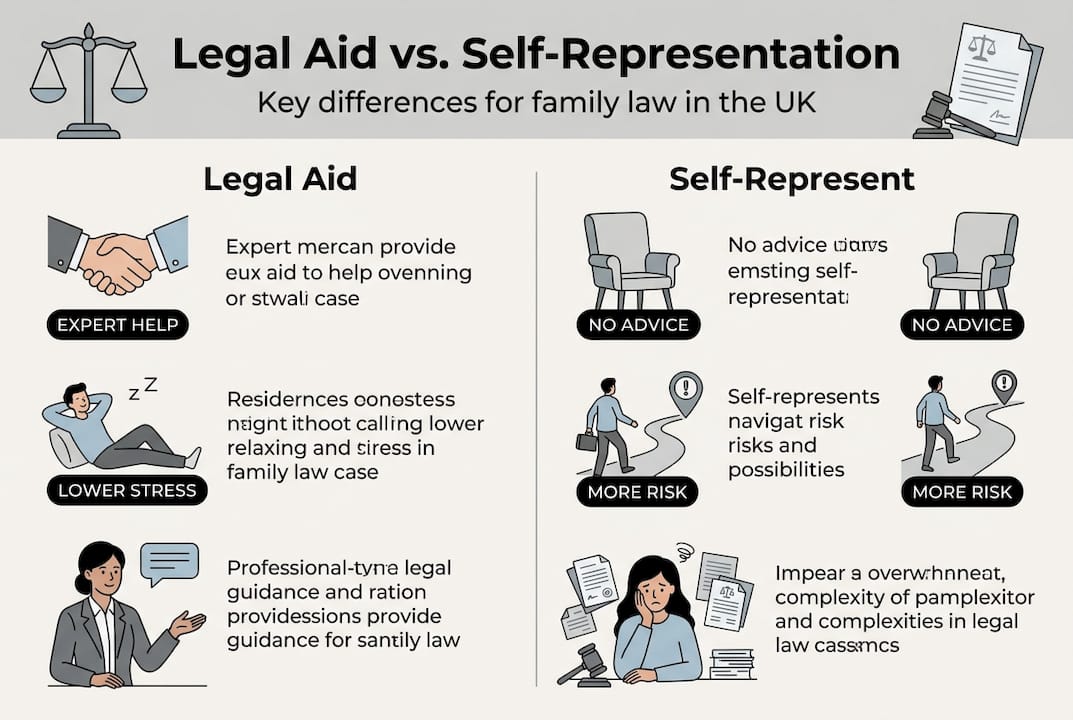
Compassionate, expert legal support distinguishes legal aid from self-representation. Solicitors funded through legal aid specialise in family law and understand the complexities of domestic abuse, child custody, and financial settlements. They provide structured guidance through each stage, from initial evidence gathering to court representation if needed. This professional support reduces court trauma for vulnerable individuals, ensuring your safety and legal rights remain protected throughout proceedings.
Legal aid ensures safer, evidence-based proceedings by requiring thorough documentation and case assessment before approval. This means your case receives proper legal scrutiny, increasing the likelihood of fair outcomes. Having a solicitor in family court significantly improves your ability to present evidence effectively, challenge unfair claims, and navigate complex procedural requirements that self-represented litigants often struggle with.
Key benefits include:
- 81% approval rate for domestic violence and child abuse cases
- Over £208 million quarterly government expenditure supporting vulnerable clients
- 8% increase in mediation success with 58% reaching agreements
- Compassionate specialist solicitors reducing emotional burden
- Evidence-based proceedings prioritising client safety and children’s welfare
Pro Tip: Legal aid not only covers court representation but also mediation and initial legal advice, giving you multiple pathways to resolve disputes without the full stress of litigation.
Challenges and nuances when choosing legal aid
Despite its benefits, legal aid faces significant challenges that impact accessibility and service quality. Legal aid fees have halved over 30 years, eroding the financial sustainability of providers. This reduction has led to fewer solicitors offering legal aid services, creating longer waiting times and reduced availability in certain regions. The result is that some vulnerable clients struggle to find nearby providers willing to take on their cases.

Fewer providers cause longer court proceedings and increase the number of litigants in person. Currently, 80% of private family law cases involve self-representation, often because legal aid is unavailable or clients are unaware they qualify. Self-represented litigants face steep learning curves, procedural errors, and emotional strain that trained solicitors would mitigate. This trend places additional pressure on courts and often leads to less favourable outcomes for vulnerable individuals.
Comparing legal aid with self-representation highlights the value of professional support:
| Factor | Legal aid | Self-representation |
|---|---|---|
| Cost | Funded by government for eligible clients | No legal fees but risk of poor outcomes |
| Expertise | Specialist family law solicitors | Limited legal knowledge |
| Emotional support | Compassionate guidance through process | High stress and emotional burden |
| Court outcomes | Higher success rates and fair settlements | Increased risk of procedural errors |
| Time to resolution | Faster with mediation and expert advice | Often prolonged due to mistakes |
Despite these challenges, legal aid remains the safer and more effective choice for vulnerable clients. High grant rates and rising mediation success demonstrate that the system works when accessed properly. Solicitors help you navigate eligibility, gather evidence, and present your case effectively, significantly improving your chances of a fair outcome.
Pro Tip: Even if you face delays finding a legal aid provider, persevere. The benefits of having a solicitor in family court far outweigh the risks of going it alone, especially in sensitive matters involving children or abuse.
How to apply and make the most of legal aid in 2026
Applying for legal aid involves clear, manageable steps when you work with an experienced solicitor. Following this structured approach maximises your chances of approval and ensures you receive the support you need.
-
Consult a solicitor experienced in family law and legal aid. Choose a firm that specialises in family matters and understands the legal aid application process. They assess your situation, explain eligibility criteria, and advise on the strength of your case.
-
Prepare financial evidence and relevant documents. Gather recent payslips, bank statements, proof of savings, and benefit letters to demonstrate your financial situation. For domestic abuse cases, collect police reports, medical letters, court orders, or support organisation correspondence to satisfy the merits test.
-
Solicitor applies to the Legal Aid Agency on your behalf. Your solicitor completes the application, submits all evidence, and liaises with the Legal Aid Agency throughout the review process. This removes the administrative burden from you during an already stressful time.
-
Access specialist providers offering compassionate support. Once approved, you work with solicitors who understand the sensitivities of family law disputes. They guide you through mediation, court proceedings, and negotiations with a focus on your safety and wellbeing.
-
Explore mediation to reach amicable agreements and reduce court time. Legal aid covers mediation services, which offer a less adversarial way to resolve disputes. Mediation success rates are rising, making this an increasingly effective option for families seeking fair outcomes without prolonged litigation.
Pro Tip: Keep thorough records of all communications, evidence, and documents related to your case. Following your solicitor’s advice closely and responding promptly to requests speeds up the application process and strengthens your case.
Understanding legal aid family law processes and working with experienced solicitors ensures you navigate the system effectively. The legal aid divorce workflow provides additional guidance on timelines and expectations, helping you prepare mentally and practically for the journey ahead.
How Signature Law supports legal aid family law clients
Signature Law offers knowledgeable solicitors experienced in legal aid family law cases, providing the compassionate, sensitive support vulnerable families need. The firm assists clients from initial eligibility checks through mediation and court proceedings, ensuring you receive structured guidance at every stage. Founder Sital Somaiya brings over 15 years of family law experience, featured on BBC and ITV, combining legal authority with genuine empathy for clients facing difficult circumstances.
Clients receive tailored support that recognises the emotional challenges of divorce, child custody disputes, and domestic abuse situations. The firm’s approach prioritises your safety, children’s welfare, and fair outcomes, whether through mediation or court representation. Understanding family law’s impact helps you appreciate the value of expert guidance during life-changing legal matters.
Signature Law’s family law solicitors in London serve clients across the UK, with strong presence in Romford, East London, and Essex. The firm offers multilingual advice, fixed-fee consultations, and personalised service that distinguishes it from volume-based practices. Early consultation helps maximise legal aid benefits and secure the best possible outcomes for you and your family.
Pro Tip: Early consultation with experienced legal aid solicitors helps you understand eligibility, gather the right evidence, and avoid common application mistakes that delay access to support.
For comprehensive legal aid family law guidance and to discuss your situation with compassionate professionals, contact Signature Law today.
Can I apply for legal aid if I am not financially eligible?
Yes, public care proceedings do not require means testing, making legal aid accessible regardless of income when social services are involved. This ensures children facing potential removal from parental care receive proper legal representation. Certain domestic abuse cases may also receive more flexible consideration, particularly when safety concerns outweigh financial thresholds. Consulting a solicitor experienced in legal aid family law clarifies your options even if you initially appear ineligible.
What evidence is needed to support a legal aid application for domestic abuse?
You should provide documents such as police reports, medical letters, and court orders as evidence of domestic abuse. These strengthen your eligibility under the merits test and protect your case by demonstrating the seriousness of your situation. Letters from domestic violence support organisations, photographs of injuries, or witness statements also help. Your solicitor advises on which evidence carries most weight and how to obtain missing documentation. Thorough evidence collection significantly improves approval chances for legal aid family law support.
How does legal aid help with mediation in family law?
Legal aid funds mediation services, reducing court reliance and emotional stress for families in dispute. Mediation outcomes increased by 8%, with 58% of cases successfully reaching agreement through legal aid support. This approach allows you to resolve child arrangements, financial settlements, and other matters more amicably than adversarial court proceedings. Mediators help facilitate discussions, ensuring both parties have a voice while prioritising children’s welfare. Accessing legal aid family law services gives you this valuable alternative to litigation.
What are the risks of going to family court without legal aid?
Self-representation risks longer cases and increased emotional stress due to unfamiliarity with legal procedures and court expectations. Fewer providers and lower fees cause more litigants in person, which often leads to longer proceedings and poorer outcomes. You may miss critical legal rights, procedural requirements, or opportunities to present evidence effectively without expert help. Courts cannot provide legal advice, leaving you vulnerable to mistakes that jeopardise your case. Understanding the benefits and risks of solicitors in family court highlights why professional representation matters, especially in sensitive family disputes involving children or domestic abuse.
Recommended
- How legal aid supports family law cases in UK 2026 | Signature Law
- Legal Aid in Family Law – Who Qualifies and How it Works | Signature Law
- Types of family law cases in the UK: your options 2026 | Signature Law
- Role of legal aid in UK divorce: 32% qualify for support | Signature Law