





Family Law
Understanding the role of landlord solicitors in UK housing

Many landlords mistakenly believe they can manage rental properties without specialist legal support, only to face costly disputes or compliance breaches later. The reality is that UK housing law has grown increasingly complex, particularly with sweeping reforms introduced by the Renters’ Rights Act 2025. Landlord solicitors now play an essential role in helping property owners navigate tenancy agreements, eviction procedures, and regulatory obligations. This guide explains how solicitors support landlords through changing legislation, protect their interests during disputes, and ensure full compliance with safety and administrative requirements that come into force in 2026.
Table of Contents
- Key takeaways
- Understanding the role of landlord solicitors in tenancy management
- Navigating the Renters’ Rights Act 2025 and its implications for landlords
- How landlord solicitors assist in eviction and dispute resolution post-2026
- How Signature Law supports landlords with legal challenges
- Frequently asked questions
Key Takeaways
| Point | Details |
|---|---|
| Legal support essential | Professional legal advice is increasingly necessary for landlords to manage tenancy agreements, compliance duties and potential disputes under evolving laws. |
| Safety and compliance duties | Landlords must meet gas safety certificates, electrical safety inspections, an Energy Performance Certificate, deposit protection in a government authorised scheme within 30 days, and the mandatory How to Rent guide. |
| Renters Rights Act 2025 | From 1 May 2026 section 21 no fault evictions are abolished and all ASTs convert to periodic tenancies with tenants given two months notice. |
| Proactive legal review | Solicitors can review tenancy setup before marketing, helping with documentation, insurance wording, subletting restrictions and rent increase compliance to reduce disputes. |
Understanding the role of landlord solicitors in tenancy management
Landlord solicitors provide the legal foundation for successful tenancy management. Their work begins before a tenant moves in and continues throughout the tenancy lifecycle. Most landlords use Assured Shorthold Tenancies (ASTs), and solicitors ensure these agreements contain all necessary terms whilst complying with current legislation. They review clauses covering rent, deposit amounts, maintenance responsibilities, and notice periods to protect your interests.
Compliance obligations form a significant part of what solicitors help landlords manage. You must meet multiple safety and administrative requirements:
- Annual gas safety certificates for all gas appliances and fittings
- Electrical safety inspections every five years or at each change of tenancy
- Valid Energy Performance Certificate (EPC) with a minimum rating of E
- Protection of tenant deposits in a government-approved scheme within 30 days
- Provision of the mandatory ‘How to Rent’ guide to all new tenants
- Houses in Multiple Occupation (HMO) licensing where applicable
Solicitors create compliance checklists tailored to your property type and advise on documentation requirements. They also help you understand the interaction between your rights as a property owner and tenant protections under law. This balance becomes particularly important when disputes arise or when you need to regain possession of your property.
Pro Tip: Engage a landlord solicitor before advertising your property to ensure all documentation and compliance measures are in place from day one, preventing costly corrections later.
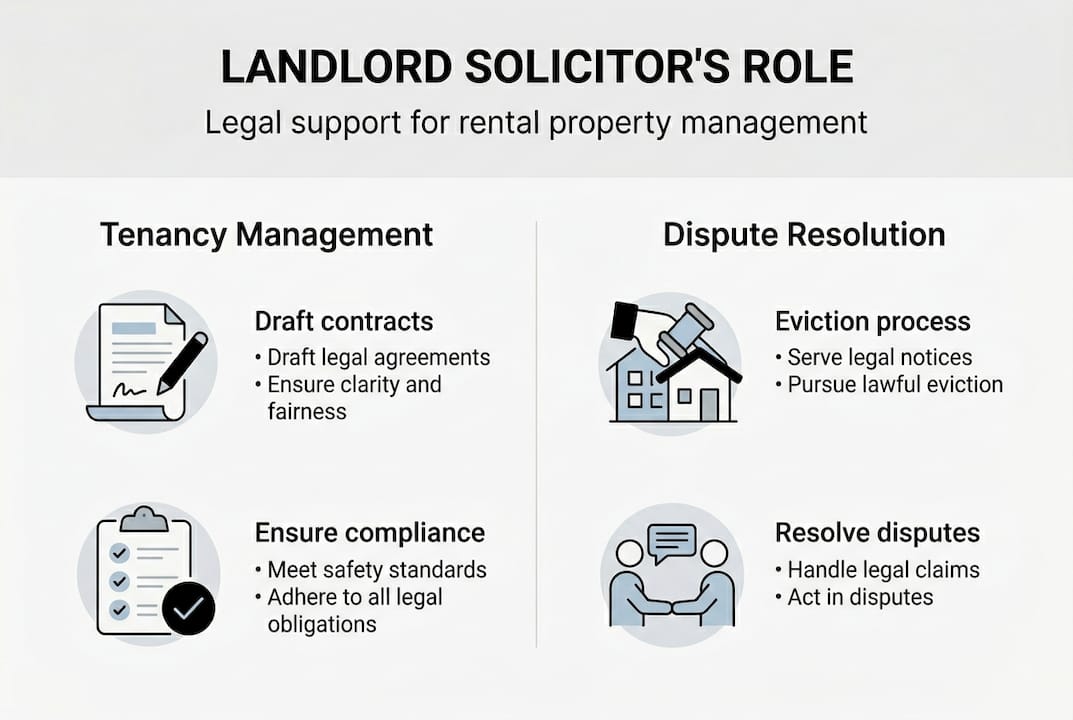
Many landlords only seek legal advice when problems emerge, but solicitors who review your tenancy setup proactively can identify potential issues before they escalate. They ensure your insurance requirements are clearly stated, clarify subletting restrictions, and confirm that rent increase mechanisms comply with statutory limits. For landlords managing multiple properties or considering cohabitation solicitors for tenants in relationships, this upfront legal investment pays dividends by reducing disputes and simplifying property management over time.
Navigating the Renters’ Rights Act 2025 and its implications for landlords
The Renters’ Rights Act 2025 represents the most significant reform to private rental law in decades. From 1 May 2026, Section 21 no-fault evictions are abolished, fundamentally changing how landlords regain possession of their properties. This reform aims to provide greater security for tenants but requires landlords to adapt their approach to tenancy management and termination.
Under the new framework, all ASTs automatically convert to periodic tenancies. Fixed-term contracts will no longer bind tenants beyond an initial period, giving them flexibility to leave with two months’ notice. For landlords, this means you cannot rely on a fixed term ending to regain possession. Instead, you must use Section 8 grounds, which require specific reasons such as rent arrears, antisocial behaviour, or your intention to sell or move into the property yourself.
The Act introduces several new obligations that landlord solicitors help you implement:
- Rent increases limited to once per year, with proper notice and justification based on market rates
- Tenant requests to keep pets must be considered, and refusal requires reasonable grounds
- Mandatory membership of a government-approved Ombudsman scheme for dispute resolution
- Registration of all rental properties in a national database for transparency
- Stricter enforcement of the Decent Homes Standard with penalties for non-compliance
- Enhanced protections against retaliatory eviction if tenants complain about property conditions
“The Renters’ Rights Act shifts the balance towards tenant security whilst maintaining landlords’ ability to regain possession for legitimate reasons. Solicitors bridge this gap by ensuring landlords understand new procedures and document everything properly.”
These changes require landlords to maintain more detailed records and follow precise procedures. Solicitors guide you through the transition period, ensuring your existing tenancies comply with new requirements and helping you update standard documents. They advise on how rent review clauses must be reworded, what constitutes reasonable grounds for refusing pet requests, and which Ombudsman scheme suits your circumstances. For landlords managing properties where landlord tenant disputes have occurred previously, solicitors help you learn from past issues and implement systems that prevent future conflicts under the stricter regulatory environment.
How landlord solicitors assist in eviction and dispute resolution post-2026
With Section 21 evictions eliminated, landlord solicitors become essential for navigating the more complex possession process. Section 8 grounds now provide the only route to eviction, and each ground has specific evidence requirements and notice periods. Solicitors assess your situation, identify applicable grounds, and ensure you meet all procedural requirements before initiating court proceedings.

The eviction process demands meticulous documentation. For rent arrears, you need detailed payment records showing exactly what is owed and when. For antisocial behaviour, you require evidence from neighbours, police reports, or local authority complaints. For cases where you intend to sell or occupy the property yourself, you must provide genuine evidence of your plans. Solicitors help you gather and organise this evidence in a format that courts will accept.
| Aspect | Pre-Renters’ Rights Act | Post-Renters’ Rights Act (2026 onwards) |
|---|---|---|
| No-fault eviction | Section 21 available with 2 months’ notice | Abolished completely from May 2026 |
| Grounds for possession | Section 21 or Section 8 | Section 8 only with valid grounds |
| Notice requirements | Shorter notice periods possible | Longer notice periods, stricter timing |
| Court process | Relatively straightforward for Section 21 | More complex, requires substantial evidence |
| Tenant challenges | Limited grounds to contest Section 21 | Greater scope to challenge possession claims |
| Record keeping | Basic documentation sufficient | Comprehensive records mandatory |
Dispute resolution takes on new importance under the reformed system. The mandatory Ombudsman scheme provides an alternative to court proceedings for many tenancy issues. Solicitors advise when to use the Ombudsman process versus when court action is necessary. They represent you in both forums, preparing submissions that address legal requirements whilst presenting your case persuasively.
The new property database requirement means all your tenancy details, compliance certificates, and deposit information must be accurately recorded and accessible. Solicitors help you establish systems that maintain these records throughout each tenancy. They also advise on data protection obligations, ensuring you handle tenant information lawfully whilst meeting transparency requirements.
Pro Tip: Start building your evidence file from the beginning of each tenancy, not when problems arise. Photograph property condition, keep all correspondence, and document every compliance check to create an audit trail that supports potential future possession claims.
Solicitors increasingly focus on preventative strategies that reduce the need for eviction. They review your tenant selection criteria, suggest tenancy clauses that discourage problematic behaviour, and recommend early intervention approaches when issues first emerge. For landlords who also require estate administration solicitors for inherited properties, coordinating legal advice across property and estate matters ensures consistent management approaches.
How Signature Law supports landlords with legal challenges
Signature Law understands the pressures landlords face in managing rental properties within an evolving regulatory landscape. Our specialist solicitors provide tailored advice on tenancy agreements, compliance obligations, and dispute resolution that reflects both current law and the significant changes taking effect in 2026. We recognise that successful landlords need more than generic legal templates; they need strategic guidance that balances property rights with tenant protections.
Our approach combines technical legal expertise with practical property management insights. Whether you need support drafting compliant tenancy documents, navigating the new Section 8 eviction process, or resolving disputes through the Ombudsman scheme, we provide clear advice at every stage. We help landlords implement robust record-keeping systems, understand their obligations under the Renters’ Rights Act, and respond effectively when tenancy issues arise.
For landlords managing properties alongside other legal matters, our integrated service connects landlord & tenant disputes services with related areas such as family law solicitors London when relationship breakdowns affect property ownership, or family law uk impact guidance for landlords experiencing personal legal challenges. This holistic approach ensures your property interests remain protected even when life becomes complicated.
Pro Tip: Contact Signature Law before implementing any significant changes to your tenancy management approach in 2026 to ensure you comply with new requirements from day one.
Frequently asked questions
What does a landlord solicitor do?
Landlord solicitors advise on all legal aspects of managing rental properties, from drafting tenancy agreements to handling eviction proceedings. They ensure you comply with safety regulations, deposit protection rules, and administrative requirements whilst protecting your rights as a property owner. Their role has expanded significantly with recent legislative reforms.
How has the role of landlord solicitors changed with the Renters’ Rights Act 2025?
The abolition of Section 21 evictions from May 2026 means solicitors now focus more on Section 8 grounds and evidence gathering for possession claims. They also guide landlords through new Ombudsman membership requirements, property database registration, and stricter record-keeping obligations. The advisory role has shifted from reactive problem-solving to proactive compliance management.
Can landlord solicitors help if there is a dispute with a tenant?
Yes, solicitors provide comprehensive dispute resolution support including negotiation, Ombudsman representation, and court proceedings if necessary. They advise on complaint handling procedures, help you respond to tenant allegations about property conditions, and prepare evidence for possession claims. Early solicitor involvement often resolves disputes before they escalate to formal proceedings.
What compliance checks must landlords perform and how do solicitors assist?
Landlords must ensure gas safety certificates, electrical inspections, valid EPC ratings, and proper deposit protection for every tenancy. Solicitors create compliance schedules tailored to your property type, advise on documentation requirements, and help you understand penalties for non-compliance. They also ensure you provide mandatory information to tenants including the ‘How to Rent’ guide and prescribed information about deposits.
When should I consult a landlord solicitor?
Consult a solicitor before letting your first property to establish compliant systems from the start. Seek advice when drafting or reviewing tenancy agreements, before initiating any eviction process, and when disputes arise with tenants. Given the significant changes taking effect in 2026, landlords should review their current practices with a solicitor well before the May implementation date to ensure smooth transition to the new framework.
Recommended
- Landlord & Tenant Disputes | Signature Law
- Solicitor’s role in divorce property transactions UK 2026 | Signature Law
- Leasehold Enfranchisement Solicitors | Signature Law
- Is It Better to Have a Solicitor in Family Court? Benefits, Risks, and Legal Guidance for UK Family Law | Signature Law