





Family Law
Domestic abuse solicitors: urgent legal help in the UK
TL;DR:
- Domestic abuse solicitors secure legal protection through civil court orders quickly and efficiently.
- Legal aid is available for victims with evidence of abuse who cannot afford legal costs.
- Choosing a specialized, empathetic solicitor is crucial for effective and sensitive legal support.
Many people in crisis believe that calling the police is their only option when facing domestic abuse. It is often the most urgent first step, but it is far from the only route to safety. A domestic abuse solicitor can secure legal protection quickly, sometimes within hours, and legal aid in England and Wales is available if you have evidence of abuse and cannot afford legal costs. This article explains what a domestic abuse solicitor does, when to contact one, how to manage costs, and what to look for when choosing the right person to help you.
Table of Contents
- What is a domestic abuse solicitor?
- When and how can a domestic abuse solicitor help?
- Legal aid and costs: what support can you get?
- Choosing the right solicitor: what to look for and expect
- What most guides miss about getting urgent legal protection
- Need urgent, sensitive help? Speak to a solicitor today
- Frequently asked questions
Key Takeaways
| Point | Details |
|---|---|
| Solicitors provide urgent legal protection | A domestic abuse solicitor can help you secure emergency court orders and coordinate support beyond what police offer. |
| Legal aid is available with evidence | You may not need to pay for protection if you have proof of abuse and meet financial rules—your solicitor handles the application. |
| Choose the right specialist | Look for solicitors with experience in abuse cases and empathy, not just legal expertise. |
| Early action matters most | Fast advice and evidence collection can make a life-changing difference—do not wait for more harm to occur. |
What is a domestic abuse solicitor?
A domestic abuse solicitor is a family law specialist who helps victims of abuse secure legal protection through the civil courts. This is a distinct route from the criminal justice system, where the police investigate crimes and the Crown Prosecution Service decides whether to charge someone. Both routes can run at the same time, and a good solicitor will understand how they interact.
The civil route, managed by your solicitor, focuses on obtaining court orders that protect you and your children from further harm. These orders carry legal force. Breaching them is a criminal offence. Understanding how family lawyers handle domestic abuse matters because the civil route is often faster and more directly tailored to your specific circumstances than waiting for a criminal prosecution.
A domestic abuse solicitor can assist you with:
- Non-molestation orders: These prohibit your abuser from contacting or threatening you.
- Occupation orders: These can require your abuser to leave the family home, even if they own or rent it jointly with you.
- Prohibited steps orders: These prevent a parent from taking specific actions relating to a child without court permission.
- Child arrangement orders: These set out where your children live and how much time they spend with each parent.
- Forced marriage protection orders: These protect individuals from being forced into marriage.
- Injunctions: Broader protective orders where circumstances require them.
If you are in immediate danger, the most urgent step is always to call 999. However, once you are safe, a solicitor can act quickly to secure protective orders that provide lasting legal safety. Solicitors can also support you with longer-term matters including divorce proceedings, financial settlements, and family law solicitors and child protection issues that arise after the immediate crisis has passed.
When and how can a domestic abuse solicitor help?
Knowing when to contact a solicitor is not always straightforward. Many victims wait longer than they should, often because they are unsure whether their situation is ‘serious enough.’ The truth is that you do not need to have been physically harmed to seek legal protection. Coercive control, emotional abuse, financial abuse, and threats all qualify as domestic abuse under UK law.
Here are the most common situations where a solicitor can act on your behalf:
- You are experiencing ongoing threats or harassment and need a court order to make contact illegal.
- You have recently left or are planning to leave and want legal support in place before you do.
- Your children are at risk and you need urgent child arrangement or prohibited steps orders.
- You have reported to the police and want parallel civil protection while the criminal process proceeds.
- Your abuser has violated a previous order and you need to return to court quickly.
- You are at risk of forced marriage and need immediate legal intervention.
In emergency situations, a solicitor can apply to court without notifying the other party first. This is called a without notice application (sometimes referred to as an ex parte application). Courts take these seriously and can grant protective orders the same day when the risk is clear. A solicitor can act swiftly to secure these orders, particularly where legal aid is available to fund the work.
For non-emergency situations, your solicitor will gather evidence, advise you on the strongest application, and represent you at any hearings. You can read more about how to apply for a non-molestation order and understand the full process before you begin.
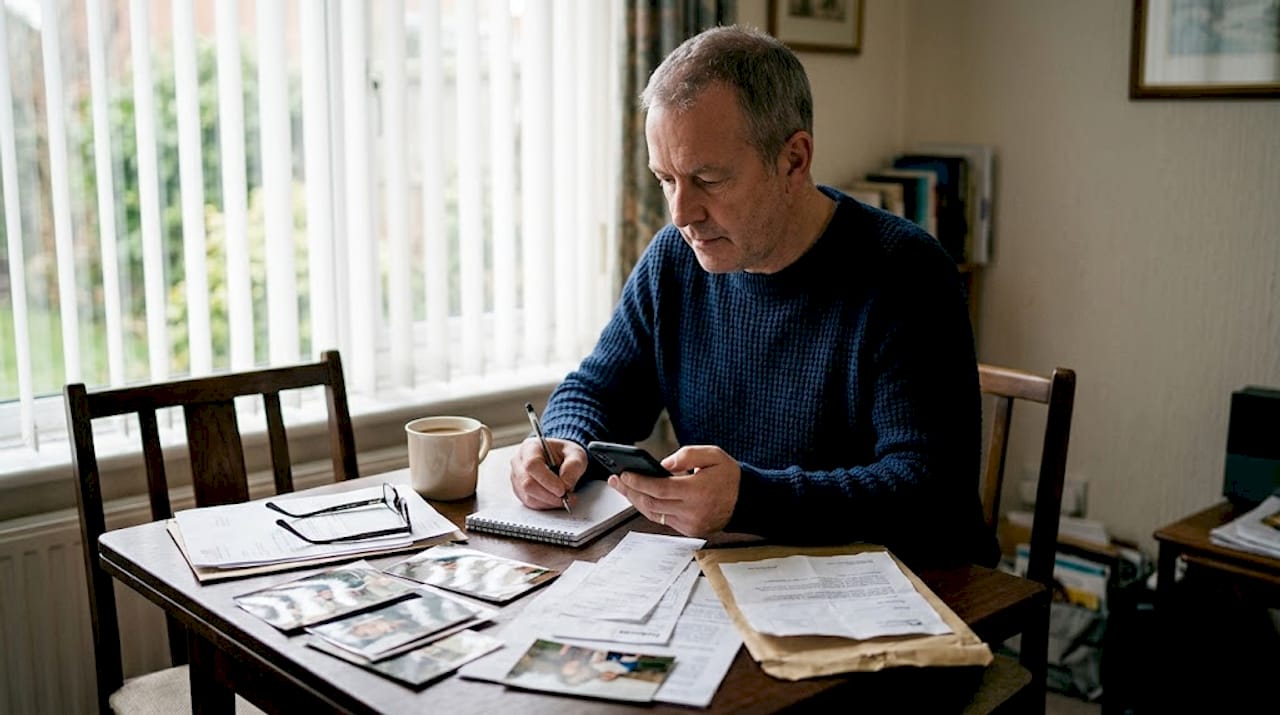
Pro Tip: Start documenting everything now. Dates, times, descriptions of incidents, photographs of injuries, screenshots of threatening messages, and any witnesses. This evidence is not just useful; it is often essential for both court orders and eligibility for legal aid after abuse.
Legal aid and costs: what support can you get?
Cost is one of the biggest barriers that stops people from seeking legal help. Many victims assume that solicitors are unaffordable, particularly when they may be financially controlled by an abuser. The reality is that legal aid exists specifically for situations like yours.
Legal aid may be available if you have evidence that you have been a victim of domestic abuse and you cannot afford to meet legal costs. Crucially, you cannot apply for legal aid yourself; a qualified legal adviser will check your eligibility and make the application on your behalf. This removes a significant practical burden from you at an already stressful time.
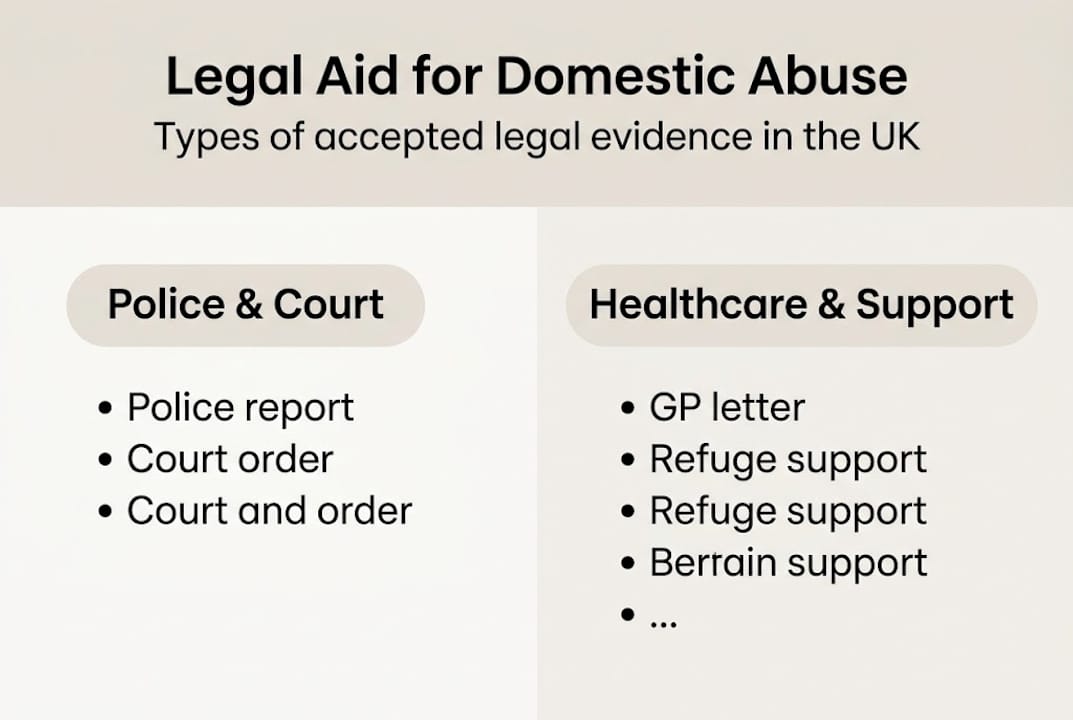
The types of evidence accepted to support a legal aid application include:
| Evidence type | Example |
|---|---|
| Police record | Incident report, arrest record, caution |
| Court order | Previous injunction, restraining order |
| Medical evidence | GP letter, A&E record confirming injuries |
| Social services involvement | Written confirmation from a social worker |
| Refuge or support worker letter | Written statement from a domestic abuse service |
| Multi-agency risk assessment | MARAC referral or SafeLives documentation |
You can review the full legal aid evidence criteria published by the government to understand exactly what is accepted.
If you do not meet financial eligibility thresholds for legal aid, fixed-fee consultations are an option worth exploring. Some solicitors will also discuss payment arrangements. The key sources to gather evidence from include:
- Your GP or a hospital A&E department
- The police, using your crime reference number
- A social worker assigned to your household
- A domestic abuse charity or refuge where you have sought support
- A previous court order from any previous legal proceedings
For further detail on what to expect, see our guidance on legal aid for domestic abuse and choosing legal aid for family law. If divorce proceedings are also on the horizon, our legal aid divorce workflow explains the full process step by step.
Choosing the right solicitor: what to look for and expect
Not every family law solicitor has the specific experience and sensitivity required for domestic abuse cases. Choosing the wrong person can mean delays, poor advice, or worse, feeling unsupported at a deeply vulnerable time. Here is what to look for.
| Quality to assess | What it looks like in practice |
|---|---|
| Specialist experience | The solicitor has handled non-molestation and occupation orders before |
| Legal aid accreditation | They are authorised to assess and apply for legal aid |
| Empathy and listening | They give you time to explain your situation without rushing |
| Confidentiality | Clear reassurance about privacy and data handling |
| Responsive communication | You know who to contact and how quickly to expect a reply |
| Plain language | They explain legal steps clearly, without unnecessary jargon |
When you attend your first consultation, come prepared. Bring any evidence you have already gathered, note down a timeline of key incidents, and be ready to explain your current living arrangements and any children involved. A qualified adviser will check your legal aid eligibility at this stage and explain the funding options clearly.
Ask the solicitor directly: who will actually handle my case day to day? In larger firms, a senior solicitor may take your initial call but pass your file to a junior member of staff. You deserve to know this upfront.
Pro Tip: A good domestic abuse solicitor will make you feel heard, not processed. If a first meeting feels rushed or dismissive, trust that instinct and seek a second opinion. You can learn more about family lawyer expertise in abuse cases and how a specialist approach makes a measurable difference to outcomes. Consider also reading about family law in everyday life to understand the broader picture of how legal support fits into your situation.
What most guides miss about getting urgent legal protection
Most articles on this subject focus on process: what forms to fill in, which orders to apply for, what evidence to gather. That information is important. But what it rarely addresses is the emotional reality of reaching out for help when you are frightened, exhausted, and uncertain about what happens next.
In our experience working with clients in these situations, the most common reason people delay is not lack of information. It is the belief that their situation does not yet warrant legal action, or that things might improve on their own. Waiting for ‘enough’ evidence can be genuinely dangerous. Courts can act on what you have right now.
The solicitors who make the biggest difference in these cases are not just technically competent. They are the ones who understand that a client calling for the first time may be terrified, may not have slept properly in weeks, and may feel profound shame about what has happened. That combination of experienced family lawyers and genuine human sensitivity is what changes outcomes. Fear and uncertainty are normal. Acting despite them is where your protection begins.
Need urgent, sensitive help? Speak to a solicitor today
If you are facing domestic abuse, you do not have to navigate this alone. Signature Law’s leading family law solicitors in London provide confidential, compassionate legal support tailored to your circumstances. Whether you need an emergency protective order today or want to understand your options first, we are here without judgement. We can advise on legal aid for domestic abuse and help you access funding if you qualify. Your safety comes first. Speak to us confidentially and take the first step towards legal protection today.
Frequently asked questions
Can I get free legal help for domestic abuse in the UK?
Yes, you may qualify for legal aid if you have evidence of domestic abuse and meet the financial eligibility criteria; a solicitor will assess and apply on your behalf.
What proof do I need for legal aid if I’m a domestic abuse victim?
Evidence such as a police report, court order, letter from a GP, or written support from a refuge manager is accepted; the government publishes full legal aid evidence criteria for domestic abuse cases.
How fast can a solicitor arrange a non-molestation order?
Once instructed and with supporting evidence in place, solicitors can often obtain emergency protective orders from court the same day through a without notice application.
Do I have to face my abuser in court if I use a solicitor?
Not always; in many cases your solicitor can arrange special measures, screens, or separate waiting areas to significantly reduce or eliminate direct contact during proceedings.
Will my children be protected if I get help from a domestic abuse solicitor?
Yes, solicitors can apply for child arrangement orders and prohibited steps orders alongside protective orders, ensuring your children are covered as part of your overall safety plan.
Recommended
- Legal aid for domestic abuse: protection and support UK | Signature Law
- Legal Aid Divorce Workflow: Step-by-Step Guide for UK Clients | Signature Law
- Why choose legal aid for family law matters in the UK | Signature Law
- How Family Lawyers Provide Expert Domestic Violence Help and Legal Support in the UK