





Family Law
Why consider property trusts for UK estate planning

TL;DR:
- A property trust is a legal structure where trustees manage property assets for beneficiaries, offering control, protection, and long-term planning advantages. It allows precise inheritance and asset protection, especially for complex families or significant estates, with strict compliance and tax regulations. Proper trustee selection and legal advice are essential, as trusts involve ongoing obligations and impact property transactions.
A property trust is a legal arrangement where trustees hold and manage property assets on behalf of selected beneficiaries, separating legal ownership from beneficial ownership to give you control, protection, and long-term planning advantages. If you are asking why consider property trusts, the answer lies in what a trust can do that a standard will or outright transfer cannot: it lets you decide who benefits, when, and under what conditions, long after you are gone. Regulated under HMRC’s relevant property regime and subject to registration with the Trust Registration Service, property trusts are a recognised and well-established tool in UK estate planning. They are not a loophole. They are a structured, legally sound way to protect family wealth across generations.
Why consider property trusts: the core benefits explained
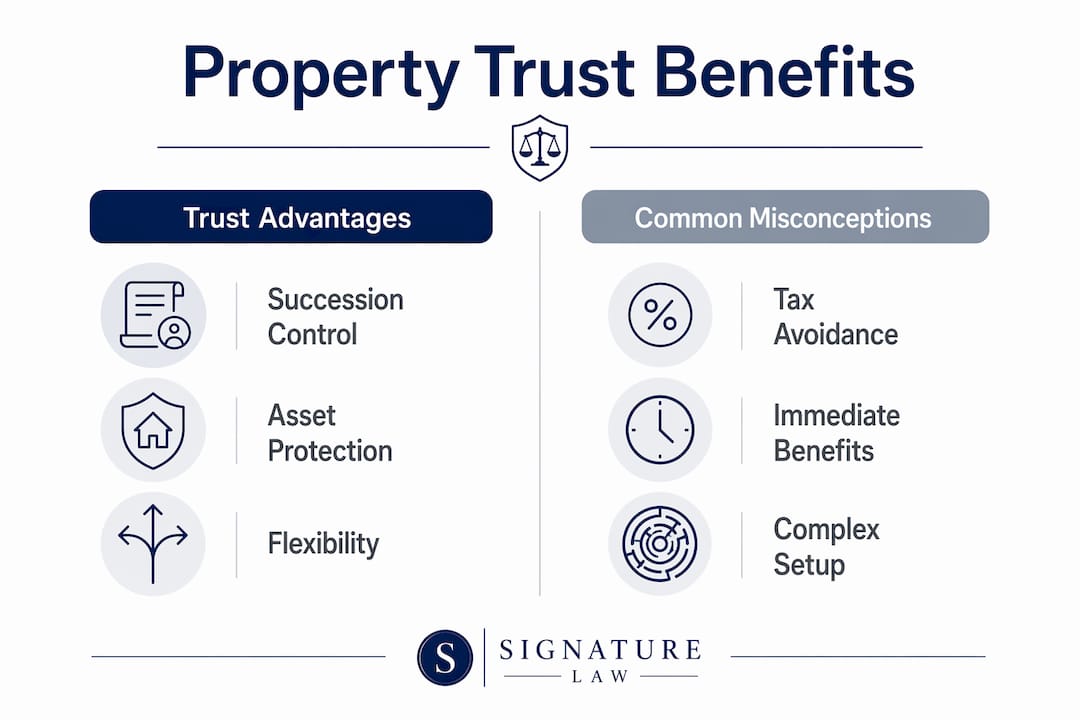
The primary reason to consider a property trust is succession control. A trust lets you specify exactly how your property passes to the next generation, rather than leaving that to the default rules of intestacy or the discretion of a court. That level of precision is not available through a simple will alone.
The benefits of property trusts extend well beyond basic succession planning. Here are the most significant advantages for UK property owners:
- Asset protection from beneficiaries’ personal risks. Trustees exercise discretion to protect family wealth from risks such as a beneficiary’s divorce, bankruptcy, or creditor claims. The property sits outside the beneficiary’s personal estate until the trustees decide to distribute it.
- Protection for vulnerable or minor beneficiaries. A trust allows you to appoint trustees who manage the property responsibly until a child reaches adulthood or a vulnerable adult is properly supported.
- Privacy compared to probate. Trusts provide privacy benefits by reducing public exposure through probate. When an estate passes through probate, the grant and will become public documents. A trust keeps family arrangements more private, though some regulatory reporting still applies.
- Flexibility through trustee discretion. Discretionary trusts allow trustees to respond to changing family circumstances, such as a beneficiary’s financial need or a change in tax law, without requiring a court order.
- Predictable tax exposure. Under the relevant property regime, the maximum inheritance tax charge on a lifetime trust is capped at 6% every ten years, compared with the standard 40% rate on death. That predictability allows for long-term financial planning.
- Multi-generational planning. A trust can hold property across multiple generations, making it particularly useful for blended families, second marriages, or estates with complex family structures.
Pro Tip: The fundamental value of a trust lies in succession control, not short-term tax avoidance. If your primary goal is to eliminate inheritance tax entirely, a trust is unlikely to deliver that outcome. If your goal is to control who benefits and when, a trust is one of the most effective tools available.
Property trust advantages are most clearly felt when a family faces complexity: a blended family, a vulnerable beneficiary, or a substantial estate that needs careful management across decades. For straightforward estates, the benefits may not outweigh the costs and administration involved.

How do property trusts work in practice?
Understanding how a property trust operates day to day helps you assess whether the structure suits your circumstances. The process begins with a trust deed, a legal document that sets out the terms of the trust, names the trustees and beneficiaries, and defines the trustees’ powers and obligations.
Once the trust is established, the steps trustees must follow include:
- Registration with the Trust Registration Service. Trusts must be registered within 90 days of creation and kept up to date. Non-compliance risks administrative penalties and can cause delays when dealing with financial institutions or HMRC.
- Transfer of legal title at Land Registry. The property is transferred into the trustees’ names. Trustees hold legal title registered at Land Registry, meaning any future sale, gift, or mortgage requires their formal consent and signature.
- Annual tax returns. Trustees must file self-assessment tax returns for the trust, reporting any income or gains arising from the property each tax year.
- Ten-yearly inheritance tax reviews. Under the relevant property regime, trustees must calculate and report any periodic charge due to HMRC at each ten-year anniversary of the trust.
- Trustee decision-making. Trustees must act in the best interests of the beneficiaries at all times. Major decisions, including selling the property, must be agreed by all trustees and documented properly.
Pro Tip: Choose trustees carefully. Professional trustees are recommended for complex or large trusts to ensure proper management and compliance. A family member who is difficult to contact or unwilling to cooperate can create serious legal friction when you need to sell or remortgage.
One practical complication that surprises many families is the impact on property transactions. Once property is placed in a lifetime trust, owners lose sole legal ownership and require trustee consent for sales, gifts, or mortgages. If a trustee becomes incapacitated, moves abroad, or simply refuses to act, the transaction can stall. This is not a reason to avoid trusts, but it is a reason to plan trustee appointments with the same care you give to the trust itself.
What are the tax implications of a property trust?
Tax is one of the most misunderstood aspects of property trusts. The honest position is that trusts do not eliminate inheritance tax but redistribute the timing and administration of charges. They trade one tax cost for another, including entry charges and periodic charges under the relevant property regime.
| Tax | Treatment inside a trust | Treatment on outright inheritance |
|---|---|---|
| Inheritance tax (IHT) | Up to 6% periodic charge every 10 years | 40% on death above nil-rate band |
| Capital gains tax (CGT) | Charged on transfer into trust and on disposal | Uplift to market value on death; CGT on later sale |
| Income tax (rental) | Discretionary trust pays 45% on non-dividend income above small band | Individual pays at their marginal rate |
The 6% periodic charge under the relevant property regime applies to the value of the trust fund above the available nil-rate band at each ten-year anniversary. That predictability is a genuine advantage for long-term planning, even though it is not a tax elimination strategy.
Capital gains tax applies when property is transferred into a trust. The transfer is treated as a disposal at market value, which can trigger a CGT charge if the property has increased in value. Hold-over relief may be available in certain circumstances, but this requires professional advice to confirm eligibility.
Income tax is a significant consideration for rental property held in trust. A discretionary trust pays income tax at 45% on non-dividend income above a small standard band. That rate is higher than the basic rate paid by many individual landlords, so the net rental income benefit can be substantially reduced.
A property trust is a timing and control structure, not a tax elimination vehicle. The real question is not “will this save me tax?” but “does this give me the control and protection my family needs?” When the answer to the second question is yes, the tax costs are often worth accepting.
One critical trap to avoid is the “gift with reservation of benefit” rule. If you transfer your home into a trust but continue to live in it without paying a market rent, HMRC treats the property as still forming part of your estate for inheritance tax purposes. The trust provides no IHT benefit in that scenario, and you still face the full 40% charge on death. Setting up a trust requires professional legal advice precisely because these interactions between tax law, family circumstances, and finance are complex and easy to get wrong.
Who should consider a property trust, and when is it not suitable?
Property trusts suit a specific profile of property owner. Understanding whether you fall into that profile saves time, money, and potential legal difficulty.
Profiles that typically benefit from a property trust:
- Owners with substantial estates where the 40% IHT rate on death represents a significant financial risk to the next generation
- Blended families where you want to protect a current spouse’s right to live in the property while preserving the capital for children from a previous relationship
- Families with vulnerable beneficiaries, including those with disabilities or addiction issues, who need managed rather than outright access to assets
- Multi-generational planning situations where property needs to pass through two or more generations in a controlled way
- Owners concerned about a beneficiary’s exposure to divorce proceedings or creditor claims
Situations where a property trust is unlikely to be suitable:
- Small estates where the costs of setting up and administering the trust outweigh any planning benefit
- Owners who want to retain full use of the property and its income without paying a market rent, due to the gift with reservation of benefit rules
- Individuals unwilling to accept ongoing compliance costs, annual tax returns, and trustee administration
- Those seeking a quick or simple solution, as trusts require long-term commitment and professional support
Alternatives worth considering include a well-drafted will, a Lasting Power of Attorney, and careful property ownership structuring, such as tenants in common arrangements. These tools are simpler and cheaper to maintain. For many families, a combination of a clear will and a comprehensive estate planning approach delivers the protection they need without the complexity of a trust.
The decision to use a property trust should never be made in isolation. The interaction between IHT, CGT, income tax, and family law means that what works well for one family can create unexpected costs for another. Professional advice at the outset is not optional. It is the difference between a trust that works as intended and one that creates more problems than it solves.
Key takeaways
Property trusts are most valuable as long-term succession and protection tools, not as short-term tax-saving devices.
| Point | Details |
|---|---|
| Succession control is the core benefit | Trusts let you specify who benefits, when, and under what conditions, beyond what a will alone can achieve. |
| IHT charges are predictable, not eliminated | The relevant property regime caps periodic charges at 6% every ten years, compared with 40% on death. |
| Trustee selection is critical | Unreliable or unavailable trustees can block property sales and create serious legal delays. |
| Rental income faces a 45% trust tax rate | Discretionary trusts pay higher income tax on rental income, which can significantly reduce net returns. |
| Professional advice is non-negotiable | Complex interactions between tax law and family circumstances make upfront legal guidance essential. |
My honest view on property trusts after years in UK law
George here. After working with families on estate planning matters for many years, the single most common mistake I see is people approaching a property trust as a tax-saving shortcut. It is not. The families who benefit most from trusts are those who have a clear, long-term goal: protecting a vulnerable child, preserving assets through a blended family structure, or ensuring a property passes intact across generations.
The compliance side of trusts is genuinely manageable when you have the right support in place. Annual tax returns, Trust Registration Service updates, and trustee decisions are not burdensome if you plan for them from the start. What creates problems is when families set up a trust without understanding the ongoing obligations, then find themselves unable to sell a property because a trustee is uncontactable or unwilling to sign.
The other thing I would say plainly is this: do not let the 6% periodic charge figure mislead you into thinking a trust is always cheaper than outright inheritance. For some estates it is. For others, particularly those with significant rental income, the 45% income tax rate inside a discretionary trust can erode the financial benefit considerably. The right answer depends entirely on your specific circumstances, your family structure, and your long-term goals.
Trusts work best as part of a broader plan that includes a clear will, appropriate Lasting Powers of Attorney, and proper property ownership structuring. They are a powerful tool. But like any powerful tool, they need to be used with care and with a clear purpose in mind. If you are considering a trust, start with the question: “What am I trying to achieve for my family?” The answer to that question will tell you whether a trust is the right vehicle.
— George
Signaturelaw: expert support for property trusts and estate planning
Signaturelaw is a UK law firm founded by solicitor Sital Somaiya, who has over 15 years of experience and has been featured on BBC and ITV. The firm advises individuals and families across the UK on estate planning and family law matters, including property trusts, wills, and probate. If you are weighing up whether a property trust suits your circumstances, Signaturelaw offers fixed-fee initial consultations and multilingual legal advice, so you can get clear answers without commitment. The firm’s approach is personal and thorough, not volume-based. To speak to a solicitor about property trusts or wider estate planning, contact Signaturelaw today.
FAQ
What is a property trust in the UK?
A property trust is a legal arrangement where trustees hold and manage property on behalf of named beneficiaries, separating legal ownership from beneficial ownership. It is governed by a trust deed and regulated under HMRC’s relevant property regime.
Does putting property in a trust avoid inheritance tax?
No. Trusts do not eliminate inheritance tax but change the timing and structure of charges. The relevant property regime imposes a periodic charge of up to 6% every ten years instead of the standard 40% on death.
Can I still live in my home if I put it in a trust?
Living in a property held in trust without paying a market rent triggers the gift with reservation of benefit rules, meaning HMRC treats the property as still part of your estate for IHT purposes. The trust provides no inheritance tax benefit in that situation.
How long does it take to register a property trust?
Trusts must be registered with the Trust Registration Service within 90 days of creation. Failure to register on time risks administrative penalties and can cause delays with financial institutions and HMRC.
Who should act as trustee for a property trust?
Trustees must be reliable, available, and willing to act over the long term. Professional trustees are recommended for complex or high-value trusts to ensure proper compliance and to avoid legal friction when property needs to be sold or remortgaged.
Recommended
- How to avoid inheritance disputes: a UK guide | Signature Law
- Why estate planning matters: secure your family’s future | Signature Law
- Estate Planning in Divorce – Protecting Your Children | Signature Law
- Signature Law Blog: Legal Insights & Updates (2026)