





Family Law
Why use conveyancing: your essential UK property guide

TL;DR:
- Conveyancing is a legal process essential for transferring property ownership in England and Wales.
- A professional conveyancer investigates legal titles, manages deadlines, and protects buyers from hidden risks.
Conveyancing is the legal process that transfers property ownership from one person to another, and it is a requirement for every residential and commercial property transaction in England and Wales. Without it, you cannot legally own the property you have purchased. The process covers far more than paperwork. A qualified conveyancer or conveyancing solicitor investigates title, conducts property searches, reviews contracts, liaises with mortgage lenders, and manages legally binding deadlines on your behalf. Understanding why use conveyancing matters is the first step to protecting what is likely the largest financial commitment of your life.
What does a conveyancer do to protect buyers and sellers?
Conveyancers perform complex legal investigations that go well beyond completing forms. They act as your legal investigator and risk manager throughout the entire transaction. Their role is to identify problems before they become your problem.
A conveyancer’s core responsibilities include:
- Reviewing and drafting contracts to identify unfavourable clauses before you sign anything binding
- Conducting property searches covering planning permissions, environmental risks, drainage, and title history
- Investigating hidden legal defects such as boundary disputes, restrictive covenants, or unapproved structural alterations
- Liaising with your mortgage lender to satisfy all conditions before funds are released
- Managing exchange and completion deadlines to prevent penalties or loss of deposit
- Ensuring the transfer complies with English and Welsh property law throughout
Experienced conveyancers identify hidden defects like boundary disputes or unapproved alterations during pre-exchange investigations. These are problems that a property viewing will never reveal. The majority of a conveyancer’s value is delivered in this pre-exchange phase, where risks are uncovered and resolved before they become legally and financially binding.
Conveyancers work solely for the buyer or seller, never for the estate agent. That independence matters. The estate agent’s job is to complete the sale. Your conveyancer’s job is to protect your legal rights, even if that means advising you not to proceed.

Pro Tip: Ask your conveyancer to walk you through any issues found during the title investigation before exchange. Understanding what has been flagged and resolved gives you confidence that the property is legally sound.
Why is professional conveyancing safer than doing it yourself?
DIY conveyancing is legally permitted in England and Wales, but the risks are substantial. Most mortgage lenders will not release funds unless a qualified solicitor or licensed conveyancer handles the legal work. That alone removes the DIY option for the majority of buyers.
For cash buyers, the risks remain serious. Failing to use a professional conveyancer can result in missing legally binding deadlines, risking penalty interest or complete loss of deposit worth 5–10% of the property price. That is a significant financial exposure on a transaction worth hundreds of thousands of pounds.
| Factor | Professional conveyancer | DIY conveyancing |
|---|---|---|
| Legal expertise | Qualified solicitor or licensed conveyancer | No formal legal qualification required |
| Lender acceptance | Accepted by all major mortgage lenders | Typically refused by mortgage lenders |
| Risk identification | Trained to spot title defects, covenants, and planning issues | High risk of missing hidden legal problems |
| Deadline management | Tracks all legally binding dates | Sole responsibility falls on the buyer or seller |
| Indemnity cover | Professional indemnity insurance in place | No cover if errors cause financial loss |
| Communication | Manages all parties on your behalf | You manage estate agents, solicitors, and lenders directly |
Choosing a conveyancer based solely on lowest price risks poor communication, superficial checks, and increased financial liability. Low-cost firms often operate high-volume models that limit their capacity to respond to your enquiries or investigate complex issues thoroughly. The consequences of a missed legal defect can far exceed any saving made on fees.
“Transparent fees and clear communication are more important to a satisfactory conveyancing experience than the lowest cost.” — What Mortgage
Choosing a conveyancer with local knowledge also matters. A solicitor familiar with your area will recognise common title issues specific to that region, whether that involves leasehold complications, local authority planning history, or flood risk patterns.
How does conveyancing contribute to a smooth property transaction?
Conveyancing keeps a property transaction moving by managing every legal and administrative thread simultaneously. Without that coordination, chains collapse, deadlines are missed, and transactions fail.
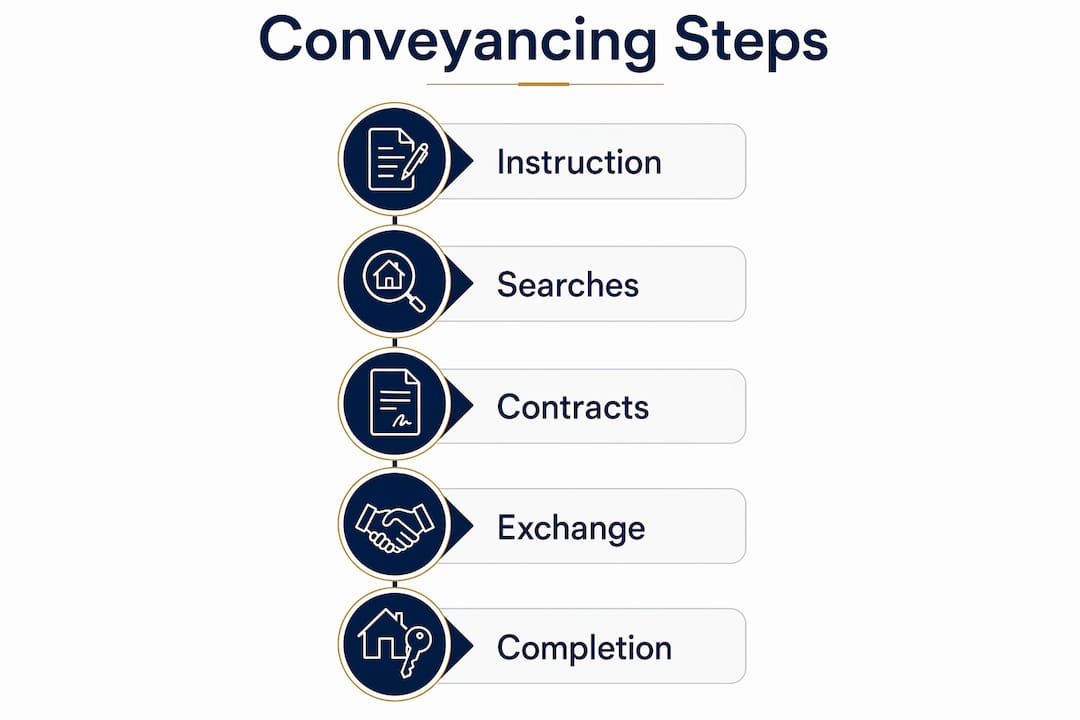
The practical steps a conveyancer manages on your behalf include:
- Receiving and reviewing the draft contract from the seller’s solicitor and raising enquiries on any unclear points
- Ordering and reviewing property searches from the local authority, environmental agencies, and drainage authorities
- Reporting to your mortgage lender and satisfying all conditions required before funds are approved
- Exchanging contracts on the agreed date, at which point the transaction becomes legally binding for both parties
- Managing completion by transferring funds, registering the new ownership at HM Land Registry, and paying Stamp Duty Land Tax where applicable
Conveyancing manages legally binding settlement dates, and missing these can cause penalties or deposit loss. Your conveyancer communicates with all parties to keep the transaction on schedule. When you are simultaneously buying and selling, that coordination becomes even more critical.
Using the same conveyancer for both purchase and sale provides unified oversight that helps prevent chain collapse. A single firm with visibility across both transactions can react immediately to delays on either side. That speed of response can be the difference between a chain surviving and falling apart entirely.
Modern conveyancing uses secure digital platforms for real-time updates and to facilitate faster transactions. Platforms such as PEXA provide online workspaces where clients and stakeholders can track progress securely. This transparency reduces the anxiety that often accompanies property transactions and keeps all parties informed without the need for repeated phone calls.
How to choose the right conveyancer for your transaction
The right conveyancer makes a measurable difference to the speed, security, and outcome of your property transaction. Choosing poorly can cost you time, money, and in the worst cases, the transaction itself.
When selecting a conveyancer, prioritise the following:
- Instruct early. Early conveyancer instruction enables identity and source of funds checks to be completed in advance, and pre-emptively resolves title and documentation issues. This speeds up the transaction once an offer is accepted.
- Check qualifications. Your conveyancer should be either a solicitor regulated by the Solicitors Regulation Authority or a licensed conveyancer regulated by the Council for Licensed Conveyancers.
- Request a transparent fee quote. A reputable firm provides a clear breakdown of legal fees, disbursements, and Stamp Duty Land Tax obligations upfront. Avoid firms that are vague about costs.
- Read client reviews. Look for consistent feedback on communication, responsiveness, and how problems were handled. A single poor review matters less than a pattern of complaints about delays or poor contact.
- Prioritise local knowledge. A conveyancer familiar with your area will recognise area-specific title issues and have established relationships with local estate agents and other solicitors in the chain.
- Ask the right questions. Before instructing, ask how many cases the fee earner handles at once, who your main point of contact will be, and how they communicate progress updates.
Conveyancers serve as negotiators and compliance specialists who protect your legal rights throughout a lengthy process. Their advice may even include recommending that you do not proceed if the risks identified are unacceptable. That level of independent judgement is something no online comparison tool or estate agent recommendation can replicate.
Pro Tip: If you are buying and selling simultaneously, ask whether the firm can handle both transactions. Unified oversight from a single conveyancer significantly reduces the risk of chain collapse and improves communication across all parties.
Key takeaways
Professional conveyancing is the single most effective way to protect your legal and financial interests during a UK property transaction.
| Point | Details |
|---|---|
| Conveyancing is legally essential | Every property transfer in England and Wales requires the conveyancing process to be completed correctly. |
| Conveyancers investigate, not just administer | They identify hidden title defects, boundary issues, and planning problems before exchange of contracts. |
| DIY conveyancing carries serious risk | Missing legally binding deadlines can result in deposit loss worth 5–10% of the property price. |
| Instruct early for faster transactions | Early engagement allows identity checks and title issues to be resolved before an offer is accepted. |
| Quality matters more than cost | Low-cost, high-volume firms risk poor communication and superficial legal checks on your largest asset. |
Why I believe conveyancing is the most undervalued part of buying a home
People spend months searching for the right property. They negotiate hard on price. Then they instruct the cheapest conveyancer they can find and hope for the best. That disconnect surprises me every time.
Conveyancing is often mistaken for simple paperwork rather than recognised as a highly technical legal service vital to financial protection. That misconception leads buyers to treat it as a commodity. It is not. A conveyancer who spots a restrictive covenant that prevents you from extending the property, or identifies an unapproved loft conversion that the seller failed to disclose, has just saved you from a dispute that could cost tens of thousands of pounds to resolve after completion.
The other mistake I see repeatedly is leaving conveyancer instruction too late. Buyers wait until an offer is accepted before they even begin looking. By that point, identity checks, source of funds verification, and preliminary title work all need to happen under time pressure. Instructing early removes that pressure entirely.
Clients benefit most from a conveyancer who acts only for their interests, not the estate agent’s. The estate agent earns their fee when the sale completes. Your conveyancer earns their fee by making sure the sale completes correctly, on the right terms, with your legal rights fully protected. Those are very different motivations. Choose accordingly.
If you are buying or selling property in Romford, East London, or Essex, the conveyancing solicitors in Romford at Signaturelaw understand the local market and the specific issues that arise in this region.
— George
How Signaturelaw supports your property transaction
Signaturelaw provides residential conveyancing services for buyers and sellers across the UK, with particular expertise in Romford, East London, and Essex. The team offers clear, personalised guidance from the moment you instruct them through to completion, keeping you informed at every stage. Signaturelaw is not a high-volume factory firm. Every client receives direct access to their solicitor and a commitment to thorough legal investigation. Whether you are a first-time buyer, moving home, or managing a simultaneous purchase and sale, Signaturelaw protects your interests throughout. Speak to the conveyancing team today at https://signaturelaw.co.uk/contact-us/.
FAQ
What is conveyancing and why is it required?
Conveyancing is the legal process of transferring property ownership between parties in England and Wales. It is required to ensure the transfer is legally valid, the title is clear, and all financial and regulatory obligations are met.
What does a conveyancer do during a property purchase?
A conveyancer reviews and drafts contracts, conducts property searches, liaises with your mortgage lender, investigates title defects, and manages exchange and completion deadlines on your behalf.
Can I do my own conveyancing without a solicitor?
DIY conveyancing is legally permitted for cash buyers, but most mortgage lenders require a qualified solicitor or licensed conveyancer to act. The risk of missing legal defects or deadlines makes professional instruction the safer choice for almost all buyers.
When should I instruct a conveyancer?
Instruct a conveyancer as early as possible, ideally before your offer is accepted. Early instruction allows identity checks and title investigations to begin in advance, which speeds up the transaction once an offer is agreed.
How do I choose a good conveyancer in the UK?
Look for a solicitor regulated by the Solicitors Regulation Authority or a licensed conveyancer regulated by the Council for Licensed Conveyancers. Prioritise transparent fees, clear communication, local knowledge, and positive client reviews over the lowest price. Contact Signaturelaw to discuss your property transaction with an experienced conveyancing solicitor.
Recommended
- Tips for buying property in the UK: 2026 guide | Signature Law
- Why use a conveyancing solicitor for divorce property | Signature Law
- Commercial conveyancing guide for separating couples 2026 | Signature Law
- Conveyancing Solicitors Harold Wood: Clear Guidance for a Smooth Property Journey | Signature Law