





Family Law
Understanding the probate process: divorce and separation
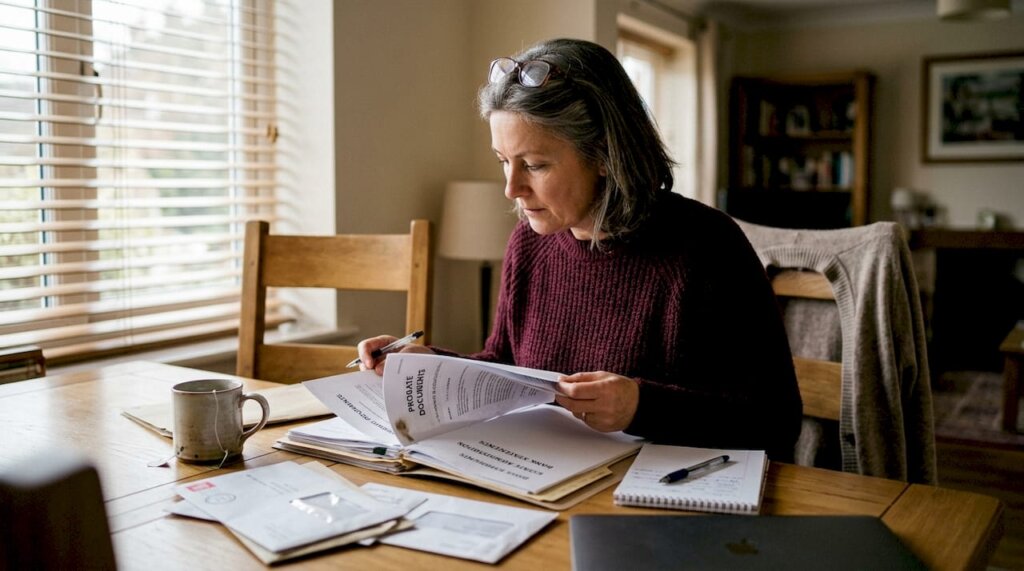
When a loved one dies during or after a divorce, many people assume probate will be straightforward. The reality is far more complex. Probate becomes a legal minefield when family structures shift, wills become outdated, and former spouses retain unexpected inheritance rights. Understanding how probate works, especially during separation or divorce, protects your interests and prevents costly disputes. This guide walks you through the UK probate process, explains how divorce alters inheritance rights, and offers practical steps to navigate probate smoothly when your family circumstances change.
Table of Contents
- Key takeaways
- The UK probate process explained
- How divorce and separation affect probate and wills
- Common challenges and disputes in probate today
- How to navigate probate smoothly during divorce or separation
- How Signature Law supports probate and family law matters
- What is the probate process?
Key Takeaways
| Point | Details |
|---|---|
| Probate basics | Probate is the legal mechanism that authorises the executor to manage a deceased person’s estate and release assets. |
| Divorce alters wills | Divorce revokes gifts to an ex spouse and invalidates the ex spouse as executor, altering inheritance rights. |
| Digital processing speed | Digital applications have shortened the probate grant process, reducing processing times from months to weeks in many cases. |
| Timeline variability | Simple estates can complete within six months, while complex estates may extend beyond twelve months. |
The UK probate process explained
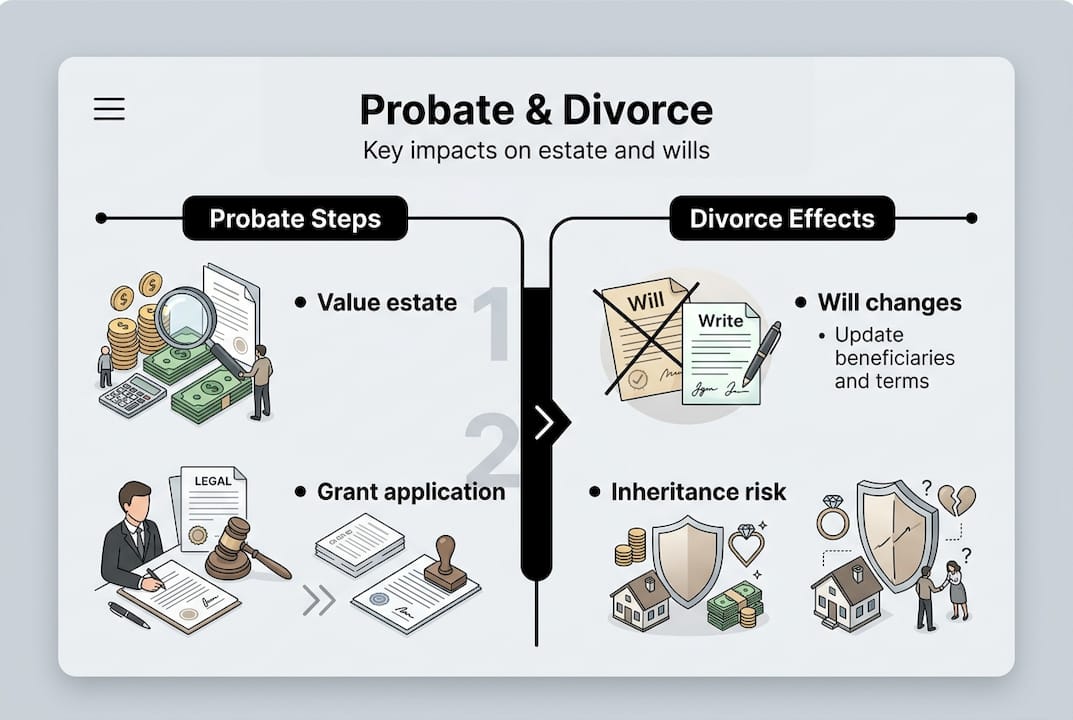
Probate is the legal mechanism that gives someone authority to manage a deceased person’s estate. Without it, banks, property registries, and other institutions will not release assets. The UK probate process involves registering the death within 5 days, locating the will, valuing the estate, paying inheritance tax, applying for probate, collecting assets, settling debts, and distributing to beneficiaries.
Here is how the process unfolds step by step:
- Register the death with the local registrar within five days of the death occurring.
- Locate the will and identify the executor named in the document, or determine who should apply for letters of administration if no will exists.
- Value the entire estate by listing all assets including property, savings, investments, and personal possessions, then subtract debts and liabilities.
- Calculate and pay any inheritance tax due, typically within six months of death, to avoid penalties and interest charges.
- Apply for the grant of probate or letters of administration through the Probate Registry, now streamlined via digital applications.
- Collect all assets once you receive the grant, closing accounts and transferring property titles as needed.
- Settle outstanding debts, taxes, and funeral expenses from the estate funds before making distributions.
- Distribute the remaining estate to beneficiaries according to the will or intestacy rules.
The timeline varies significantly. Simple estates with clear wills and no disputes can complete within six months. Complex estates involving multiple properties, business interests, or contested claims often extend beyond twelve months. Digital applications have improved efficiency, with grant processing now taking 2 to 4 weeks compared to several months previously.
Key considerations during probate include:
- Estate valuation must be accurate and comprehensive to avoid HMRC penalties for underreporting.
- Inheritance tax thresholds and allowances change, so verify current rates when calculating liabilities.
- Joint assets pass automatically to surviving joint tenants without going through probate.
- Beneficiaries cannot receive their inheritance until all debts and taxes are settled.
Understanding the probate process step by step helps you anticipate requirements and avoid delays. For those managing estates during divorce or separation, the process becomes more nuanced.
Pro Tip: Start gathering financial documents immediately after death. Delays in locating bank statements, property deeds, and investment records extend the entire probate timeline significantly.
How divorce and separation affect probate and wills
Divorce fundamentally changes your will and inheritance rights. Many people do not realise that divorce revokes will provisions gifting to or appointing an ex-spouse as executor, but separation without finalised divorce keeps those provisions legally valid. This distinction creates serious complications during probate.
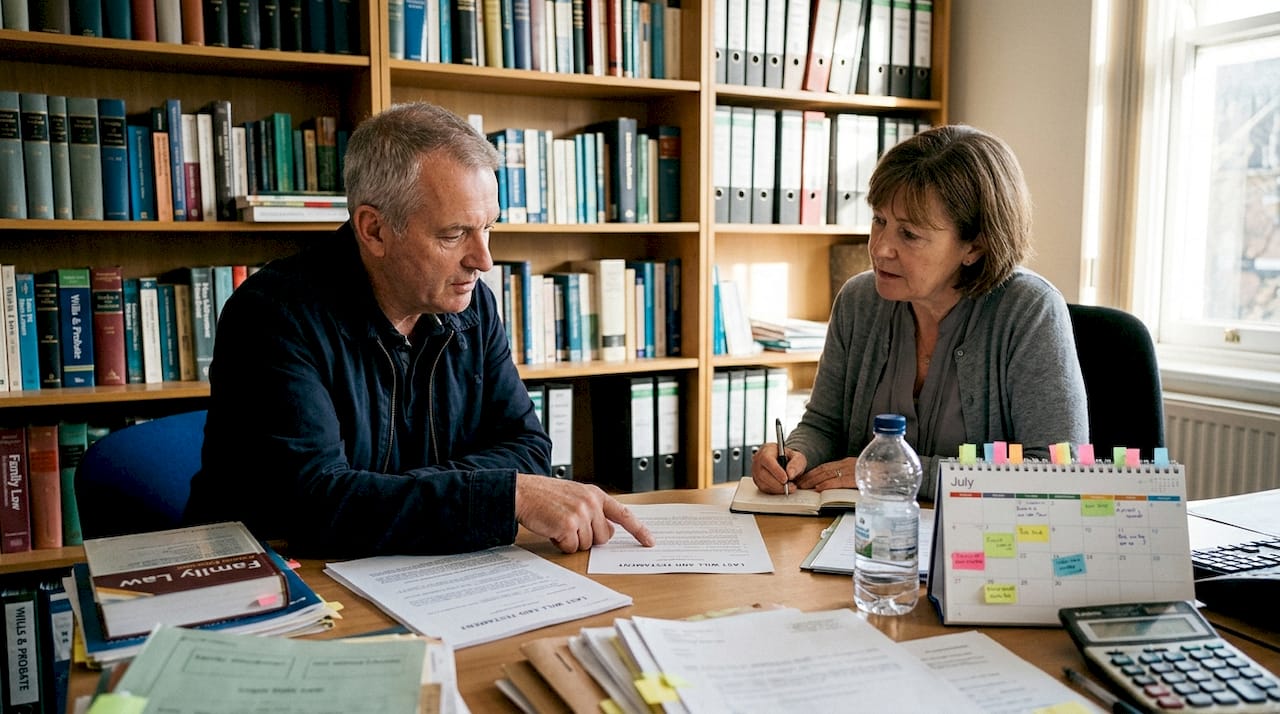
When you finalise your divorce, the law automatically treats your will as if your former spouse died before you. Any gifts to them fail, and any appointment of them as executor becomes void. This sounds protective, but it creates gaps. If your will left everything to your spouse with no alternative beneficiaries named, you die partially intestate. Intestacy rules then determine who inherits those assets, which may not align with your wishes.
Separation without divorce presents different risks. If you are separated but not legally divorced, your spouse retains full inheritance rights under your existing will. They can also inherit under intestacy rules if you die without a valid will. This means an estranged spouse you have not lived with for years could inherit your entire estate, excluding your children or new partner.
Death during divorce proceedings complicates matters further. If one spouse dies after filing for divorce but before the decree absolute, the surviving spouse may still inherit. Courts sometimes allow claims against the estate even when divorce was imminent. These situations require careful legal analysis of timing and procedural stages.
Blended families face additional probate challenges:
- Children from previous relationships may contest wills favouring a new spouse.
- Step-children have no automatic inheritance rights under intestacy rules.
- Former spouses may claim financial provision if the will fails to make reasonable provision.
- Multiple families increase the likelihood of disputes over asset distribution.
DIY wills significantly increase probate complications. Homemade wills often contain ambiguous language, fail to account for divorce, or miss legal formalities. These errors lead to disputes, court applications, and delayed distributions. The rise in DIY wills correlates directly with increased probate litigation.
Pro Tip: Update your will immediately after separation, even before divorce finalises. Make your intentions crystal clear and name alternative beneficiaries to avoid partial intestacy if your primary beneficiary predeceases you or becomes ineligible.
Understanding how property and divorce impact your estate planning helps you make informed decisions during this transition.
Common challenges and disputes in probate today
Probate disputes have surged in recent years. Contentious probate is rising in 2026 due to blended families, DIY wills, and capacity issues, with caveat applications reaching record highs. A caveat is a formal objection that blocks the probate process until the dispute resolves.
The main drivers of probate disputes include:
- Blended families with competing interests between current spouses and children from previous relationships.
- DIY wills lacking proper legal formalities or containing ambiguous provisions.
- Questions about testamentary capacity, whether the deceased had mental capacity when making the will.
- Allegations of undue influence, where someone pressured the deceased into changing their will.
- Lack of financial provision for dependants who expected to inherit.
Disputes fall into two broad categories. Will validity challenges question whether the will is legally valid, attacking its execution, the testator’s capacity, or claiming undue influence or fraud. Inheritance Act claims argue the will fails to make reasonable financial provision for certain dependants, even if the will is technically valid.
| Dispute type | Common causes | Resolution approach |
|---|---|---|
| Will validity | Improper execution, lack of capacity, undue influence, fraud | Court determination, witness evidence, medical records |
| Inheritance Act claims | Insufficient provision for spouse, children, or dependants | Negotiated settlement, court order for reasonable provision |
| Executor disputes | Breach of duty, conflicts of interest, delays | Removal of executor, court supervision, beneficiary claims |
| Asset distribution | Ambiguous will terms, missing beneficiaries | Court interpretation, legal construction proceedings |
Mediation offers a cost-effective alternative to court proceedings. Many probate disputes settle through mediation, avoiding the expense and emotional toll of litigation. Mediators help parties reach compromise solutions that preserve family relationships and reduce legal costs.
Caveats can freeze the probate process for months. Anyone with a legitimate interest can lodge a caveat at the Probate Registry, preventing grant issuance until the objection is resolved or withdrawn. This tactic sometimes serves as leverage in settlement negotiations.
Pro Tip: Address potential disputes proactively. If you anticipate challenges to your will, consider including a letter of wishes explaining your decisions, or discuss your plans with family members before death to manage expectations.
Exploring the benefits of using probate solicitors during divorce helps you understand when professional support becomes essential.
How to navigate probate smoothly during divorce or separation
Managing probate during divorce or separation requires careful planning and professional support. These practical steps help you avoid delays and protect your interests throughout the process.
Hiring a solicitor experienced in both probate and family law provides crucial advantages. DIY probate is viable for simple estates but solicitors are recommended for divorce complexities to avoid delays and errors. A specialist understands how divorce affects inheritance rights, anticipates disputes, and navigates complex family dynamics.
Key actions to take:
- Keep detailed records of all estate assets, communications with beneficiaries, and financial transactions throughout the probate process.
- Apply for the grant of probate as soon as possible after gathering necessary documents to minimise delays and maintain momentum.
- Calculate inheritance tax carefully and pay on time to avoid penalties that reduce the estate value available for beneficiaries.
- Communicate regularly with all beneficiaries to manage expectations and prevent misunderstandings that could escalate into disputes.
- Consider mediation early if conflicts arise, before positions harden and legal costs accumulate.
- Update your own will immediately to reflect your current wishes and protect your intended beneficiaries.
Tax and debt management requires particular attention. Inheritance tax becomes due six months after death, and interest accrues on late payments. Executors are personally liable for distributing assets before settling tax liabilities, so verify all tax obligations before making distributions.
Understanding typical timelines helps set realistic expectations:
| Probate stage | Typical duration | Factors affecting timeline |
|---|---|---|
| Death registration | 1 to 5 days | Availability of medical certificates |
| Estate valuation | 2 to 8 weeks | Complexity of assets, number of institutions |
| Inheritance tax calculation | 2 to 4 weeks | Estate complexity, professional valuations needed |
| Grant of probate application | 2 to 4 weeks | Digital vs paper application, completeness of forms |
| Asset collection | 4 to 12 weeks | Number of institutions, property sales |
| Debt settlement | 2 to 8 weeks | Number of creditors, disputed claims |
| Final distribution | 2 to 4 weeks | Beneficiary locations, asset types |
Digital applications significantly speed up grant processing. The online system reduces waiting times and provides real-time updates on application status. However, complex estates with multiple properties or contested elements may still require paper applications and longer processing.
Pro Tip: Maintain a probate timeline spreadsheet tracking each stage, deadlines, and responsible parties. This transparency helps beneficiaries understand progress and reduces anxious enquiries that consume your time.
Learning how to handle probate in the UK provides additional guidance for managing this complex process effectively.
How Signature Law supports probate and family law matters
Navigating probate during divorce or separation demands expertise in both areas of law. Signature Law combines specialist knowledge in family law and probate to guide clients through these intersecting challenges. Our solicitors understand how divorce affects inheritance rights, anticipate common disputes, and develop strategies that protect your interests while minimising stress and delay. Whether you need support updating your will after separation, managing a contested estate, or understanding your rights during probate, our team provides clear advice tailored to your circumstances. We help clients across the UK navigate complex family transitions with confidence. Learn more about our approach to family law UK impact, explore our probate solicitors services, or discover the specific benefits of using probate solicitors during divorce. Contact us today to discuss your situation.
What is the probate process?
What does probate entail legally?
Probate is the legal process that grants authority to administer a deceased person’s estate. It involves obtaining a grant of probate or letters of administration, which allows the executor or administrator to collect assets, pay debts and taxes, and distribute the remaining estate to beneficiaries according to the will or intestacy rules.
How long does probate usually take?
Straightforward probate cases typically take six to twelve months from death to final distribution. Complex estates involving multiple properties, business interests, tax complications, or disputes can extend well beyond twelve months. Digital applications now reduce grant processing to two to four weeks, improving overall timelines.
How does divorce impact wills and probate?
Final divorce automatically revokes will provisions gifting to or appointing your ex-spouse as executor, treating them as if they died before you. However, separation without finalised divorce keeps all provisions valid, meaning your estranged spouse retains full inheritance rights. This creates significant risks if you die before updating your will post-separation.
When should I hire a probate solicitor?
Consider hiring a probate solicitor when the estate involves divorce complications, blended families, significant assets, business interests, potential disputes, or tax complexities. Professional support prevents costly errors, manages disputes effectively, and ensures compliance with legal requirements. Solicitors are particularly valuable when family relationships are strained or inheritance expectations conflict.
What causes probate disputes?
Common dispute causes include blended family conflicts, DIY wills with errors or ambiguities, questions about testamentary capacity, allegations of undue influence, and claims that the will fails to make reasonable financial provision for dependants. Disputes have increased significantly as family structures become more complex and homemade wills become more common.
Recommended
- Benefits of using a probate solicitor during divorce | Signature Law
- Signature Law Blog: Legal Insights & Updates (2026)
- Family disputes in probate explained: a UK legal guide 2026 | Signature Law
- Probate Process Step By Step UK 2026: 92% Online Success | Signature Law