





Family Law
Why make a will? Secure your family’s future in the UK

TL;DR:
- Making a will is essential for anyone with assets or dependents, regardless of age or wealth.
- Dying without a will can lead to unintended inheritance and family disputes under UK laws.
- Creating or updating a will protects loved ones during family transitions and legal uncertainties.
Making a will is not something reserved for the elderly or the exceptionally wealthy. If you have children, a home, savings, or someone who depends on you, your will matters right now. This is especially true if your family situation has recently changed through divorce, separation, or a new relationship. Without a legally valid will in place, the law decides who receives your assets and who cares for your children. That outcome may bear no resemblance to what you actually want. In this article, we explain what a will does, what is at stake if you do not have one, and how to take the right steps to protect your family.
Table of Contents
- Understanding the purpose of a will
- The risks of not making a will in the UK
- Benefits of having a will during family transitions
- How to get started with making your will
- Why waiting to make a will is a risk your family can’t afford
- Secure your legacy with expert will guidance
- Frequently asked questions
Key Takeaways
| Point | Details |
|---|---|
| Wills protect your wishes | A will ensures your assets and guardianship wishes are followed, not just left to UK default law. |
| Avoid family disputes | Making a will minimises the risk of conflict and confusion among loved ones. |
| Essential after family change | A will is vital after divorce, new children, or complicated relationships. |
| Legal support matters | Expert advice makes your will legally robust, especially in complex family circumstances. |
| You can act today | Starting a will is a practical step and not as daunting as most people think. |
Understanding the purpose of a will
A will is a legal document that records your wishes for what should happen to your estate after you die. A will legally sets out how your possessions, property, and responsibilities are divided after death. That includes physical assets such as your home and savings, but also less obvious matters such as who should care for your children, what happens to your business interests, and even your funeral preferences.
People often assume a will is only relevant once they reach a certain age or accumulate significant wealth. This is a genuinely risky misconception. If you are in your thirties or forties, going through a divorce, raising children, or entering a new relationship, you are precisely the person who needs a will in place.
Some of the most common life events that should prompt you to make or review a will include:
- Getting married or entering a civil partnership
- Going through a divorce or separation
- Having or adopting a child
- Buying a property
- Forming a blended family with stepchildren
- Experiencing a significant change in financial circumstances
A well-written will does more than distribute assets. It prevents family disputes, removes ambiguity, and gives your loved ones legal clarity at an already difficult time. Without one, your family may face lengthy and costly legal proceedings to resolve questions you could have answered in advance.
When writing your will, it is worth understanding that there are several formats available depending on your circumstances. Knowing about the different types of wills helps you choose the right approach for your family structure and financial situation.
“A will is not about planning for death. It is about protecting the people you love while you are still here to make those decisions.”
Pro Tip: If you have children under 18, your will is the only legal document where you can formally name a guardian for them. Without this, a court decides who raises your children.
The risks of not making a will in the UK
Understanding the underlying purpose, it is vital to recognise what can go wrong if you do not make a will. When someone dies without a valid will, they are said to have died intestate. Intestacy means UK law steps in and applies a fixed set of rules to divide your estate, regardless of your actual wishes.
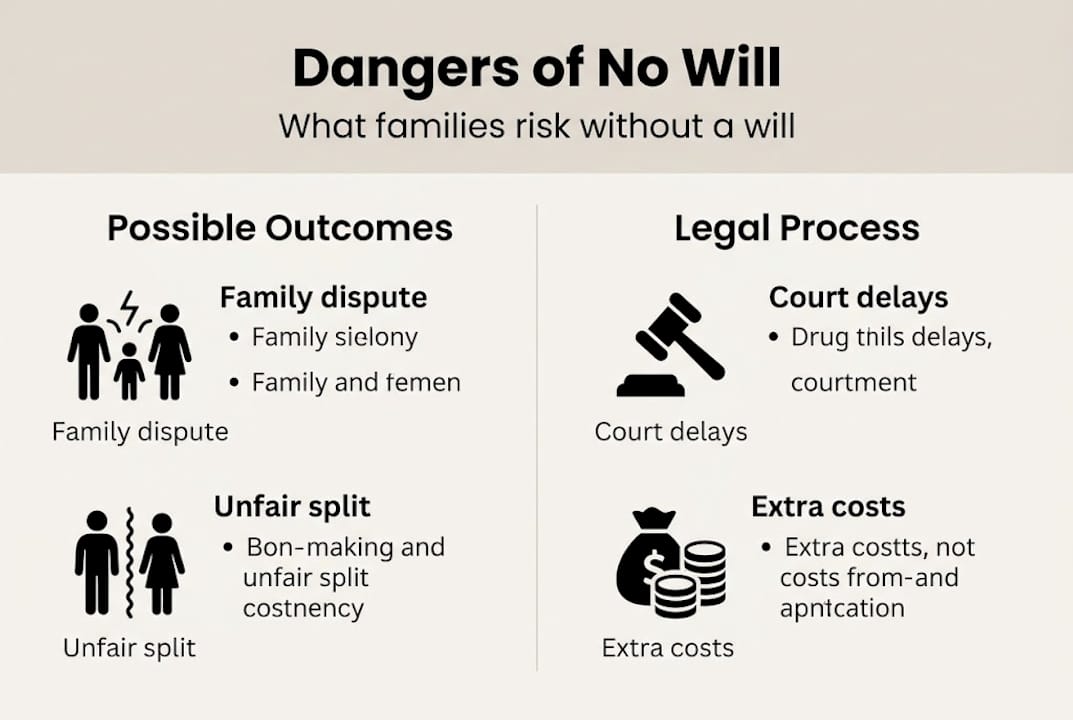
Dying intestate means your assets may not go to the people you intend and could ignite family disputes. The intestacy rules in England and Wales follow a strict order of priority, which does not account for modern family structures.
Here is how the intestacy rules typically apply:
| Family situation | Who inherits under intestacy |
|---|---|
| Married with children | Spouse receives first £322,000 plus half the remainder; children share the rest |
| Unmarried with children | Children inherit everything; partner receives nothing |
| Divorced with children | Children inherit; ex-spouse is excluded |
| Married, no children | Spouse inherits the entire estate |
| Unmarried, no children | Parents, then siblings, then more distant relatives |
This matters enormously if you are separated but not yet legally divorced. Your estranged spouse could still inherit your entire estate. Equally, if you are cohabiting with a partner, they have no automatic right to anything under intestacy rules, regardless of how long you have been together.
The risks of dying intestate are particularly acute for families going through transitions. Consider the following vulnerabilities:
- Stepchildren have no automatic inheritance rights
- Unmarried partners are legally invisible under intestacy rules
- Children from a previous relationship may be overlooked
- Estranged family members could inherit instead of chosen loved ones
- Disputes over probate and family disputes can take years to resolve
Research consistently shows that the majority of UK adults do not have a valid will. This leaves millions of families exposed to outcomes they would never have chosen. The cost of resolving intestacy disputes, both financially and emotionally, can far exceed the cost of simply making a will.
Benefits of having a will during family transitions
Recognising the risks, it is empowering to see how a will can actively safeguard your loved ones, especially through challenging changes. For anyone navigating divorce, separation, or a blended family situation, a will is not optional. It is essential.

Wills have a direct impact on protecting children and partners during divorce or separation. One critical point many people miss is that marriage automatically revokes a previous will. Equally, divorce does not cancel a will entirely. It simply removes your ex-spouse from it, which can create unintended gaps in your estate planning.
Here is a direct comparison of family outcomes with and without a will:
| Scenario | With a will | Without a will |
|---|---|---|
| Unmarried partner | Inherits as directed | Receives nothing |
| Stepchildren | Can be included | No automatic right |
| Minor children | Named guardian appointed | Court decides guardian |
| Estranged relative | Can be excluded | May inherit by default |
| Specific assets | Directed to chosen person | Divided by legal formula |
If you are going through a family transition, here is the order of priority for updating or creating your will:
- Update or create your will immediately upon separation or divorce
- Name or update guardians for any children under 18
- Review all beneficiaries, including any named in pension schemes and life insurance policies
- Consider whether any existing trusts need to be amended
- Seek professional will writing advice if your family structure is complex
Pro Tip: Pensions and life insurance policies are not covered by your will. They pass separately through nomination forms. Review these at the same time as your will to ensure everything is aligned.
For individuals who have experienced domestic abuse or are in the process of leaving a difficult relationship, a will also provides a layer of financial protection. It ensures that your assets reach the people you trust, not those you are trying to move away from.
How to get started with making your will
Now you see the advantages, the next question is how you can take action and where you should start. The good news is that making a will does not need to be complicated or expensive. But the approach you choose should reflect your personal circumstances.
There are three main options for writing a will in the UK:
- DIY will kits: Available online and from stationers. Suitable only for very simple estates with no family complications.
- Online will services: More structured than DIY kits, but still limited in their ability to handle complex family arrangements.
- A qualified solicitor: The most reliable option, particularly if you have children from different relationships, are going through divorce, own property, or have any concerns about family disputes.
A solicitor can ensure your will is legally sound and supports your intentions, especially in complex family situations. This is particularly important when stepchildren, estranged relatives, or cohabiting partners are involved. A poorly worded or improperly witnessed will can be challenged or declared invalid, leaving your family in exactly the situation you were trying to avoid.
To prepare for making your will, gather the following:
- A list of all your assets, including property, savings, investments, and personal possessions
- Details of any debts or liabilities
- The full names and addresses of your chosen beneficiaries
- The name of your preferred executor (the person responsible for carrying out your wishes)
- The name of a guardian for any children under 18
When you are ready to speak to a professional, planning ahead with solicitors who understand the emotional as well as the legal dimensions of family transitions makes a real difference.
Pro Tip: Have an honest conversation with your chosen executor before naming them. Ensure they understand your wishes and are willing to take on the responsibility.
Why waiting to make a will is a risk your family can’t afford
With practical steps in hand, let us pause to reflect on what really happens when people wait too long. In our experience working with families across the UK, the most common reason people delay making a will is not cost or complexity. It is the belief that now is not quite the right time.
That belief is understandable. It is also one of the most damaging assumptions a family can make. Every day without a will is a day when your wishes have no legal standing. Every new relationship, every property purchase, every child born into your family creates a new layer of complexity that an absent will cannot address.
We have seen families torn apart not by grief alone, but by the legal uncertainty that follows an intestate death. The relief that clients feel once their will is in place is immediate and genuine. It is not about dwelling on mortality. It is about clarity. It is about knowing that the people you love are protected, whatever happens.
If your family situation has changed recently, do not wait. Get your will sorted now, while you have the clarity and the opportunity to do it properly.
Secure your legacy with expert will guidance
At Signature Law, we understand that making a will is rarely just a legal task. For many of our clients, it is deeply personal, shaped by divorce, new relationships, children, and the desire to protect the people who matter most. Our founder, Sital Somaiya, has over 15 years of experience and has been featured on BBC and ITV, bringing both authority and genuine compassion to every client we support.
We offer fixed-fee consultations and multilingual legal advice, so you can access the right guidance without unnecessary barriers. Whether you need to understand the difference between probate and wills, are looking for trusted Upminster wills solicitors, or want to understand how family law affects your situation, we are here to help. Contact us today to start your will enquiry.
Frequently asked questions
Who should make a will in the UK?
A will is recommended for all UK adults, regardless of wealth. Anyone over 18 with assets, children, or loved ones who depend on them should make a will, particularly if their family situation is changing.
What happens if you die without a will?
Intestacy rules apply when someone dies without a will, meaning your assets are shared according to a fixed legal formula that may not reflect your wishes and could leave key people, such as an unmarried partner, with nothing.
How often should you update your will?
Wills should always reflect your current circumstances. It is best to review and update your will after major life events such as divorce, marriage, the birth of a child, or the death of a beneficiary.
Can you write a will yourself in the UK?
Yes, but solicitor involvement is advised for non-traditional family arrangements. A solicitor ensures your will is legally valid and genuinely reflects your intentions, especially when stepchildren, cohabiting partners, or estranged relatives are involved.
Recommended
- Why estate planning matters: secure your family’s future | Signature Law
- How to write a will: secure your assets and legacy | Signature Law
- Types of Wills UK: 4 Key Options to Secure Your Family in 2026 | Signature Law
- Probate vs Wills: Why Clarity Matters in the UK | Signature Law