





Family Law
Estate administration guide 2026: navigate probate with confidence

Handling estate administration after a loved one dies feels overwhelming. You’re grieving while facing unfamiliar legal processes, complex paperwork, and tight deadlines. This guide breaks down probate and estate management in England and Wales into clear, manageable steps. You’ll learn what probate is, how to prepare your application, administer the estate effectively, and avoid the common mistakes that cause costly delays.
Table of Contents
- Introduction To Estate Administration And Probate
- Prerequisites: What You Need Before Starting Probate
- Step-By-Step Probate Application Process
- Administering The Estate After Probate Grant
- Common Mistakes In Probate And How To Avoid Them
- Expected Timelines, Costs And When To Seek Professional Help
- Summary And Practical Next Steps
- Expert Probate And Family Law Support At Signature Law
- Frequently Asked Questions
Key takeaways
| Point | Details |
|---|---|
| Probate requirement | Estates over £5,000 require probate to legally manage property and assets. |
| Essential preparation | Gathering documents and accurate valuations before applying speeds the entire probate process significantly. |
| Common pitfalls | Undervaluing assets and missing tax deadlines cause delays; professional help prevents these errors. |
| Expected timelines | Probate applications take 8 to 12 weeks; full estate administration typically requires 6 to 12 months. |
| Professional guidance | Complex or high-value estates benefit greatly from solicitor support to reduce risks and delays. |
Introduction to estate administration and probate
Probate is the legal process that validates a will and authorises executors to manage and distribute the deceased’s estate. Without probate, executors cannot access bank accounts, sell property, or transfer assets to beneficiaries. The term “estate administration” covers the entire journey from obtaining probate through to final distribution.
Estate administration involves several key stages. First, you apply for probate or letters of administration if there’s no will. Then you pay outstanding debts and taxes. Finally, you distribute assets according to the will or intestacy rules. This complete probate guide explains each stage in detail.
When is probate legally required? Most estates worth over £5,000 require a standard probate application fee of £273. You’ll need probate when the deceased owned property or assets solely in their name above this threshold. Banks, building societies, and the Land Registry demand proof of legal authority before releasing funds or transferring property titles.
Some estates avoid probate entirely. Joint ownership assets pass automatically to the surviving owner. Assets held in trust or with nominated beneficiaries transfer directly without court involvement. Small estates below £5,000 may not require formal probate, though some institutions still request it.
Key terminology matters here. Executors are individuals named in the will to manage the estate. Administrators fulfil the same role when no valid will exists. The grant of probate is the legal document confirming your authority. Understanding these terms prevents confusion throughout the process.
Estate administration follows this general sequence:
- Locate the will and obtain certified death certificates
- Value all estate assets accurately
- Apply for grant of probate
- Pay outstanding debts, taxes, and expenses
- Distribute remaining assets to beneficiaries
Each step builds on the previous one. Rushing or skipping stages creates problems later. The UK probate process demands attention to detail and proper documentation at every turn.
Prerequisites: what you need before starting probate
Successful probate begins with thorough preparation. Executors can apply for probate immediately after obtaining the death certificate; no mandatory waiting period exists. However, gathering essential documents and information first makes the application smoother and faster.
Start by obtaining multiple certified death certificates. You’ll need these to close accounts, claim insurance, and support your probate application. Next, locate the original will. Copies won’t suffice for probate. If no will exists, you’ll apply for letters of administration instead following intestacy rules.
Compiling a comprehensive asset list is crucial. Include:
- Bank and building society accounts
- Property, land, and vehicles
- Investments, shares, and pensions
- Personal belongings and jewellery
- Business interests and digital assets
Accurate valuations prevent delays and HMRC challenges. Use professional valuers for property and significant items. Date valuations to the date of death, not current market values. Undervaluing assets creates serious problems we’ll discuss later.
Identify all debts and liabilities the deceased owed. This includes mortgages, loans, credit cards, utility bills, and funeral expenses. You must settle these before distributing inheritance. Outstanding debts reduce the estate’s taxable value, so documenting them accurately matters.
Inheritance tax considerations come next. Estates valued over £325,000 may face inheritance tax at 40% on amounts exceeding this threshold. Additional allowances apply when passing property to a spouse or children. Prepare IHT forms for HMRC even if no tax is due. This step-by-step probate process explains tax obligations clearly.
Confirm your eligibility to apply. Executors named in the will have automatic authority. When no will exists, close relatives apply in order of priority: spouse, children, parents, siblings. Multiple executors can apply jointly, though all must agree on decisions.
Pro tip: Create a dedicated estate administration file, either physical or digital. Store all documents, correspondence, receipts, and valuations in one place. This organisation saves hours later and protects you if beneficiaries question your actions. Detailed records demonstrate your diligence and transparency throughout the process.
Step-by-step probate application process
Once you’ve gathered prerequisites, the formal probate application begins. Follow these steps carefully to avoid rejection or delays.
Step 1: Complete the application forms accurately. You’ll need form PA1P if there’s a will or PA1A without one. Include the original will and certified death certificate. Inheritance tax forms IHT205 or IHT400 must accompany your application depending on estate value and complexity. Double-check every detail before submission.
Step 2: Pay the standard probate court fee of £273 for estates over £5,000. Estates below this threshold pay nothing. You can pay by cheque or online depending on your submission method. Keep payment receipts for your records.
Step 3: Submit your complete application to the Probate Registry. You can apply online, by post, or through a solicitor. Online applications typically process faster. The Registry reviews your documents, checks for errors, and may request additional information or corrections.
Step 4: Wait for processing. Probate court fee is £273 for estates over £5,000; solicitor fees range generally from £1,500 to £5,000 or 1 to 2% of estate value plus VAT. Standard applications take 8 to 12 weeks, though complex estates may take longer. The Registry contacts you if problems arise.
HMRC must clear inheritance tax before the Registry issues your grant. Submit IHT forms early and respond promptly to any queries. Tax clearance delays often extend probate timelines significantly. Once cleared, you’ll receive the grant of probate or letters of administration authorising estate management.
Comparing probate application instructions shows the DIY versus professional assistance trade-offs:
| Factor | DIY Probate | Solicitor-Assisted Probate |
|---|---|---|
| Cost | £273 court fee only | £1,500 to £5,000 plus VAT and court fee |
| Time commitment | 20 to 40 hours executor time | Minimal executor involvement |
| Complexity | Suitable for simple estates | Handles complex assets and disputes |
| Error risk | Higher; mistakes cause delays | Professional accuracy reduces risks |
| Legal protection | Executor bears all liability | Solicitor professional indemnity covers errors |
This UK probate fees and costs comparison helps you decide which approach suits your situation. Simple estates with cooperative beneficiaries often work fine DIY. Complex estates, disputes, or unfamiliar executors benefit enormously from professional support.
Administering the estate after probate grant
Receiving your grant of probate marks a major milestone. Now the real work begins: collecting assets, paying liabilities, and distributing inheritance.

Secure all estate assets immediately. Contact banks, building societies, and investment firms with certified grant copies. They’ll release funds to the estate account you’ve opened. Arrange property insurance and maintenance. Collect physical assets like vehicles, jewellery, and personal belongings. Protect everything until distribution.
Settle debts and liabilities next. Pay funeral expenses, outstanding bills, and loans from estate funds. Clear mortgage balances before transferring property. Submit final tax returns for the deceased covering income up to death. Pay any inheritance tax due, either from estate funds or by selling assets if needed.
Distribute assets according to will instructions or intestacy rules. Transfer property titles through the Land Registry. Close and distribute bank accounts. Transfer shares and investments to beneficiaries. Deliver personal items as specified. Document every distribution with receipts and acknowledgments from recipients.
Maintain meticulous records throughout. Note every transaction, payment, and distribution. Keep copies of all correspondence. These records protect you legally and demonstrate proper estate management. Beneficiaries can request accounts showing how you handled the estate.
Close the estate once all distributions complete. Prepare final accounts summarising income, expenses, and distributions. Obtain receipts from all beneficiaries confirming they received their inheritance. File final paperwork with HMRC confirming estate closure. This typical probate durations guidance explains realistic timeframes.
Pro tip: Communicate regularly with beneficiaries throughout administration. Update them on progress, explain delays, and answer questions promptly. Transparent communication prevents misunderstandings and reduces disputes. Most conflicts arise from poor communication, not actual wrongdoing. Keep everyone informed and document all conversations.
Common mistakes in probate and how to avoid them
Even diligent executors make errors that cause delays and extra costs. Understanding these pitfalls helps you avoid them.
Undervaluing assets ranks as the most frequent mistake. Undervaluing estate assets often causes delays from HMRC requiring recalculations and resubmissions, significantly extending probate timelines. Use professional valuers for property and significant items. HMRC challenges low valuations, forcing resubmissions that add months to the process. Accurate initial valuations save time and stress.
Missing critical deadlines creates serious problems. Inheritance tax payments due within six months of death incur interest and penalties if late. Probate applications have no deadline, but delayed applications complicate asset access and estate management. Mark all deadlines clearly and build in buffer time.
Misunderstanding when probate is required causes unnecessary complications. Some executors apply when not needed, wasting time and money. Others fail to apply when required, preventing asset access. Review estate composition carefully and seek advice if unsure. This probate common mistakes and corrections resource clarifies requirements.
Poor documentation throughout administration creates vulnerability. Beneficiaries may question your decisions if you lack supporting records. Keep detailed accounts, save all receipts, and document your reasoning for significant decisions. Thorough records protect you from challenges and demonstrate proper estate stewardship.
Accurate asset valuations and timely submissions prevent the vast majority of probate delays and complications. Taking time to get values right initially saves months of corrections later. Professional valuations provide defensible figures that HMRC accepts without challenge.
Other common errors include:
- Distributing assets before paying all debts and taxes
- Failing to advertise for creditors in complex estates
- Not obtaining beneficiary releases before final distribution
- Mixing estate funds with personal money
Each mistake risks personal liability for executors. Avoid probate errors by following proper procedures, maintaining clear records, and seeking professional advice when uncertain.
Expected timelines, costs and when to seek professional help
Understanding realistic timelines and costs helps you plan effectively and decide when professional help makes sense.
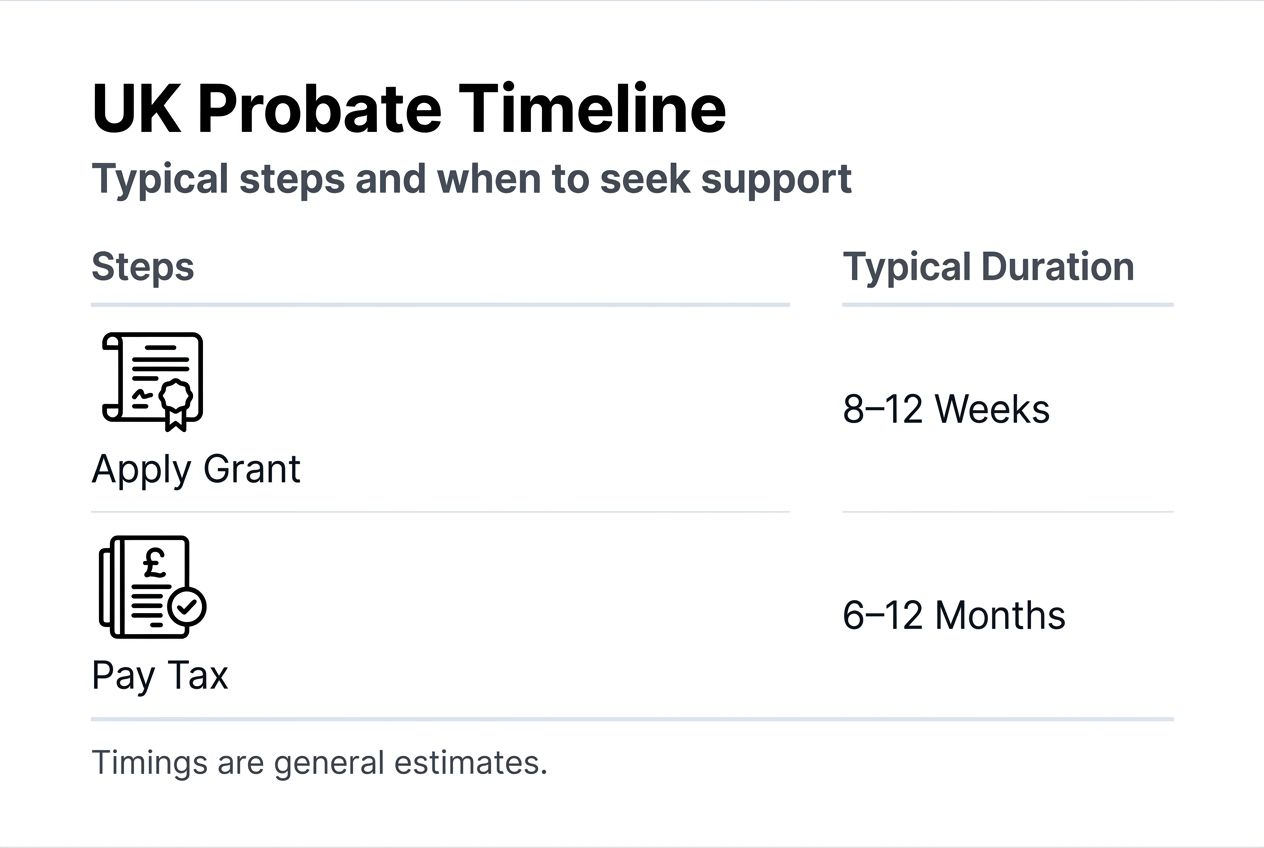
Typical probate grant takes 8 to 12 weeks; full administration often lasts 6 to 12 months. Simple estates with cooperative beneficiaries and no tax complications finish faster. Complex estates with multiple properties, business interests, or disputes take longer. International assets, missing beneficiaries, or contested wills extend timelines significantly.
The probate court fee is £273 for estates over £5,000. Estates below this pay nothing. This covers the grant application only. Additional costs include valuation fees, legal advice, and professional services if needed.
Solicitor fees generally range from £1,500 to £5,000 or 1 to 2% of estate value plus VAT. Hourly rates typically run £150 to £300 depending on location and complexity. Fixed-fee arrangements provide cost certainty for straightforward estates. Percentage-based fees suit larger estates where work scales with value.
Comparing approaches helps clarify when professional help delivers value:
| Consideration | DIY Approach | Professional Support |
|---|---|---|
| Best for | Simple estates under £250,000, cooperative beneficiaries, familiar executors | Complex estates, disputes, unfamiliar legal processes, high-value assets |
| Executor time | 20 to 40 hours over 6 to 12 months | Minimal involvement; solicitor handles administration |
| Risk exposure | Executor personally liable for mistakes | Professional indemnity insurance protects against errors |
| Peace of mind | Stressful during difficult time | Reduces stress; expert handles complexities |
Professional solicitor involvement is recommended for estates over £250,000 or when executors face unfamiliar legal challenges to avoid costly errors and delays. Large estates justify professional fees through error prevention and time savings. Complex situations, disputes among beneficiaries, or unfamiliar executors benefit enormously from expert guidance.
Consider probate solicitor services when:
- Estate value exceeds £250,000
- Multiple properties or business interests involved
- Beneficiaries disagree or threaten disputes
- You’re unfamiliar with legal and tax requirements
- International assets or beneficiaries complicate matters
- You lack time to manage administration properly
Professional help isn’t weakness. It’s smart risk management. The probate costs and timings investment prevents mistakes that cost far more to correct later.
Summary and practical next steps
Estate administration demands attention to detail, accurate valuations, and timely submissions. Success requires following proper procedures throughout the journey from initial preparation through final distribution.
Key stages recap:
- Gather death certificates, locate the will, and compile comprehensive asset lists
- Value assets accurately using professional valuers for property and significant items
- Complete probate application forms carefully and pay the court fee
- Wait 8 to 12 weeks for grant of probate
- Collect estate assets and open estate bank account
- Pay all debts, taxes, and expenses before distributing inheritance
- Distribute assets according to will or intestacy rules
- Maintain detailed records of every transaction and communication
- Close estate with final accounts and beneficiary receipts
Essential documents and tasks checklist:
- Original will and multiple certified death certificates
- Complete asset list with professional valuations dated to death
- Comprehensive debt and liability schedule
- Probate application forms PA1P or PA1A
- Inheritance tax forms IHT205 or IHT400
- Estate bank account for collecting and distributing funds
- Detailed transaction records and beneficiary communications
Accuracy and timeliness prevent the delays and complications that make probate stressful. Taking time to value assets properly, submit forms correctly, and maintain clear records protects you legally and keeps the process moving smoothly.
Complex or stressful situations benefit greatly from professional support. Don’t struggle alone through unfamiliar legal processes during an already difficult time. Contact Signature Law for personalised guidance tailored to your specific circumstances and peace of mind throughout estate administration.
Expert probate and family law support at Signature Law
Navigating estate administration requires expertise, patience, and attention to detail during emotionally challenging times. Signature Law specialises in wills, probate, and family law across the UK, providing the compassionate yet authoritative guidance executors need.
Our experienced wills and probate solicitors understand the pressures you face handling complex legal requirements while grieving. We offer tailored support for executors managing estates of all sizes and complexities, from straightforward administrations to disputed high-value estates with international assets.
Founder Sital Somaiya brings over 15 years’ experience and has been featured on BBC and ITV for legal expertise. Our firm combines legal authority with genuine compassion, supporting individuals and families through life’s most difficult moments. We’re not a factory firm. You receive personalised attention focused on your specific needs.
We also provide comprehensive family law services for clients navigating divorce, child arrangements, and related matters often arising during estate administration. Our integrated approach addresses the full range of legal challenges families face during transitional periods.
Contact Signature Law today for a fixed-fee initial consultation. Let us guide you through estate administration with clarity, care, and professional expertise that reduces stress and protects your interests throughout the process.
Frequently asked questions
What is probate and when is it required?
Probate is the legal process authorising executors to manage and distribute a deceased person’s estate. It’s usually required when the estate includes assets solely owned by the deceased valued over £5,000, such as property, bank accounts, or investments. Joint ownership assets and small estates often avoid probate requirements.
How long does the probate process typically take in the UK?
The grant of probate usually takes 8 to 12 weeks after submitting your application. Complete estate administration generally lasts 6 to 12 months depending on complexity, asset types, and whether disputes arise. Simple estates with cooperative beneficiaries finish faster than complex estates with multiple properties or typical probate timelines international complications.
When should I consider hiring a probate solicitor?
Consider hiring a probate solicitor assistance for estates over £250,000 or where legal complexities, disputes, or unfamiliar processes exist. Professional help significantly reduces the risk of costly errors and delays. If you’re uncertain about any aspect of estate administration, expert guidance provides peace of mind and protects you from personal liability.
What documents do I need to apply for probate?
You need the original will, certified death certificates, completed probate application form (PA1P with will or PA1A without), and inheritance tax forms (IHT205 or IHT400). You’ll also need comprehensive asset valuations dated to the death, a full debt schedule, and payment for the £273 court fee. Professional valuations for property and significant items strengthen your application.
Can I distribute estate assets before receiving probate?
No. You cannot legally distribute assets or access most estate funds before receiving the grant of probate. Banks, building societies, and the Land Registry require proof of your legal authority before releasing assets or transferring titles. Distributing assets prematurely creates personal liability and serious legal complications.
Recommended
- How to Handle Probate UK: Complete Step-by-Step Guide | Signature Law
- Probate Process Step By Step UK 2026: 92% Online Success | Signature Law
- Estate Administration Explained – Managing Loss in Romford | Signature Law
- Probate Costs UK 2026: What Families Must Know | Signature Law