





Family Law
How to avoid inheritance disputes: a UK guide

TL;DR:
- Inheritance disputes often result from poor communication and outdated legal documents, not legal errors. Proper estate planning, regular reviews, and honest family conversations significantly reduce conflict risk. Using neutral executors, trusts, and mediation clauses further helps prevent and resolve disputes efficiently.
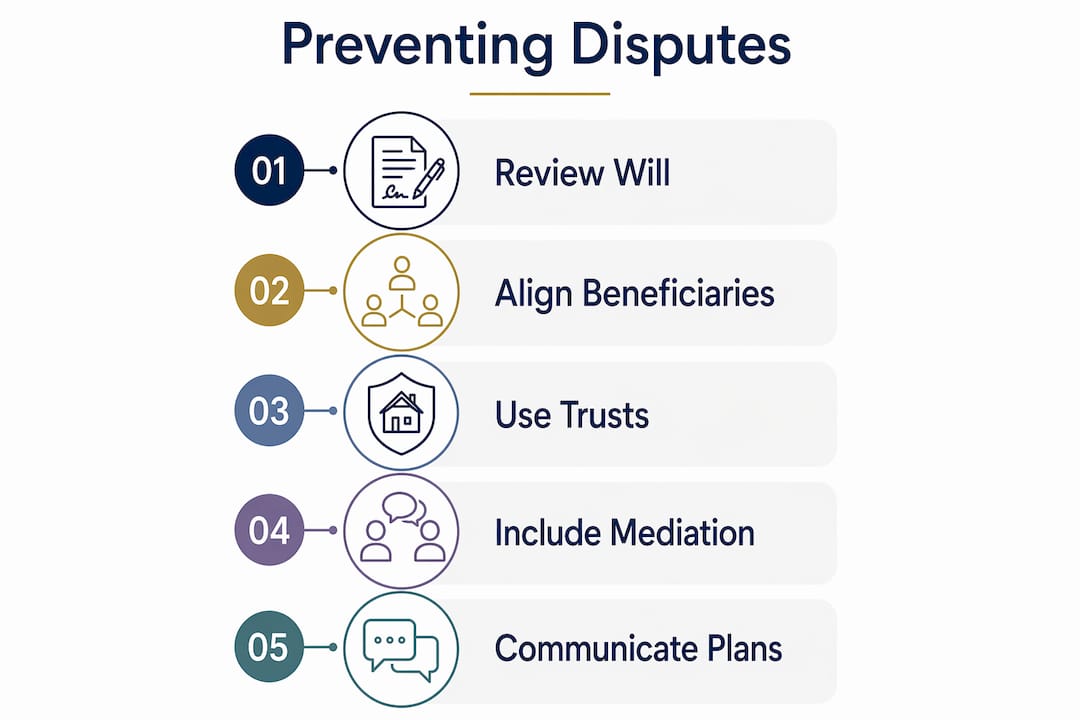
Inheritance disputes are defined as legal or family conflicts that arise when the distribution of a deceased person’s estate is challenged or contested. The formal term used in UK law is “contentious probate,” though the phrase “inheritance dispute” is widely understood and used interchangeably. Most of these conflicts are preventable. Clear estate planning, aligned beneficiary designations, and honest family communication are the three pillars that reduce the risk of conflict significantly. Inheritance conflicts rarely stem from a single legal error; emotional factors and communication breakdowns are the primary triggers. That means the solution is both legal and relational, and you can act on both right now.
How to avoid inheritance disputes: understanding the root causes
Preventing inheritance conflicts starts with knowing what causes them. The most common triggers are not dramatic legal battles. They are quiet, accumulated failures in planning and communication.

Emotional dynamics and outdated documents
Grief intensifies every perceived slight. When a family member feels overlooked or treated unfairly, that emotion can quickly become a legal challenge. Outdated wills are a major accelerant. A will written before a second marriage, the birth of grandchildren, or the acquisition of a property may no longer reflect your true intentions. Courts apply the law as written, not as intended.
Misaligned asset titles and beneficiary forms
Legal distribution follows beneficiary designations and asset titles over verbal wishes or even the terms of a will. This is one of the most misunderstood points in estate planning. A pension pot or jointly held property passes according to its own legal designation, regardless of what your will says. If those designations are out of date, the estate may be distributed in a way that contradicts your wishes entirely.
Limited but complex legal grounds for contesting a will
Under UK law, the legal grounds for contesting a will are specific. They include lack of testamentary capacity, undue influence, fraud, and failure to comply with the Wills Act 1837. Claims under the Inheritance (Provision for Family and Dependants) Act 1975 allow certain individuals to apply for reasonable financial provision if they were financially dependent on the deceased. Understanding these grounds helps families distinguish between genuine legal challenges and emotional grievances.
Executor conduct and fiduciary duty
Executors have a fiduciary duty to act in the estate’s best interests, not to appease individual heirs. When executors are perceived as favouring one beneficiary over another, disputes follow. Choosing the right executor is therefore as important as writing the will itself.
Pro Tip: If your estate includes a blended family, a business interest, or significant assets, consider appointing a professional executor rather than a family member. This removes the perception of bias before it becomes a problem.
Which estate planning tools are most effective at preventing conflicts?
A well-constructed estate plan is the single most effective tool for preventing inheritance conflicts. The following tools each serve a distinct purpose in building a dispute-resistant plan.
A properly executed and regularly reviewed will
A valid will under UK law must be signed by the testator in the presence of two independent witnesses, who must also sign. Beyond execution, the will must be reviewed regularly. Experts recommend reviewing wills and beneficiary designations every 3–5 years, or after any major life event. A will that reflects your current circumstances leaves far less room for challenge.
Trusts
Trusts add a layer of clarity and privacy that a will alone cannot provide. A discretionary trust, for example, allows a trustee to distribute assets according to changing family circumstances rather than a fixed formula. Trusts also bypass the probate process, which means their contents remain private and distribution can happen more quickly. For families with minor children, vulnerable beneficiaries, or complex assets, a trust is often the most sensible structure.
No-contest clauses
No-contest clauses discourage meritless challenges by penalising disputants through forfeiture of their inheritance if they contest and lose. They are not foolproof, but they reduce opportunistic disputes significantly. A beneficiary who stands to lose a meaningful inheritance is far less likely to mount a speculative legal challenge.
Mediation provisions
Including a mediation clause in your estate documents requires beneficiaries to attempt mediation before pursuing litigation. Mediation resolves the majority of estate disputes through structured negotiation, preserving family relationships in the process. This is a practical and cost-effective safeguard.
| Planning tool | Primary benefit | Best suited for |
|---|---|---|
| Updated will | Reflects current wishes and circumstances | All estates |
| Discretionary trust | Flexible distribution, bypasses probate | Complex or blended families |
| No-contest clause | Deters speculative legal challenges | Estates with unequal distributions |
| Mediation provision | Resolves disputes privately before court | Families with known tensions |
| Aligned beneficiary forms | Prevents contradictions between documents | Estates with pensions or joint assets |
Pro Tip: Review your pension nomination forms at the same time as your will. Pension providers are not bound by your will, so an outdated nomination can override years of careful estate planning.
How should you communicate your estate planning intentions to your family?
Legal documents alone do not prevent disputes. Open communication about estate plans, especially when unequal or special provisions exist, reduces surprises and misunderstandings. Families who understand the reasoning behind decisions are far less likely to challenge them.
The following steps give you a practical framework for communicating your intentions clearly.
-
Have the conversation early. Waiting until a health crisis forces the discussion creates pressure and resentment. Raising the topic while you are well signals that you are being thoughtful, not secretive.
-
Write a letter of explanation. A letter of wishes is not legally binding, but it provides context for your decisions. If you have left more to one child than another, explaining why removes the assumption of favouritism. Courts also consider letters of wishes when assessing the testator’s intentions.
-
Hold a facilitated family meeting. For larger or more complex estates, a structured meeting with a solicitor or mediator present can address questions before they become grievances. This is particularly useful in blended families or where business assets are involved.
-
Appoint a neutral executor or trustee. Neutral third-party executors reduce perceptions of bias in disputed family estates. A professional fiduciary has no personal stake in the outcome, which makes their decisions harder to challenge on emotional grounds.
-
Keep your family informed of updates. When you revise your will or change a beneficiary designation, let the relevant people know. Surprises after death are the most common trigger for disputes.
Communication does not replace legal documentation. It complements it. The two together create a plan that is both legally sound and relationally resilient. For guidance on how estate planning intersects with family dynamics, Signaturelaw has published practical resources covering a range of life circumstances.
Step-by-step process for reviewing and updating your estate plan
An estate plan is not a document you create once and file away. It is a living record that must keep pace with your life. The following process keeps your plan current and legally effective.
Review timeline
| Trigger | Recommended action |
|---|---|
| Every 3–5 years | Full review of will, trusts, and beneficiary forms |
| Marriage or civil partnership | Update will immediately (marriage revokes a previous will in England and Wales) |
| Divorce or separation | Remove former spouse from will and update beneficiary forms |
| Birth of a child or grandchild | Add or adjust provisions |
| Death of a named beneficiary or executor | Replace promptly |
| Significant change in assets | Review asset titles and trust structures |
| Change in tax law | Seek professional advice on inheritance tax implications |
Review checklist
- Confirm your will is validly executed and reflects your current wishes.
- Check all beneficiary designations on pensions, life insurance, and joint accounts.
- Verify that asset titles align with your estate plan.
- Review the suitability of your named executor and trustees.
- Confirm any trusts are properly administered and up to date.
- Consider whether a mediation clause or no-contest clause should be added.
When to seek legal advice
Seek a solicitor’s advice whenever your circumstances change materially, when you are considering a trust structure, or when you suspect a family member may challenge your estate. Early legal advice is far less costly than contested probate proceedings. The family disputes in probate guide from Signaturelaw explains the legal grounds and processes involved in detail.
Pro Tip: Set a calendar reminder every three years to review your estate documents. Treat it as routine maintenance, the same way you would review your insurance or pension contributions.
What common mistakes should you avoid when planning your estate?
The most damaging estate planning errors are not dramatic oversights. They are quiet omissions that create conflict long after you are gone.
-
Relying on verbal assurances. Telling a family member they will receive a specific item or sum is not legally binding. Only a properly executed will or trust document creates enforceable rights. Verbal promises create expectations that the law cannot honour.
-
Neglecting beneficiary form alignment. A will that leaves your estate equally to your children means nothing if your pension nomination names only one of them. Beneficiary forms on pensions and life insurance policies override your will entirely.
-
Avoiding difficult conversations. Unequal distributions, gifts to charities, or provisions for a new partner are all legitimate choices. Explaining them in advance prevents the assumption of malice or diminished capacity.
-
Misunderstanding the executor’s role. Many people appoint a trusted family member as executor without considering the burden this places on them. Executors must manage assets, pay debts, file tax returns, and distribute the estate, all while grieving. They also carry personal liability if they make errors.
Fiduciary duty is not a technicality. Executors must document every decision, avoid conflicts of interest, and follow legal rules precisely. Families who understand this distinction are far better equipped to distinguish between an executor doing their job correctly and one acting improperly.
Understanding executor and trustee obligations in full before appointing someone protects both the estate and the person you are asking to serve.
Key takeaways
Preventing inheritance disputes requires a combination of legally sound documents, aligned beneficiary designations, and honest family communication maintained consistently over time.
| Point | Details |
|---|---|
| Update your will regularly | Review every 3–5 years and after every major life event to keep your wishes legally enforceable. |
| Align all beneficiary designations | Pension nominations and joint asset titles override your will; check them at every review. |
| Communicate your intentions | A letter of wishes or family meeting removes the element of surprise that most often triggers disputes. |
| Appoint a neutral executor | A professional executor removes the perception of bias and reduces the risk of challenge. |
| Use mediation provisions | Including a mediation clause in your estate documents resolves disputes privately before they reach court. |
What I have seen change outcomes in estate disputes
Having worked with families navigating some of the most painful inheritance conflicts, the pattern I see most often is not legal failure. It is relational failure that the law is then asked to resolve. A parent who never explained why one child received more than another. An executor who was also a beneficiary and never acknowledged the conflict of interest. A will written twenty years ago that no longer reflected the family as it actually existed.
The families who avoid these conflicts are not necessarily wealthier or more legally sophisticated. They are the ones who had the harder conversations earlier. They appointed executors who had no personal stake in the outcome. They reviewed their documents when life changed, not when crisis forced them to.
Mediation resolves disputes faster and more privately than litigation, and courts actively encourage it. But the families who benefit most from mediation are those who built it into their planning from the start, not those who discovered it after a dispute had already fractured relationships.
My honest view is this: the legal tools are straightforward. A well-drafted will, a trust where appropriate, aligned beneficiary forms, and a neutral executor cover most of the risk. The harder work is the conversation with your family. That conversation, done early and done honestly, is the most effective dispute prevention tool available. No document replaces it.
— George
How Signaturelaw supports families with estate planning
Signaturelaw works with families across the UK to build estate plans that are legally sound and relationally considered. The firm’s solicitors advise on will drafting, trust structures, executor selection, and mediation provisions, combining technical expertise with genuine understanding of the family dynamics involved. Whether you are creating a plan for the first time or reviewing an existing one, Signaturelaw offers fixed-fee initial consultations and multilingual support. Founder Sital Somaiya has over 15 years of experience and has been featured on BBC and ITV. For families who want to protect their estate and their relationships, Signaturelaw’s family law services provide a clear, personalised path forward. Contact Signaturelaw today to arrange your consultation.
FAQ
What is the most effective way to prevent inheritance disputes in the UK?
A regularly updated will, aligned beneficiary designations, and a letter of wishes explaining your decisions together form the most effective prevention strategy. Open family communication removes the element of surprise that most commonly triggers disputes.
Can a no-contest clause stop a family member from challenging my will?
A no-contest clause deters speculative challenges by causing a beneficiary to forfeit their inheritance if they contest and lose. It does not prevent a challenge based on genuine legal grounds such as lack of capacity or undue influence.
How often should I review my estate plan?
Experts recommend reviewing your will and all beneficiary designations every 3–5 years, or immediately after any major life event such as marriage, divorce, or the birth of a child.
What happens if family members disagree about an estate after death?
Most inheritance disputes settle before trial, with courts actively encouraging mediation to save costs and preserve relationships. Early mediation narrows disagreement points and resolves conflicts faster and privately than litigation.
Do I need a solicitor to write a will in the UK?
You are not legally required to use a solicitor, but a professionally drafted will significantly reduces the risk of errors that could invalidate it or create ambiguity. For estates involving trusts, business assets, or blended families, professional advice is strongly recommended. Signaturelaw offers wills and probate services tailored to your circumstances.
Recommended
- Family disputes in probate explained: a UK legal guide 2026 | Signature Law
- Inheritance planning for divorce and separation UK | Signature Law
- Will disputes explained: your UK legal rights guide | Signature Law
- Investment property law in UK family disputes explained – Signature Law