





Family Law
UK Probate Timeline: Typically 6-12 Months to Complete

Many executors believe probate drags on for years. The reality is more reassuring. According to GOV.UK probate guidance, most UK probate processes complete within 6 to 12 months. Understanding this timeline empowers you to manage expectations, coordinate tasks efficiently, and reduce the anxiety that often accompanies executor duties. This guide walks you through each probate stage, common delays, and practical steps to keep the process moving smoothly.
Table of Contents
- Introduction To Probate Timeline In The UK
- Typical Probate Timeline And Key Stages
- Common Causes Of Probate Delays And How To Avoid Them
- Handling Family Disputes During Probate
- Probate Fees And Costs Overview
- Role Of Probate Solicitors In Facilitating Timely Probate
- Common Misconceptions About Probate Timeline
- Conclusion And Practical Tips For Executors
- Discover Expert Probate Support At Signature Law
- FAQ
Key Takeaways
| Point | Details |
|---|---|
| Typical Duration | Probate usually completes in 6 to 12 months for most estates. |
| Grant Application | The Grant of Probate application takes 8 to 12 weeks on average. |
| Paperwork Errors | Incomplete or incorrect paperwork causes 25% of probate delays. |
| Family Disputes | Conflicts among beneficiaries affect 20% of cases and extend timelines. |
| Solicitor Support | Engaging probate solicitors reduces executor workload by 30 to 40%. |
Introduction to Probate Timeline in the UK
Probate is the legal process that grants an executor or administrator the authority to manage and distribute a deceased person’s estate. In the UK, this typically involves applying for a Grant of Probate, valuing assets, paying debts and taxes, and distributing inheritances to beneficiaries. Understanding what probate entails and how long each stage lasts is crucial for executors who want to avoid surprises and maintain peace of mind.
According to official government guidance, the average probate process in the UK takes between 6 and 12 months from application to completion. This timeframe can vary depending on estate complexity, the presence of a valid will, and whether disputes arise among family members. Knowing the timeline helps you set realistic expectations for beneficiaries and reduces the stress that comes with uncertainty.
Executors coordinate a wide range of legal, financial, and administrative duties. You must gather documents, apply for the Grant of Probate, settle outstanding debts, calculate and pay inheritance tax, and finally distribute assets. Each step requires attention to detail and timely communication with banks, HMRC, and beneficiaries. A clear understanding of the step-by-step probate guide can make these responsibilities feel more manageable.
Families often worry about how long probate will take, especially when financial obligations or emotional closure depend on the estate’s resolution. Setting accurate expectations from the outset improves transparency and trust among all parties. When executors understand the typical timeline, they can communicate effectively, anticipate delays, and take proactive steps to avoid common pitfalls.
Key responsibilities during probate include:
- Applying for the Grant of Probate or Letters of Administration
- Valuing all estate assets, including property, investments, and personal belongings
- Paying outstanding debts, funeral costs, and inheritance tax
- Distributing remaining assets to beneficiaries according to the will or intestacy rules
- Maintaining accurate records and communicating with all stakeholders throughout the process
Typical Probate Timeline and Key Stages
Breaking down the probate process into clear stages helps you visualize what lies ahead and when each task typically occurs. Understanding these phases allows you to allocate time effectively and coordinate with professionals when needed.
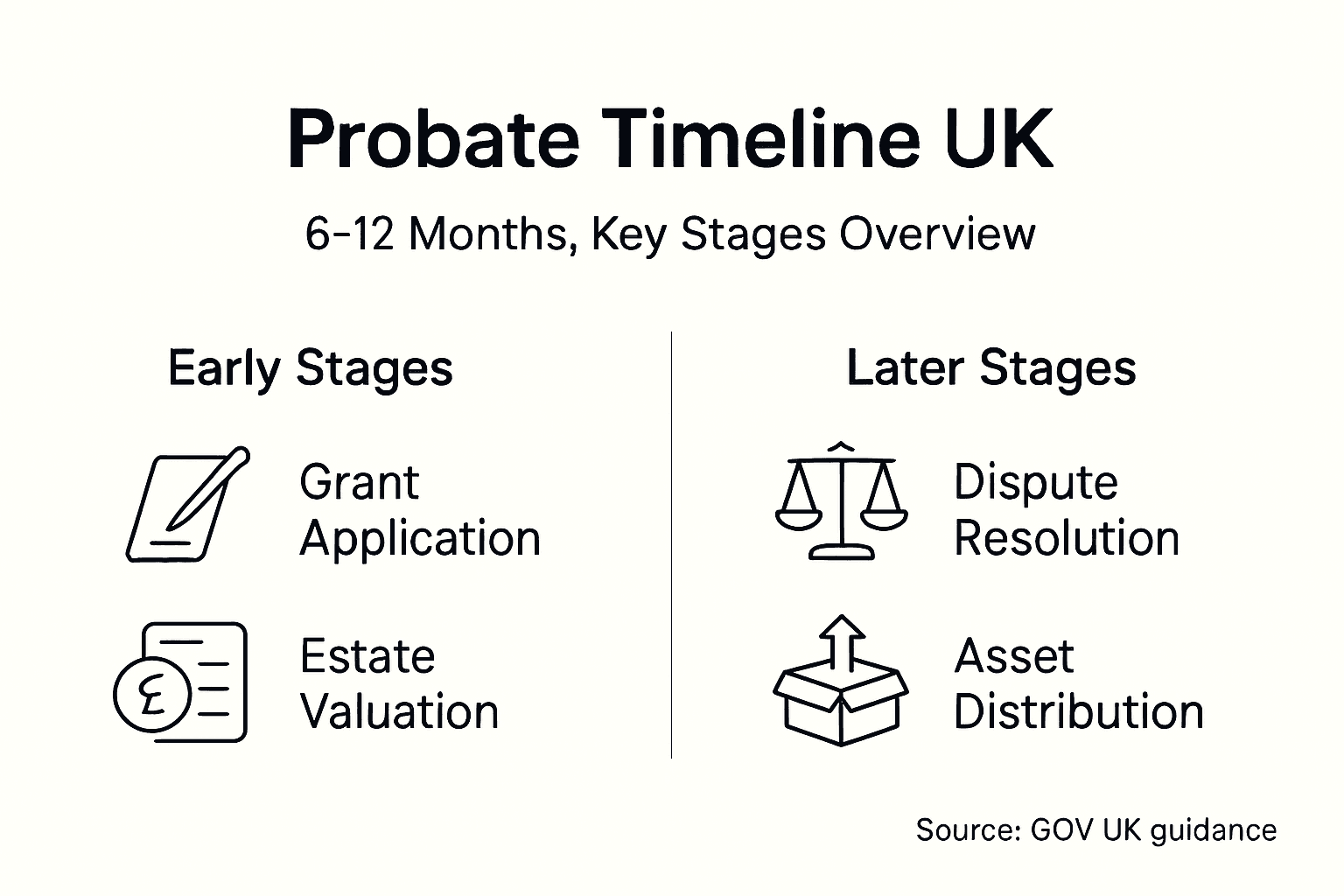
Stage 1: Apply for Grant of Probate (8 to 12 weeks)
The first major step is applying for the Grant of Probate, the legal document that confirms your authority as executor. According to GOV.UK guidance on applying for probate, this application typically takes 8 to 12 weeks from submission to receipt if no complications arise. You must submit the original will, a completed probate application form, an inheritance tax form, and the application fee. Any errors or missing information can delay approval significantly.

Stage 2: Estate Valuation and Inheritance Tax Payment (4 to 8 weeks)
Once you receive the Grant, you can begin valuing the estate in detail. This involves obtaining valuations for property, stocks, bank accounts, and personal possessions. HMRC requires accurate reporting of all assets and liabilities. If inheritance tax is due, payment must be made before you can proceed with distribution. Complex estates with multiple properties or international assets can extend this stage.
Stage 3: Resolve Disputes and Complete Administration (2 to 6 months)
After valuations and tax payments, you must settle outstanding debts, close accounts, and address any disputes among beneficiaries. Family conflicts, contested wills, or creditor claims can prolong this phase significantly. Clear communication and professional mediation often prevent disputes from escalating into costly litigation.
Stage 4: Distribute Assets and Close Estate (1 to 2 months)
The final stage involves transferring assets to beneficiaries as specified in the will or according to intestacy rules. You must obtain receipts, prepare final accounts, and ensure all legal obligations are met before formally closing the estate. This stage is usually straightforward unless disputes resurface or beneficiaries are difficult to locate.
Probate Timeline Overview:
| Stage | Typical Duration | Key Tasks |
|---|---|---|
| Grant of Probate Application | 8 to 12 weeks | Submit documents, pay fees, wait for approval |
| Estate Valuation & Tax | 4 to 8 weeks | Value assets, calculate and pay inheritance tax |
| Dispute Resolution & Administration | 2 to 6 months | Settle debts, resolve conflicts, finalize accounts |
| Asset Distribution | 1 to 2 months | Transfer assets, obtain receipts, close estate |
Pro Tip: Start gathering documents early. Collect bank statements, property deeds, investment records, and the will immediately after the death. Early preparation can shave weeks off the overall timeline and reduce stress during the application process.
For more detailed guidance on each step, consult a complete probate guide or seek advice on probate costs UK guide to budget accurately.
Common Causes of Probate Delays and How to Avoid Them
While the typical probate timeline is 6 to 12 months, several factors can extend this period significantly. Being aware of these common delay causes helps you take preventive action and keep the process on track.
Paperwork Errors (25% of Delays)
Incomplete or inaccurate paperwork is the leading cause of probate delays. According to GOV.UK probate timeline guidance, incomplete paperwork accounts for 25% of probate delays. Missing signatures, incorrect valuations, or outdated forms can result in rejection and require resubmission, adding weeks to the process. Double checking every document before submission is essential.
Family Disputes (20% of Cases)
Family conflicts over will validity, asset distribution, or executor decisions affect approximately 20% of probate cases. Disputes can add months to the timeline and often require mediation or court intervention. Proactive communication, transparency, and early legal advice can prevent many conflicts from escalating.
Complex Estate Valuations (3 to 6 Months Added)
Estates with multiple properties, overseas assets, or business interests require detailed valuations and specialist advice. These complexities can extend the valuation stage by 3 to 6 months. Engaging qualified surveyors and accountants early speeds up this process.
Intestacy Cases (Several Months Added)
When the deceased left no valid will, the estate is distributed according to intestacy rules. These cases require additional legal steps to appoint an administrator and determine rightful beneficiaries. The added procedural complexity can increase the timeline by several months.
How to Avoid Delays:
- Submit complete and accurate paperwork on the first attempt
- Maintain open communication with all beneficiaries from the outset
- Seek professional valuations for complex or high value assets
- Engage a solicitor early if disputes or complications arise
- Keep detailed records of all decisions and communications
“Proactive preparation and clear communication are your best defenses against probate delays. Executors who invest time upfront in accurate paperwork and family transparency often complete probate faster and with less conflict.”
Pro Tip: If family tensions are high, consider arranging a family meeting early in the process. Setting expectations, explaining the probate timeline, and addressing concerns openly can prevent disputes before they arise.
For families facing complex family law issues that intersect with probate, professional guidance is invaluable.
Handling Family Disputes During Probate
Family disputes are one of the most emotionally draining aspects of probate. Conflicts over inheritance, will validity, or executor decisions can fracture relationships and delay estate distribution for months or even years. Managing these disputes effectively is critical for preserving family harmony and moving probate forward.
Approximately 20% of probate cases involve some form of family dispute. Common triggers include perceived unfairness in the will, disagreements over asset valuations, or executor decisions that beneficiaries question. When disputes arise, they can escalate quickly without intervention, leading to costly litigation and prolonged timelines.
Mediation offers a constructive alternative to court proceedings. A neutral third party facilitates conversations, helps family members understand each other’s perspectives, and works toward mutually acceptable solutions. Mediation is typically faster, less expensive, and less adversarial than litigation.
Seeking early legal advice is crucial. Solicitors experienced in family dispute support can assess the situation, advise on legal rights, and recommend strategies to de escalate tensions. Early intervention often prevents disputes from becoming entrenched positions.
Maintaining clear, consistent communication with all beneficiaries is key. Regular updates on probate progress, transparent explanations of decisions, and willingness to answer questions build trust and reduce suspicion. When beneficiaries feel informed and respected, disputes are less likely to arise.
Knowing when to seek professional dispute resolution is essential. If family discussions become hostile, if beneficiaries threaten legal action, or if you feel unable to manage the conflict alone, professional help can prevent the situation from worsening.
Steps to Manage Family Disputes:
- Communicate openly and regularly with all beneficiaries
- Arrange family meetings to discuss concerns and set expectations
- Consider mediation before resorting to court proceedings
- Seek legal advice early if tensions escalate
- Document all decisions and communications to protect yourself as executor
Probate Fees and Costs Overview
Understanding the financial commitments involved in probate helps you budget accurately and avoid surprises. Probate costs vary depending on estate complexity, whether you engage a solicitor, and additional services required.
Government Probate Application Fee (£215)
The fixed fee to apply for a Grant of Probate in England and Wales is £215. This fee applies regardless of estate size and is paid when you submit your application. There is no fee if the estate is valued below £5,000.
Solicitor Fees (Variable)
Solicitor fees vary widely depending on estate complexity and the level of service required. Some solicitors charge a percentage of the estate value, typically 2% to 5%, while others offer fixed fee packages. For straightforward estates, fixed fees may range from £1,500 to £3,000. Complex estates with disputes, multiple properties, or business interests can incur fees exceeding £10,000.
Additional Costs
Beyond the application fee and solicitor charges, you may incur costs for property valuations, accountant fees, inheritance tax advice, and court fees if disputes arise. Budgeting for these additional expenses prevents financial strain during the process.
Cost Comparison:
| Cost Type | Typical Range | Notes |
|---|---|---|
| Grant of Probate Application | £215 | Fixed government fee |
| Solicitor Fees (Simple Estate) | £1,500 to £3,000 | Fixed fee packages common |
| Solicitor Fees (Complex Estate) | £5,000 to £10,000+ | Percentage based or hourly rates |
| Property Valuation | £200 to £500 | Required for accurate estate valuation |
| Accountant Fees | £500 to £2,000 | Needed for complex tax matters |
Budgeting Advice:
- Request detailed fee estimates from solicitors before engaging them
- Clarify what services are included in quoted fees
- Set aside funds for unexpected costs such as dispute resolution or additional valuations
- Maintain transparency with beneficiaries about costs being deducted from the estate
For a detailed breakdown of probate expenses, consult a probate costs guide to plan your budget effectively.
Role of Probate Solicitors in Facilitating Timely Probate
Engaging a probate solicitor can significantly reduce the burden on executors and expedite the probate process. Solicitors bring legal expertise, administrative efficiency, and dispute resolution skills that help avoid costly delays.
Probate solicitors reduce executor workload by 30 to 40% by handling complex legal forms, liaising with HMRC, and managing communications with banks and other institutions. This frees you to focus on family matters and emotional responsibilities rather than administrative details.
Solicitors ensure that all paperwork is completed accurately and submitted on time. Their familiarity with probate procedures minimizes the risk of errors that cause delays. They also provide advice on inheritance tax planning, helping you identify allowances and reliefs that reduce the estate’s tax liability.
When family disputes arise, solicitors offer mediation support and legal representation if court proceedings become necessary. Their experience in top UK probate solicitors ensures that disputes are managed efficiently and with minimal disruption to the probate timeline.
Engaging a solicitor early in the process is advisable, especially if the estate is complex, if disputes are anticipated, or if you feel overwhelmed by executor responsibilities. Early engagement allows solicitors to guide you through each stage, preventing problems before they arise.
Benefits of Engaging Probate Solicitors:
- Accurate completion of legal forms and applications
- Expert advice on inheritance tax and estate planning
- Efficient handling of communications with banks, HMRC, and beneficiaries
- Mediation and dispute resolution support
- Reduced risk of costly errors and delays
Pro Tip: Request an initial consultation to discuss your specific situation. Many solicitors offer fixed fee consultations, allowing you to assess their expertise and suitability before committing to full representation.
Common Misconceptions About Probate Timeline
Several myths about probate duration and complexity persist, causing unnecessary anxiety for executors. Debunking these misconceptions sets realistic expectations and reduces stress.
Myth 1: Probate Always Takes Over a Year
While some complex or disputed estates can extend beyond 12 months, the majority of UK probate cases complete within 6 to 12 months according to GOV.UK probate guidance. Straightforward estates with no disputes often conclude even faster.
Myth 2: Executors Must Handle All Paperwork Alone
Many executors mistakenly believe they must manage every aspect of probate independently. In reality, solicitors can handle most or all of the paperwork, significantly reducing executor workload and stress.
Myth 3: Probate Without a Will Takes Years
While intestacy cases do add time to the process, they do not automatically result in years of delay. According to intestacy rules on GOV.UK, probate without a will (intestacy) can increase the timeline by several months due to additional legal steps required. With proper legal guidance, even intestacy cases can be resolved within a reasonable timeframe.
Myth 4: Small Estates Do Not Require Probate
While estates valued below £5,000 typically do not require a Grant of Probate, many financial institutions still request probate documentation for larger accounts. Understanding probate versus wills UK clarifies when probate is necessary.
Myth 5: Probate Is Always Expensive
Costs vary widely depending on estate complexity and whether you engage professional help. Simple estates managed by executors with solicitor guidance can be relatively affordable, especially when compared to the cost of errors and delays caused by inexperience.
Correcting These Myths:
- Probate typically completes within 6 to 12 months for most estates
- Solicitors can reduce executor workload significantly
- Intestacy adds time but not necessarily years
- Professional help can prevent costly mistakes
Conclusion and Practical Tips for Executors
Managing probate is a significant responsibility, but understanding the timeline and process empowers you to fulfill your duties with confidence. Most UK probate cases complete within 6 to 12 months, though delays can occur due to paperwork errors, family disputes, or estate complexity.
Prepare all paperwork carefully and double check every detail before submission. Accuracy saves weeks of processing time and prevents frustrating rejections. Expect the probate process to take around 6 to 12 months and communicate this timeline clearly to beneficiaries from the outset.
Seek legal advice early, especially if disputes arise, if the estate is complex, or if you feel overwhelmed by your responsibilities. Solicitors experienced in top probate solicitors UK provide invaluable guidance and support throughout the process.
Maintain clear, consistent communication with all beneficiaries. Regular updates, transparency about decisions, and willingness to answer questions build trust and prevent disputes. Use professional services to reduce your workload and avoid delays. Engaging solicitors for estate administration guidance ensures that legal and administrative tasks are handled efficiently.
Practical Tips for Executors:
- Gather all necessary documents immediately after the death
- Submit accurate and complete probate applications on the first attempt
- Communicate openly and regularly with beneficiaries
- Seek professional advice early if disputes or complications arise
- Budget for probate costs and set realistic expectations for beneficiaries
- Document all decisions and communications to protect yourself legally
Discover Expert Probate Support at Signature Law
Navigating probate can feel overwhelming, but you do not have to face it alone. Signature Law offers compassionate, expert probate guidance to executors across the UK. Our experienced solicitors reduce stress, prevent delays, and handle complex legal and administrative tasks on your behalf. We provide probate guidance from Signature Law tailored to your specific situation. Our family law solicitors in Romford offer sensitive dispute resolution support when family tensions arise. For full estate administration services, our team ensures every detail is managed professionally and efficiently. Contact us today to discuss how we can support you through probate with confidence and care.
FAQ
What is the typical timeline for probate in the UK?
According to GOV.UK probate guidance, the average probate process in the UK takes between 6 and 12 months from application to completion. Straightforward estates with no disputes often conclude faster. Delays can extend this timeline, but they are not the norm for well managed cases.
How can executors prevent delays during probate?
Ensure thorough and accurate paperwork submission on the first attempt. Double check all forms, signatures, and supporting documents before sending them. Seek early legal advice to manage disputes proactively. Maintain clear, consistent communication with all beneficiaries to build trust and prevent misunderstandings.
Does probate take longer if there is no will?
Yes, intestacy usually adds several months to probate. According to GOV.UK intestacy rules, probate without a will (intestacy) can increase the timeline by several months due to additional legal steps required. Extra legal procedures for appointing administrators and determining rightful beneficiaries apply, but proper legal guidance keeps the process manageable.
What role do probate solicitors play?
They reduce executor workload by managing legal and administrative tasks with expertise. Solicitors handle complex forms, HMRC communications, and asset valuations accurately. They provide dispute resolution support and inheritance tax advice. Engaging solicitors early prevents errors, reduces stress, and helps complete probate efficiently.
Recommended
- How to Handle Probate UK: Complete Step-by-Step Guide | Signature Law
- Probate Costs UK 2026: What Families Must Know | Signature Law
- Top 5 Probate Solicitors in the UK for 2026 | Signature Law
- Probate vs Wills: Why Clarity Matters in the UK | Signature Law